10 August 2026
Bagels in Dubai: Why the Boil Is the Whole Point
A boiled bagel and a potato bun both depend on one step most bakeries skip, and you can taste the difference.
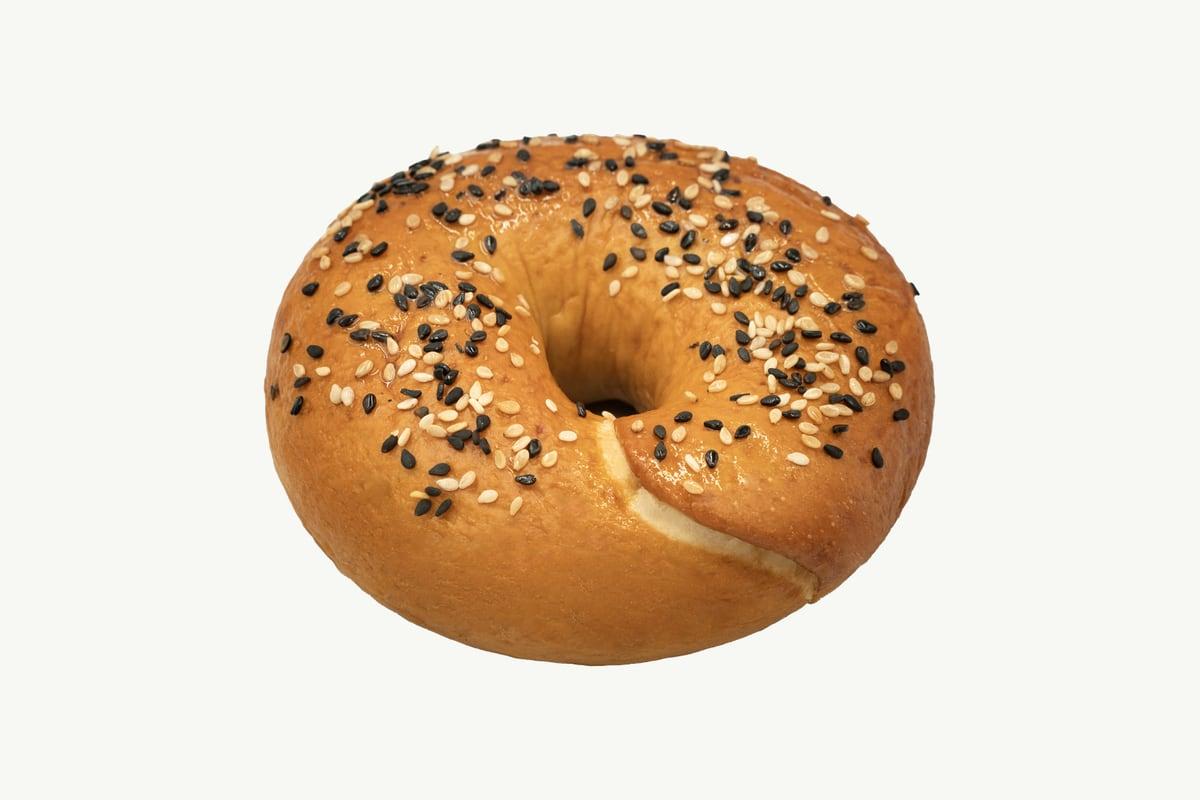
If you have bought bagels in Dubai and found them soft, airy and vaguely sweet, you did not eat a bagel. You ate a bread roll with a hole in it. The difference is a single step, about sixty seconds long, and almost every high-volume bakery skips it because it slows the line down.
That step is boiling. It is also what separates a proper potato burger bun from a supermarket one, in a different way: cooked potato in the dough changes how the crumb holds water. Both breads are defined by a process decision, not by a recipe secret. Here is what actually happens.
What does boiling do to a bagel?
A shaped bagel goes into simmering water for roughly 30 to 60 seconds a side before it ever sees the oven. Two things happen in that water.
First, the starch on the outer few millimetres gelatinises. Starch granules absorb water and swell, then set into a smooth, tight film as the surface cools. That film is why a real bagel has a glossy, faintly leathery skin rather than a floury matte crust. When it hits the oven, that gelatinised layer sets fast and stops expanding.
Second, that sealed skin restrains oven spring. A bread roll wants to balloon in the first eight minutes of baking. A boiled bagel cannot. The gas pressure inside has nowhere to go, so the crumb compresses instead of inflating, and you get the dense, elastic, slightly resistant chew that a bagel is supposed to have. Bite through one and it should pull back a little against your teeth.
Longer boils mean thicker skin and denser crumb. Shorter boils give a lighter result. Our Classic Bagels at 6 AED sit at the traditional end of that scale, because a bagel that does not fight back is not doing its job.
The other lever is flour. Bagel dough wants high protein, in the region of 13 to 14 percent, because you need a gluten network strong enough to survive being shaped into a ring, retarded overnight, dunked in boiling water and then baked hard. Bread flour at 11 percent will tear. Hydration is low by modern standards, usually 55 to 60 percent, which makes the dough stiff and genuinely difficult to mix. That stiffness is deliberate. A wet, slack dough spreads in the water and comes out flat.
Why does cold fermentation matter so much?
Bagel dough is typically shaped, then held cold overnight, often 12 to 18 hours at fridge temperature. This is not just scheduling convenience.
Cold slows yeast activity dramatically while enzymes carry on working. Amylase keeps breaking starch into simpler sugars, so the dough develops flavour and a small reserve of sugar that will caramelise on the crust. Meanwhile the gluten relaxes and the structure stabilises. Skip this and you get a bland ring that tastes of nothing but flour and salt.
There is a practical test bakers use before boiling: the float test. Drop a shaped bagel into cold water. If it floats within about ten seconds, it has fermented enough and is ready. If it sinks, it needs more time. It is crude and it works.
How is a potato bun different from a normal burger bun?
Different problem, different solution. A burger bun has one enemy: liquid. Juice from the patty, melted fat, sauce, tomato. A standard enriched bun absorbs all of it, goes translucent at the base and falls apart in your hands halfway through the burger.
Cooked potato solves this. When you cook potato, its starch gelatinises and traps a very large amount of water inside the granule. Fold that cooked potato into bread dough and you are adding water that is already bound up, not free water sloshing around the gluten network. The result is a dough with high total moisture but a crumb that behaves as though it were drier.
Three consequences follow:
The crumb stays soft for longer. Bread goes stale because starch retrogrades, recrystallising and pushing water out. Potato starch retrogrades more slowly than wheat starch, so a potato bun is still pleasant on day two when a plain bun has gone dry and crumbly.
The structure resists soaking. Because the potato starch is already saturated, it does not greedily pull in burger juices. The bun softens at the contact point but the surrounding crumb holds its shape.
The crumb is fine and tight rather than open. You want small, even cells in a burger bun. Big holes let sauce run straight through onto your plate.
Our Potato Burger Buns at 8 AED are built for that job, though they are equally good split, toasted and used for a fried egg the next morning.
How do you store bread properly in Dubai's climate?
This is where Dubai genuinely changes the rules, and where most advice written for European kitchens fails.
Never refrigerate either of these breads. The fridge, at around 4 degrees, is almost exactly the temperature at which starch retrograde happens fastest. A bagel in the fridge stales several times quicker than one on the counter. It is the single most common storage mistake.
Counter storage is short. With air conditioning at 22 to 24 degrees and indoor humidity often sitting high, mould develops faster than it would in a temperate climate. A bagel in a paper bag is good for a day, maybe two. Potato buns in a sealed bag will hold two to three days but watch them. If your kitchen is humid, do not leave bread in a plastic bag on the counter for long, because trapped condensation is exactly what mould wants.
The freezer is the real answer. Freezing halts retrogradation almost completely. Do it on the day you buy, not on day three when the bread is already tired. Slice bagels in half before freezing, because a frozen whole bagel is impossible to cut and you will hurt yourself trying. Wrap tightly, squeeze out the air, and they hold well for a month or more.
Buying a larger order and freezing most of it on arrival is a sensible way to work. We deliver across Dubai from our kitchen in Dubai Silicon Oasis, so you can order a full week's worth at once and freeze what you are not eating that day.
How do you bring a bagel or bun back to life?
Refreshing is not the same as reheating. You are trying to reverse retrogradation, and that needs heat plus a little moisture.
For a frozen sliced bagel: straight into the toaster from frozen, no defrosting. Toast a shade longer than you would fresh bread. The cut faces crisp and the interior steams itself back to softness.
For a whole bagel that has gone firm: run it briefly under a tap so the crust is damp, not soaked, then into an oven at 180 degrees for about five minutes. The water turns to steam inside, the starch re-softens and the crust re-crisps. Eat it within the hour, because a refreshed bagel stales again quickly.
For potato buns: split them, put them cut-side down on a dry pan over medium heat for 30 to 60 seconds. No butter needed first, though a little helps. You want a light golden sealing on the cut face, which also gives you a moisture barrier against the patty. This is the step that turns a decent burger into a good one, and it takes under a minute.
What do you serve them with?
A bagel handles strong flavours because the chew and the salt give it backbone. Cream cheese and cured fish is the classic pairing for a reason, but labneh with olive oil and za'atar suits the local palate and works just as well against that dense crumb. Sliced tomato, sumac, a little salt. Or keep it plain and toasted with good butter.
Potato buns want anything juicy. Beef obviously, but also grilled chicken thigh, a slow-cooked shredded filling, or a chickpea patty. Their softness may suit anyone who finds crusty rolls hard work. Browse the rest of what we bake in the shop, or read more on the blog if you want to go further into technique. Delivery details are on the delivery page.
Frequently Asked Questions
Why are my homemade bagels soft instead of chewy?
Almost always one of three things. Your flour protein is too low, so use a strong bread flour of 13 percent or above. Your dough is too wet, since bagel dough should be stiff at 55 to 60 percent hydration. Or you skipped the boil. Boiling gelatinises the crust, which restrains oven spring and forces the dense chew.
How long should you boil a bagel before baking?
Between 30 and 60 seconds a side in simmering, not violently rolling, water. Shorter gives a lighter crust and softer crumb. Longer gives a thicker, chewier skin and a denser interior. Beyond about 90 seconds a side the crust turns tough and the surface can wrinkle as it bakes.
Can you freeze bagels and potato buns?
Yes, and it is the best storage method in Dubai's climate. Freeze on the day of purchase, while the bread is still at its best. Slice bagels in half first, because cutting them frozen is difficult. Wrap tightly with the air pressed out. They keep well for a month or more.
Why do potato buns stay soft longer than normal buns?
Cooked potato starch holds a large volume of water in a bound form and recrystallises more slowly than wheat starch. Since staling is driven by starch recrystallising and expelling water, a potato-enriched crumb loses its softness at a slower rate. That is also why it resists soaking under a burger.
Should I keep bread in the fridge in Dubai?
No. Around 4 degrees is close to the temperature where starch recrystallises fastest, so refrigerated bread goes stale considerably quicker than bread left on the counter. Keep it at room temperature in paper for a day or two, and freeze anything you will not eat within that window.
Order a batch and taste the difference
If you have only ever eaten unboiled bagels, one Classic Bagel at 6 AED will make the point better than any amount of writing. Add a pack of Potato Burger Buns at 8 AED if there is grilling planned this week. Order through the shop and we will bring it to you anywhere in Dubai.