Cheesecake in Dubai: Why It Cracks and How to Serve It Right
Baked cheesecake is a set custard — which explains the cracks, the separately reduced fruit, the long chill, and why fridge-cold is the wrong way to serve it.
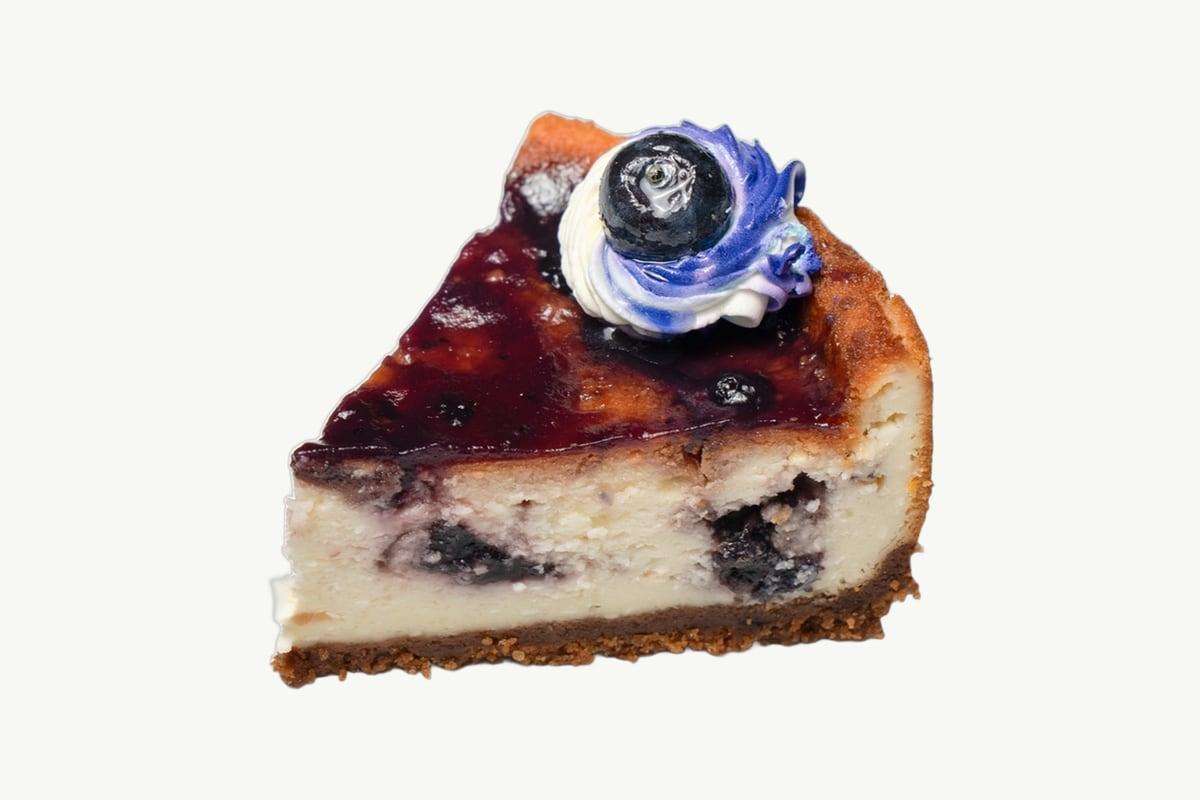
Baked cheesecake is not a cake. It is a custard that happens to be baked in a tin, and almost everything people find confusing about it follows from that one fact. It cracks because custards contract. It needs a slow, gentle oven because egg protein sets long before a cake would. A fruit topping can split it, because a custard dislikes both water and acid. And it must be chilled through before it is anything you would want to eat.
A note before you read on: cheesecake is not currently available to order online from Farah, so treat this as a baker's guide for your own kitchen. The cakes we do deliver are listed at the end.
Why baked cheesecake is a custard, not a cake
A sponge cake sets because of starch. Flour gelatinises, traps steam, and holds an aerated structure. There is barely any flour in a baked cheesecake — often only a spoonful or two of cornflour to stabilise it.
What sets a cheesecake is egg protein. Whole eggs and yolks, stirred into soft cream cheese and sugar, coagulate somewhere around 70 to 80°C and lock the mixture into a smooth, dense gel — the same mechanism as a crème caramel. The sugar does more than sweeten: it sits between the proteins and raises the temperature at which they set, which is what gives a good cheesecake its silky texture rather than a scrambled one.
So a custard cannot be beaten hard: air whipped into the batter rises like a soufflé, then collapses and splits as it cools. Mix on low, add the eggs last and slowly, and start with cream cheese soft enough that you are not beating out lumps.
Why cheesecakes crack, and how a gentle bake prevents it
Cracks are not a decorating failure. They are structural, and they have three causes.
The first is heat. Bake a custard too hot and the outer edge sets and tightens long before the centre does; the centre keeps expanding, has nowhere to go, and tears the surface open. Bake low — around 150 to 160°C — with a water bath or a tray of hot water on the shelf below, because steam slows the rate at which the surface dries and hardens.
The second is overbaking. A cheesecake that looks completely firm in the oven is already overcooked. The correct point is when the outer few centimetres are set and the middle still moves as one soft mass when you nudge the tin — a wobble, not a ripple. Carry-over heat finishes it. Overcooked egg protein squeezes out water, which is why an overbaked cheesecake weeps and feels grainy.
The third is cooling too fast. Protein contracts as it cools, and a cheesecake that goes from a hot oven into cold air shrinks against the sides of the tin, which are gripping it. Turn the oven off and leave it inside with the door ajar for an hour, and run a thin knife around the rim while it is still warm so it can pull inward without tearing.
Why fruit can split a set custard
Fruit is where a good cheesecake most often goes wrong, and blueberries show the problem clearly. They sit somewhere around pH 3, sharper than they taste because their sugar masks the acid. Stir raw acidic fruit into a cream cheese batter and the acid pulls the egg and dairy proteins together too tightly, too early. Instead of a smooth gel, the custard goes slightly granular and then weeps, leaving a thin, cloudy liquid around the fruit after a day in the fridge. It is the same mechanism as milk curdling in lemon juice, only slower and disguised by fat.
Water is the second problem. Fresh berries are roughly four-fifths water by weight. Fold a generous handful through the batter and you thin the custard, weaken its set and add dozens of little steam pockets that swell in the oven, push the surface up and then collapse — which is where many of the cracks in a homemade fruit cheesecake come from. Whatever water does not escape upward runs down into the biscuit.
So the fruit is never folded through the batter. It is cooked on its own and added as a layer.
Adding fruit: why the compote is reduced separately
The berries go into a wide pan rather than a deep one, with sugar and a small squeeze of lemon. The lemon is not really there for flavour: blueberry skins carry a fair amount of pectin, and pectin needs both acid and sugar to gel. Give it those and the fruit thickens itself. Frozen berries work at least as well, because freezing ruptures the cell walls and they collapse faster; they carry more water to drive off, so take them straight from the freezer into the pan and expect a longer reduction.
The berries collapse within minutes. Then comes the part people skip: keeping the pan on a moderate heat, stirring often, until the liquid sheets slowly off a spoon and holds a line when you drag a spatula through it. By then most of the free water has gone as steam and the rest is bound up by sugar, so the compote behaves like soft jam and can no longer soak into anything.
It then has to cool completely. Warm compote spooned onto raw batter starts cooking the eggs where it touches and leaves a grey, grainy seam. Once cold, it goes on as a defined layer or is swirled shallowly through the top with a skewer — never dragged down to the base.
The biscuit base: ratio, pressure and a blind set
A classic base is roughly three parts crushed biscuit to one part melted butter by weight, plus a pinch of salt so the slice does not read as flat sweetness. Too little butter and the crumb never binds; it turns to sand under a fork. Too much and the butter sets into a hard, greasy sheet at fridge temperature that shatters rather than yields.
Press it firm and even with the flat base of a glass, so the edge is no thinner than the middle. Compact it like concrete and you get a tile; press too lightly and the batter seeps in.
Then blind-set the base on its own, for around ten minutes in a moderate oven. The butter melts, spreads through every crumb and re-solidifies on cooling into a continuous, water-resistant shell. An unbaked base is a sponge with butter dotted through it; a blind-set one is a barrier. Let it cool again before the batter goes in, or it melts back to sponge exactly where it needs to hold.
The acid balance: why lemon works against cream cheese
Cream cheese is already acidic — that is what the cultures do to it. Sugar and fat blunt that acidity, and without something to push against, a cheesecake reads as rich and slightly heavy after two forkfuls.
Citrus is the correction. Lemon juice adds free acid, which sharpens the finish and makes the whole thing taste lighter than it is. Zest does something different: the aromatic oils in the peel carry the smell of lemon, which is most of what you perceive as flavour. Juice alone tastes sour but not lemony; zest alone smells lemony but tastes dull. A lemon cheesecake needs both, with the zest rubbed into the sugar first so the oils are released before anything else goes in — the same trick behind a good lemon butter cake.
There is a limit, and it is the fruit problem again: too much acid loosens the protein network and the set goes soft and weepy. A reduced blueberry layer does the same job from outside the custard, cutting the fat without ever touching the set.
Why it must be fully chilled — and why the fridge is not the finish line
A cheesecake straight out of the oven, even a perfect one, is loose. It sets in the fridge, not the oven: the fat in the cream cheese and the butter in the base only firm up after hours at fridge temperature. Six hours is the minimum. Overnight is better, because the flavour changes too — a freshly baked cheesecake tastes flat and eggy, and after a full chill the lactic tang comes forward and the sweetness settles back.
But here is the part most people get wrong. Fridge-cold is not the serving temperature. At 4°C, fat is firm and aromatic compounds barely volatilise, so the texture reads as waxy and the flavour as muted. Leave a whole cheesecake covered on the counter for twenty to thirty minutes before serving and it turns from dense to creamy; in an air-conditioned Dubai flat at 22 to 24°C that timing is about right, and in a warmer room fifteen is enough. A single slice warms faster, so ten to fifteen minutes on the plate does the same job.
Humidity is the other Dubai problem. Moisture condenses on a cold cheesecake within minutes in humid air, and a cake that sweats and goes back in the fridge has a tacky top the next day. Temper it indoors, keep it covered, and in summer bring out slices rather than the whole cake. Cut with a long knife dipped in hot water and wiped dry. Covered in the fridge it keeps for a few days, though the base slowly softens as moisture migrates down.
Frequently Asked Questions
Why did my cheesecake crack in the middle?
Almost always heat or cooling. Baking too hot sets the edges before the centre, so the expanding middle tears the surface. Overbaking does the same by shrinking the protein. And cooling too quickly makes the cheesecake contract while still gripping the tin. Bake low, pull it while the centre wobbles, and cool it slowly.
How long does cheesecake need to chill before serving?
Six hours at the absolute minimum, and overnight is better. A cheesecake sets in the fridge rather than in the oven, because the fat needs to firm and the egg gel needs to stabilise. Cutting it early gives you a slice that slumps on the plate and tastes flat, since the dairy flavour also develops during the chill.
Should cheesecake be served cold from the fridge?
No. At fridge temperature the fat is firm and the aromas barely register, so it tastes muted and feels waxy. Take a whole cake out twenty to thirty minutes before serving and leave it covered at room temperature, or give a single slice ten to fifteen minutes on the plate. The texture turns creamy and the flavour opens up.
Why does a fruit cheesecake go watery in the fridge?
Almost always because raw or under-reduced fruit went into the batter. The berries keep releasing water after baking, and their acid tightens the egg and dairy proteins so they squeeze out more liquid. Cook the fruit separately until it sheets off a spoon, cool it fully, and layer it on top rather than folding it through.
How do I stop the biscuit base going soggy?
Blind-bake the base on its own for about ten minutes before any filling goes in, then let it cool completely. The butter melts through the crumb and re-sets into a continuous barrier. Keeping the fruit as a top layer rather than mixed through the batter removes the other main source of moisture.
A cake we can deliver instead
If you would rather have a cake brought to your door than bake one, our cake loaves need no fridge and no careful tempering. The Classic Lemon Butter Cake Loaf gives you a bright lemon finish in a butter crumb, and the Marble Cake Loaf is the easy choice for a mixed table. Our guide to choosing between the four cake loaves compares them, and the delivery page explains how ordering works.