20 August 2026
Banana & Pecan Cake Loaf: Why the Bananas Have to Be Black
The bananas that make the best loaf are the ones you would throw away — here is the chemistry, and how to keep a slice good in a Dubai kitchen.
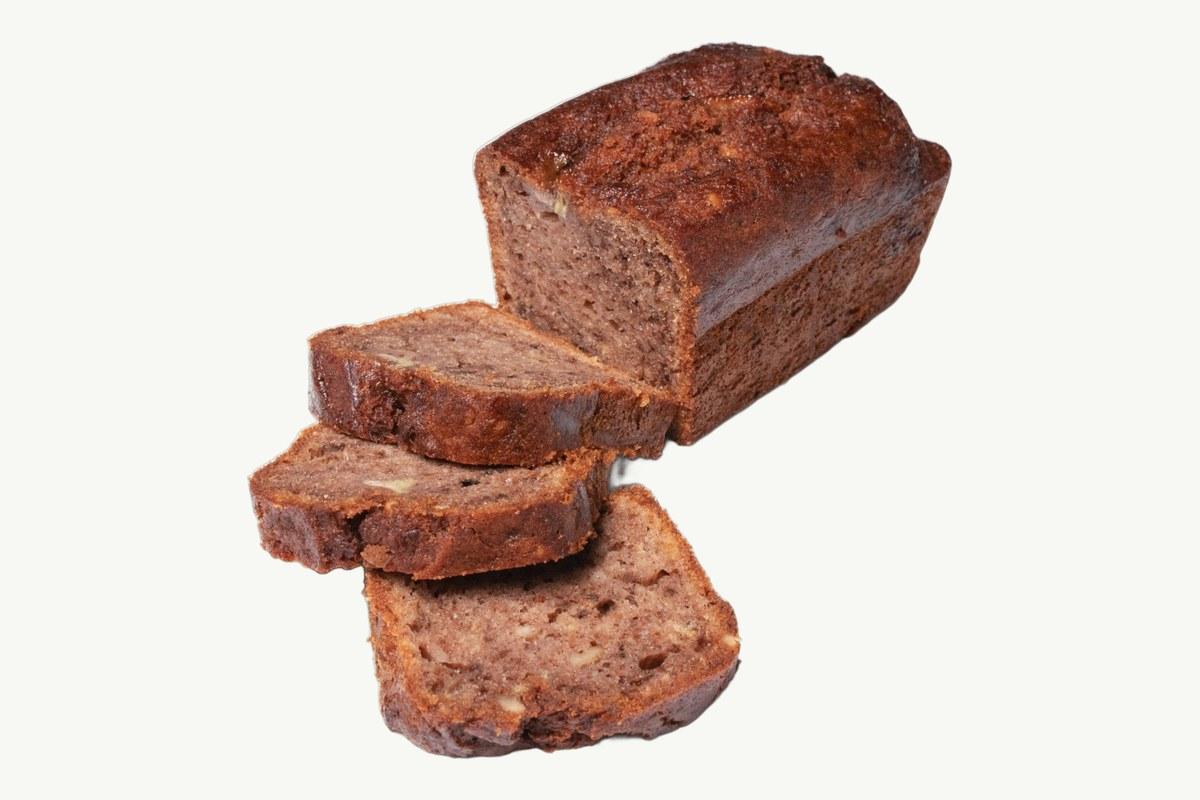
The single most common reason a homemade banana cake loaf disappoints is that the bananas were not ripe enough. Yellow bananas with a few freckles look right on the counter and behave badly in a batter. The fruit that makes a good loaf is the fruit most people have already binned: skin gone black, flesh slumping, the smell turning slightly winey. That is not sentimentality about waste. It is the point at which the fruit finally does the three jobs the recipe needs from it.
Our Banana & Pecan Cake Loaf is 35 AED and one of our four cake loaves. What follows is what the bananas are actually doing in there, why the pecans go into a dry pan before they go into the batter, and how to keep a slice from going dry in a Dubai kitchen.
What ripening actually changes
A green banana is mostly starch. As it ripens, enzymes break that starch down into simple sugars — which is why a black banana tastes sweet enough to be dessert on its own while an underripe one tastes of almost nothing. In a batter, this matters three times over.
Sweetness without extra sugar. The riper the fruit, the less added sugar the recipe needs to reach the same sweetness. That keeps the crumb tender instead of crusty, because sugar does more than sweeten — it competes with flour for water, and past a certain point it starts to dry the structure out.
Water in the right form. The cell walls of an overripe banana have partly collapsed, so the fruit mashes into a smooth purée rather than staying in stubborn lumps. Lumps are not a cosmetic problem. A lump of underripe banana is a pocket of starch that will gelatinise during the bake and leave a dense, slightly gluey patch in an otherwise open crumb.
Aroma compounds. The banana smell people associate with banana bread is largely isoamyl acetate, and it develops as the fruit over-ripens. A loaf made with yellow bananas is pale in flavour no matter how much fruit goes in, because the aroma simply is not there yet.
The practical version: if you are baking at home and your bananas are not ready, put them on a tray in a low oven until the skins blacken and the flesh softens. It is not identical to natural ripening — you get the softness and some of the sugar without the full aromatic development — but it beats baking with fruit that is not ready.
Why the pecans are toasted before they go in
Raw pecans in a cake batter come out of the oven tasting faintly of nothing, with a texture closer to damp than crisp. The batter is wet, the bake is moderate, and a nut sitting inside that environment is effectively steamed rather than roasted.
Toasting them first in a dry pan or a low oven does two things. It drives off surface moisture so the nut stays distinct in the crumb rather than softening into it, and it starts the Maillard reactions that turn a pecan from mildly sweet to properly nutty. Pecans are high in oil, and that oil carries flavour — but only once heat has released it.
There is a limit. Toast them too far and the same oils go bitter and rancid-tasting, and a bitter nut in a sweet loaf is very hard to hide. We take them to the point where the kitchen smells of them and no further, then cool them completely before they meet the batter. A warm nut folded into a cold batter starts melting the fat around it and you lose the definition you just built.
Why this loaf stays moist longer than most cakes
Two reasons, and both come from the fruit rather than from any trick.
Banana purée is largely water bound up with pectin and sugar, and that combination holds onto moisture far better than free water does. A plain butter cake loses water to the air steadily from the moment it leaves the oven. A banana loaf loses it more slowly because a good share of it is not free to evaporate.
The second reason is fat. Between the butter in the batter and the oil in the pecans, there is enough fat coating the flour proteins to keep gluten development low. Low gluten means a tender crumb, and a tender crumb reads as moist even a day later. It is the same principle that makes our Marble Cake Loaf forgiving overnight while a lean, crust-forward bread like the Sourdough Baguette is best the day it is baked.
The Dubai storage problem
Here is where local conditions change the advice. In a cooler, drier climate you can leave a banana loaf wrapped on the counter for three days quite happily. In Dubai you are choosing between two failure modes.
Left out in a warm, humid kitchen, a moist sweet cake is an excellent place for mould, and it will find it faster than you expect. Sealed in the fridge, the cake is safe but the starches retrograde — they recrystallise — and the crumb goes firm and slightly stale-tasting within a day or two.
Our practical answer: same day and next day, wrap it well and leave it at room temperature in an air-conditioned room, not on a counter next to a window. Beyond that, slice the whole loaf, wrap the slices, and freeze them. A frozen slice thawed still wrapped at room temperature for about twenty minutes, then warmed briefly if you like, is much closer to fresh than a refrigerated one, because freezing pauses retrogradation instead of accelerating it.
Eating it properly
Cold from the fridge is the worst way to eat this loaf and the most common. Fat is firm at fridge temperature and firm fat does not release flavour, so a chilled slice tastes muted and feels dense.
Let a slice come to room temperature, or give it fifteen to twenty seconds in a dry pan on a low heat, cut side down. The surface warms, the fat softens, the banana aroma lifts, and the toasted pecans come back. If you want to make more of it, a thin scrape of butter on a warmed slice is genuinely better than any icing — the salt sharpens the fruit.
It also does something useful next to coffee. The loaf is sweet but not sugary, and the nuts give it enough savoury weight to stand up to a dark roast without the two cancelling each other out.
Frequently Asked Questions
Why does my homemade banana loaf taste bland even with lots of banana in it?
Almost always underripe fruit. Sweetness and the characteristic banana aroma both develop late in ripening, so a yellow banana contributes water and starch but very little flavour. Wait until the skins have gone black and the flesh slumps when pressed, or ripen them in a low oven until the skins darken.
Should I refrigerate a banana cake loaf?
Only if you need it to last beyond a couple of days, and freezing is better. Refrigeration keeps it safe but pushes the starches to recrystallise, which firms the crumb and dulls the flavour within a day. In a warm humid kitchen, wrapped at air-conditioned room temperature for the first two days is the better trade.
Can I freeze it, and how do I bring it back?
Yes, and it freezes very well because the fat and fruit content protect the crumb. Slice the loaf first and wrap the slices individually so you can take one at a time. Thaw it still wrapped at room temperature for about twenty minutes, then warm it briefly in a dry pan if you like, rather than in a microwave.
Are the pecans in the loaf raw or toasted?
Toasted, and cooled, before they are folded into the batter. Raw nuts effectively steam inside a wet batter and end up soft and muted, while toasting drives off surface moisture and develops the nutty flavour that the oils carry. Toasting stops well short of dark, because over-toasted pecans turn bitter.
Does this loaf contain nuts, and is there an alternative without them?
Yes — toasted pecans run all through it, so it is not suitable for anyone avoiding nuts. We cannot offer a nut-free alternative either: our kitchen handles peanuts and tree nuts, and our product descriptions are not full ingredient lists, so we cannot call any item nut-free. Anyone avoiding nuts, or packing for a nut-free school, should ask us before ordering.
Order the banana and pecan loaf
The Banana & Pecan Cake Loaf is 35 AED, baked fresh every day with toasted pecans through the crumb, so cut it in thick slices to keep the pecans in rather than letting them fall out. It sits well alongside the rest of the cake loaves and the cookie range over on the shop, and there is more on how we bake over on the blog.