20 August 2026
Double Chocolate & Coconut Cake Loaf: Why Cocoa Needs Heat First
Cocoa powder tipped straight into a batter is largely wasted, which is why it goes into hot liquid first — and why the coconut is there for more than flavour.
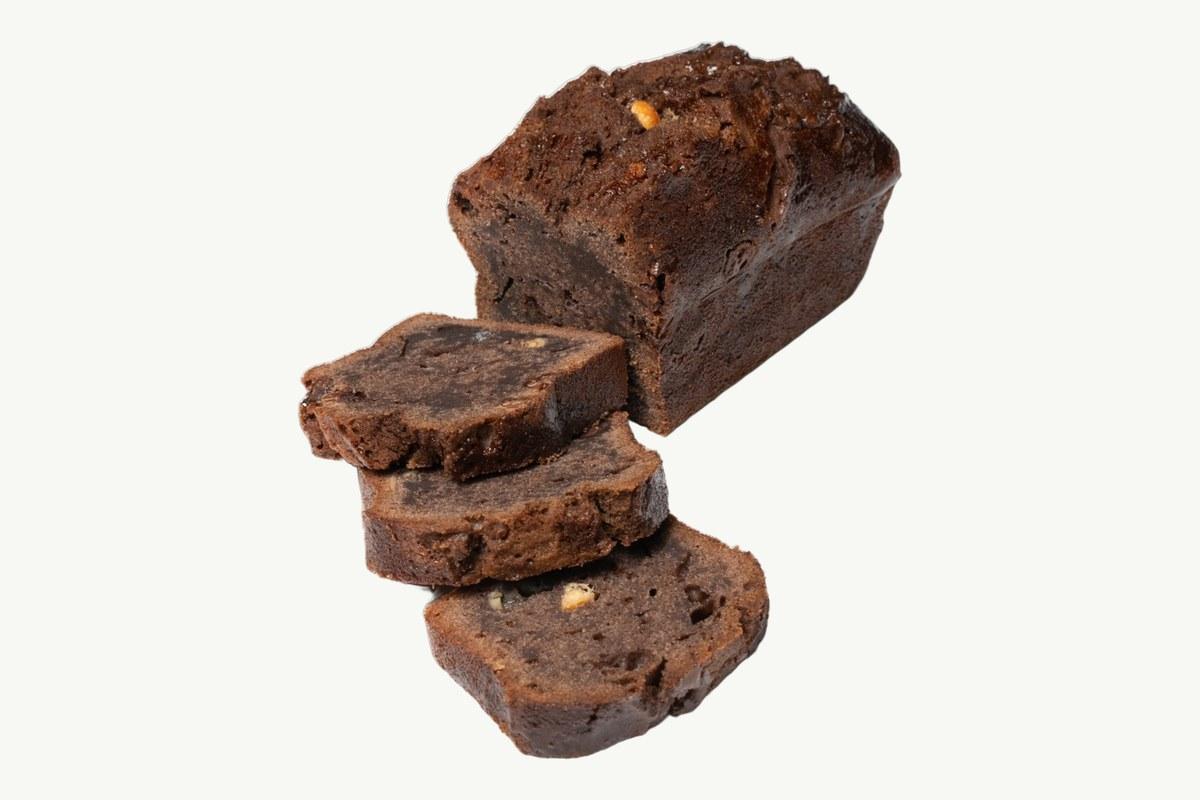
There is a step in a good chocolate cake loaf that almost never survives into home recipes, and skipping it is the difference between a cake that tastes brown and a cake that tastes of chocolate. The step is blooming: putting the cocoa powder into hot liquid before it goes anywhere near the flour.
Our Double Chocolate & Coconut Cake Loaf is 35 AED, and it is built on two chocolate sources plus coconut. What follows is why each is there and what it does to the crumb.
Why cocoa powder is bloomed in hot liquid
Cocoa powder is not a flavouring that dissolves. It is finely ground, defatted cocoa solids — a powder whose flavour compounds are locked inside particles that are partly fat, partly starch, partly protein. Tip it dry into a batter and a good share of those particles never fully hydrate. They stay as microscopic dry specks suspended in the crumb, and the flavour stays locked inside them.
Hot liquid changes that. Heat softens the residual cocoa butter in the powder and lets water penetrate the particles, releasing the aromatic compounds into the liquid where they can spread evenly through the batter. The colour deepens visibly while you stir — the same weight of cocoa goes from dusty brown to near black — and that colour shift is a fair proxy for how much flavour has actually been freed.
The practical consequence is that a bloomed batter tastes more strongly of chocolate than an unbloomed one made with the same amount of cocoa. You are not adding more. You are finally using what you put in.
There is a second, quieter benefit. Cocoa powder is thirsty; it absorbs a lot of water. Hydrating it up front, in a controlled amount of hot liquid, means it is not stealing water from the flour later in the mix. Batters where dry cocoa competes with flour for moisture tend to bake dry and crumbly no matter how much fat is in them.
Two chocolates, doing different jobs
Cocoa powder alone gives you depth and colour but not much richness — it is the defatted part of the bean. Chocolate pieces give you fat, sweetness and melt, but on their own they leave the crumb around them tasting plain, because the flavour stays where the chocolate is rather than spreading.
Using both is not indulgence for its own sake. The bloomed cocoa flavours the crumb itself so every bite is chocolate, and the pieces give you the intermittent hit of something molten. It is the same reasoning behind our Chocolate Sourdough Loaf, where the dough itself carries flavour and the studded pieces punctuate it.
Piece size matters more than people expect. Very small chips disperse so evenly that they stop registering as separate from the crumb; very large chunks sink, because a heavy piece in a fluid batter has nowhere to go but down. The size we use is the compromise that stays suspended through the bake and still reads as a distinct piece when you bite it.
What the coconut is actually for
Coconut in a chocolate loaf reads as a flavour decision. It is at least as much a texture and moisture decision.
Desiccated coconut is largely fat and fibre, and it holds water differently from flour. Folded into a batter it acts as a moisture reservoir: it takes up liquid during mixing and gives it back slowly during and after the bake. The practical result is a crumb that stays soft into a second day, in a cake that would otherwise dry quickly because cocoa is so absorbent.
The fat content matters too. Coconut fat is largely saturated and firm at room temperature, which means it does not weep out of the crumb the way some oils do. It sits in the structure, keeps the mouthfeel rich, and carries the chocolate aroma — fat is the medium most chocolate flavour compounds travel in.
Flavour-wise, coconut and cocoa share a lot of roasted, slightly nutty notes, which is why the pairing feels older than it is. The coconut is not fighting the chocolate for attention; it is sitting underneath it.
Why this loaf is darker than it tastes
People often expect a loaf this dark to be bitter. It is not, and the reason is that colour and bitterness come from different places. The near-black colour is mostly the bloomed cocoa, and blooming develops colour faster than it develops bitterness. Bitterness in a chocolate cake usually comes from too high a proportion of cocoa solids relative to sugar and fat, or from cocoa that has been scorched during blooming.
That last one is the home-baking trap. Boiling liquid poured straight onto cocoa and left to sit will scorch it, and scorched cocoa is acrid in a way no amount of sugar will fix. Hot is the requirement; boiling and standing is not.
Storing it in a Dubai kitchen
Chocolate loaves have one storage advantage and one disadvantage compared with a plain butter cake.
The advantage is fat. Between the cocoa butter in the chocolate pieces, the coconut and the butter in the batter, there is enough fat in the crumb to slow staling considerably. Fat coats starch molecules and interferes with the recrystallisation that makes cake go firm.
The disadvantage is that chocolate pieces respond badly to temperature swings. Move a loaf from a cold fridge into a warm humid room repeatedly and the cocoa butter in the pieces migrates to the surface and recrystallises as a pale grey film. It is harmless and it is not mould, but it looks like a fault and the texture of the pieces turns slightly chalky.
So: wrapped, at air-conditioned room temperature, for the first two days. For longer, slice and freeze — freezing is far kinder to this loaf than refrigeration, because it skips the slow temperature cycling that causes the surface bloom. Thaw a slice at room temperature rather than in a microwave, which overheats the chocolate pieces long before the crumb is warm.
How to serve it
Warm, but only just. Fifteen seconds in a dry pan, cut side down, is enough to soften the chocolate pieces without melting them into the crumb. Fully melted pieces lose their point — the contrast between soft crumb and firmer chocolate is the whole texture of the thing.
It takes salt well. A few flakes on a warmed slice sharpens the cocoa noticeably. It also sits comfortably next to a cookie board — the Double Chocolate Chip Cookie makes a fair comparison if you want to taste what chocolate does in a lean, crisp-edged format versus a rich, tender one; our double chocolate cookie guide covers the other side of that comparison.
Frequently Asked Questions
What does blooming cocoa actually do?
Blooming means hydrating cocoa powder in hot liquid before it meets the flour. Heat softens the residual cocoa butter and lets water into the particles, releasing aroma compounds that otherwise stay locked inside. The batter darkens visibly, and the same quantity of cocoa delivers noticeably more chocolate flavour.
Why does my homemade chocolate loaf come out dry?
Usually cocoa competing with flour for water. Cocoa powder is very absorbent, so adding it dry means it pulls moisture out of the rest of the batter during the bake. Hydrating it in hot liquid first solves most of it; the rest is usually overbaking, since a dark crumb hides the visual cues that a cake is done.
Does the coconut make it taste strongly of coconut?
No. At the proportion used it works mostly as a moisture reservoir and a fat source rather than a headline flavour, and it shares roasted notes with cocoa so it blends underneath rather than standing apart. You notice it as richness and a slightly chewier crumb more than as a distinct coconut hit.
What is the grey film that sometimes appears on the chocolate pieces?
That is fat bloom — cocoa butter migrating to the surface and recrystallising after repeated temperature swings, typically from moving the loaf in and out of the fridge. It is harmless and not mould, though the pieces can feel slightly chalky. Storing at a steady temperature, or freezing rather than refrigerating, prevents it.
Is this loaf suitable for someone avoiding nuts?
Coconut is botanically a drupe rather than a tree nut, but it is often treated as a nut in catering and allergy settings, so check before serving it to anyone with a nut restriction. We cannot offer a nut-free alternative: our kitchen handles peanuts and tree nuts, and our product descriptions are not full ingredient lists, so anyone avoiding nuts should ask us before ordering.
Order the chocolate and coconut loaf
The Double Chocolate & Coconut Cake Loaf is 35 AED, baked dark and kept deliberately on the rich side of bitter. Our guide to the four cake loaves shows how it compares with the others, all of which are in the shop, and there is more on how we bake over on the blog.