21 August 2026
Double Chocolate Chip Cookie: Crisp Edge, Gooey Middle, One Bake
The crisp rim and the molten middle are not two recipes. They are one dough baked to the moment the edges set and the centre has not.
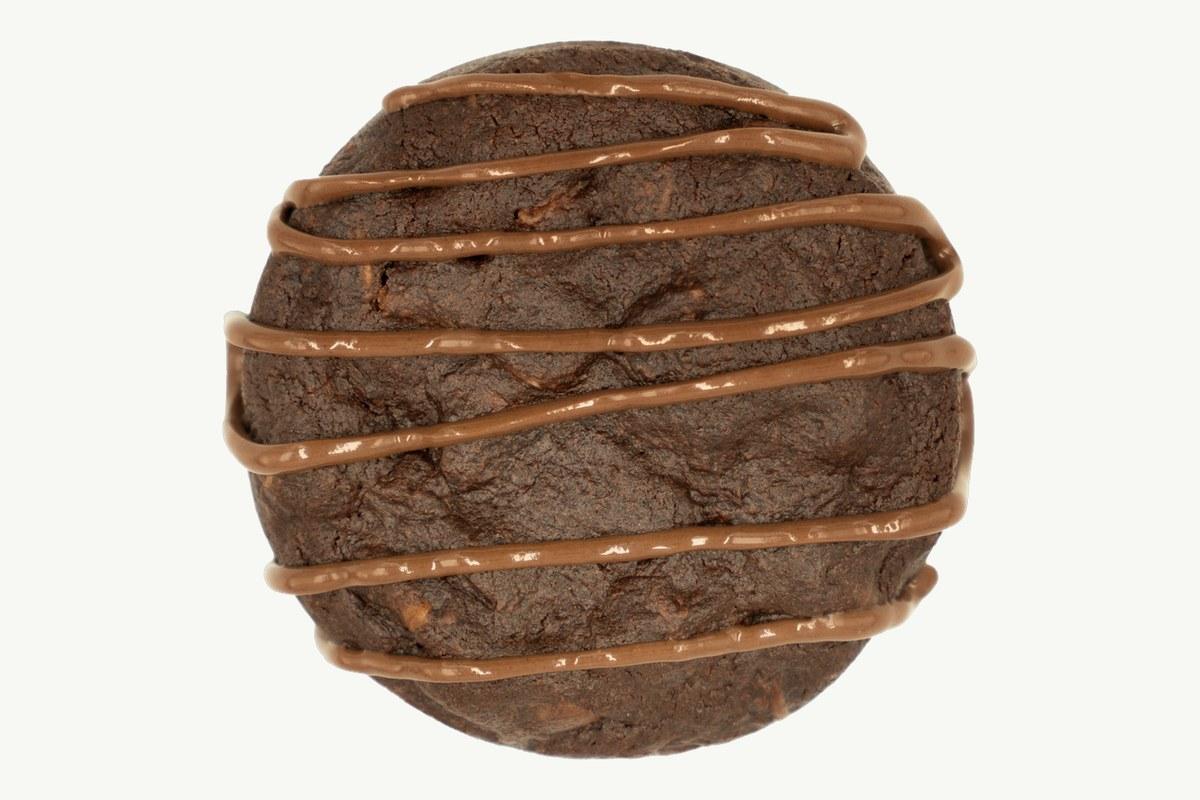
A double chocolate cookie with a crisp edge and a soft centre looks like a compromise between two different cookies. It is not. It is a single dough with a temperature gradient running through it, pulled from the oven at the precise moment the outer ring has set and the middle has not. Miss that window by two minutes in either direction and you get a uniformly soft cookie or a uniformly crisp one — both fine, neither what this is.
Our Double Chocolate Chip Cookie is 18 AED and weighs 80 g, which is a deliberate number. Below about 60 g a cookie bakes through before the gradient can establish itself. What follows is how the gradient works, and how to keep it in a double chocolate cookie that has to survive Dubai humidity.
Why "double chocolate" is a structural decision
Two chocolate sources do two jobs, and the distinction matters more in a cookie than in a cake.
Cocoa powder goes into the dough itself. It is defatted, absorbent, and slightly acidic, and it makes the base of the cookie taste of chocolate everywhere rather than only where a chip happens to be. It also changes the structure: because cocoa soaks up moisture, a cocoa dough is drier at the same liquid level than a plain one, which is part of why a chocolate cookie holds its shape rather than spreading into a wafer.
Chocolate chips bring fat, sweetness and melt. They do almost nothing for the flavour of the crumb around them, but they give you the intermittent molten pockets that make the thing worth eating warm.
Take either away and the cookie fails in a predictable direction. Chips alone give you a pale, sweet cookie with occasional chocolate. Cocoa alone gives you an evenly chocolatey biscuit with nothing to look forward to.
How the crisp edge and soft centre happen
Heat enters a cookie from the outside. The rim, thinner and in direct contact with the hot tray, reaches the temperature at which sugar recrystallises and water has evaporated long before the centre does. That rim sets hard and stays hard once cooled.
The middle is thicker, insulated by the dough around it, and still full of water when the cookie comes out. Residual heat continues cooking it on the tray for a few minutes after the bake — this is why cookies are rested on the tray rather than moved immediately — and then it stops, leaving a centre that has set just enough to hold together but not enough to go firm.
Two things control where that boundary lands:
Thickness. A tall, domed portion of dough has a longer heat path to its centre, so the gradient is steeper and the contrast sharper. A dough ball pressed flat before baking has almost no gradient at all — it bakes through evenly and comes out crisp throughout.
Time, not temperature. Baking hotter and shorter does not reliably improve the contrast; it browns the outside before the structure sets. The reliable lever is pulling the tray at the point where the edges are visibly set and matte while the centre still looks slightly underdone and glossy. With cocoa doughs this is genuinely harder to judge than with a pale dough, because the colour cues everyone uses are hidden by the cocoa. You go by the surface finish and the set of the edge, not by browning.
Why it changes overnight
A day later the same cookie is chewy rather than crisp-and-gooey, and nothing has gone wrong. Moisture has simply equalised. Water migrates from the wet centre outwards into the dry rim until the whole cookie sits at an intermediate level. The edges soften, the middle firms, and you get a uniform chew.
Sugar plays into this too. Brown sugars are hygroscopic — they attract water from the air — so a cookie with a high proportion of them will pull humidity out of a Dubai kitchen and soften faster than it would in a dry climate. This is why a cookie that was crisp when you bought it can feel quite different by the next afternoon if it has been sitting in an open box.
Storing and reviving it
Airtight, at room temperature, is right. A sealed container slows the moisture exchange with the room, which is the main thing degrading texture. Do not refrigerate — cold accelerates starch retrogradation and you get a hard, dry cookie rather than a preserved one.
To bring one back, three to four minutes in an oven at around 160°C will re-melt the chocolate and drive a little moisture back out of the rim, restoring most of the contrast. An air fryer works at a lower setting and shorter time; watch it, because the moving air browns cocoa doughs faster than you expect and there is no colour cue to warn you.
A microwave will make it soft and warm but it will also make it uniformly limp, and the chocolate goes from molten to oily. If you only want a warm cookie and do not care about the edge, that is a legitimate choice. If you want the texture back, use dry heat.
Freezing works well for the longer term. Wrap individually and freeze, then thaw still wrapped at room temperature for about twenty minutes, so any condensation settles on the wrapping rather than the rim, and warm briefly in a low oven if you like.
Where the double chocolate cookie sits against the others
If you like this one, the comparison worth making is with the Lotus & White Chocolate Chip Cookie, which is built the other way round: a pale, buttery dough carrying strongly flavoured inclusions rather than a flavoured dough carrying neutral ones, with its Lotus spread sealed in pockets. The Pistachio Chocolate Chip Cookie sits between the two, with a pistachio cream and roasted-nut topping that keeps its own texture through the bake.
All three are 80 g, and putting them side by side is the quickest way to understand what the dough itself contributes versus what is added to it. Our guide to choosing cookies by texture sorts all six that way.
Frequently Asked Questions
Why do my homemade cookies come out flat instead of thick?
Usually dough that is too warm when it goes in, so the fat melts and spreads before the structure sets. Chilling portioned dough until firm before baking fixes most of it. Pressing the dough ball flat also removes the thickness that creates the crisp-edge, soft-centre gradient in the first place.
How do I tell when a chocolate cookie is done, with no browning to go by?
Watch the surface finish and the edge rather than the colour. The outer ring should look matte and set, while the centre still looks glossy and slightly underdone. Pull it there — residual heat on the tray finishes the middle over the next few minutes without firming it.
Why is the cookie chewy the day after instead of crisp and gooey?
Moisture equalises across the cookie overnight. Water moves from the soft centre into the dry rim until both sit at the same level, so the edges soften and the middle firms into a uniform chew. Brown sugar makes this faster in humid conditions because it draws moisture from the air.
What is the best way to reheat one?
Dry heat, short. Around 160°C for three to four minutes in an oven, or a lower setting briefly in an air fryer, re-melts the chocolate and re-crisps the rim. Avoid the microwave if texture matters — it warms the cookie evenly and leaves it limp, with the chocolate turning oily rather than molten.
Can I freeze these, and does it hurt the texture?
They freeze very well. Wrap them individually once fully cool, then thaw them still wrapped at room temperature for about twenty minutes, so condensation settles on the wrapping rather than the crisp rim. Warm them briefly in a low oven if you like.
Order the double chocolate cookie
The Double Chocolate Chip Cookie is 18 AED for 80 g, baked to order in our Dubai Silicon Oasis kitchen and delivered across Dubai, with the earliest delivery window the next morning. Take it with the rest of the cookie board over on the shop, and give it three or four minutes at 160°C if you want the molten middle back.