Cookies in Dubai: How to Choose Yours by Texture, Not Flavour
Brown butter, a 24-72 hour dough rest and a deliberately soft centre — what separates a bakery cookie, and how to pick from our six.
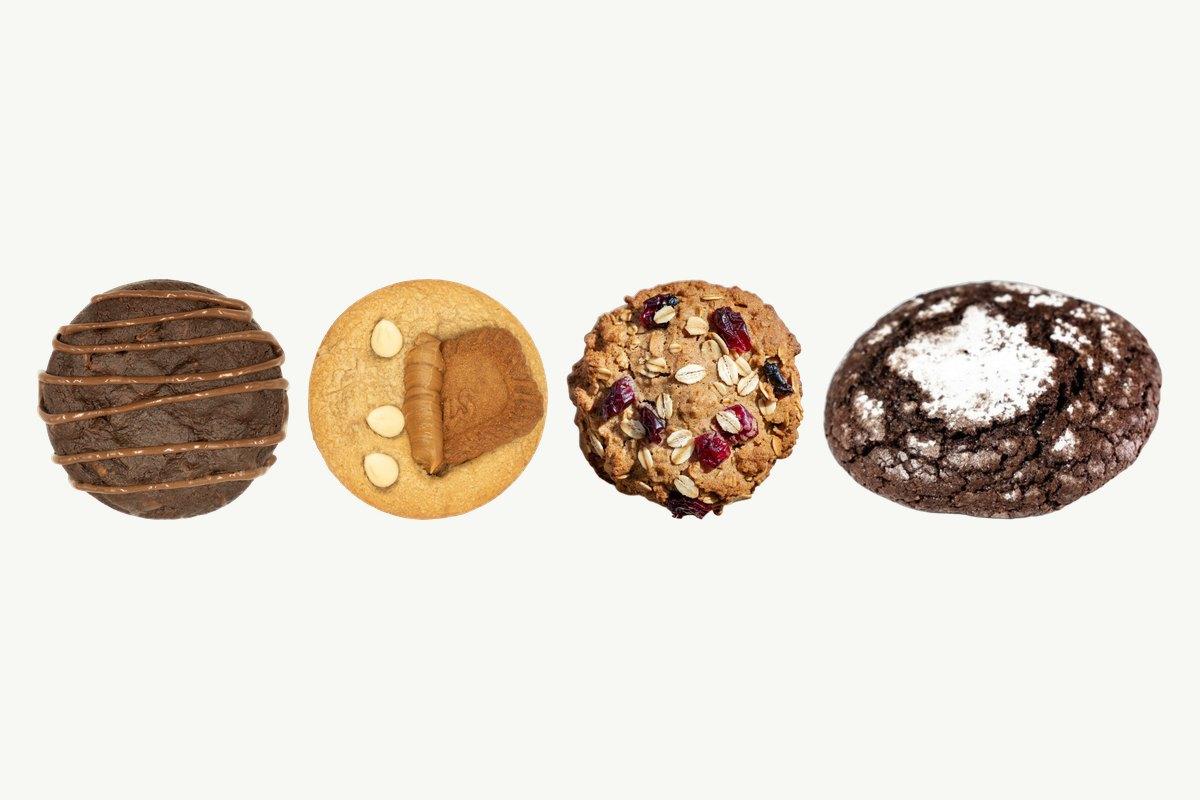
The gap between a bakery cookie and a good home-baked one comes down to four decisions, and none of them is the recipe. Brown butter instead of melted butter, dough rested for one to three days before it sees an oven, a flour with enough protein to give real chew, and a bake pulled while the centre still looks underdone.
This is a guide to what those decisions do, and then a walk through our six cookies grouped by texture rather than flavour — because chewy, fudgy, short and oaty is how people really choose.
Why brown butter changes the whole cookie
Most recipes ask for softened butter creamed with sugar. That traps air and gives lift, which is what you want in a cake. In a thick bakery cookie you want density, not lift, so we take the butter further.
Heating butter past the point where the water cooks off leaves the milk solids in direct contact with the pan. They toast, and the Maillard reaction produces the nutty, faintly caramel note you cannot get from any flavouring. It also drives off a good share of the butter's weight as steam, which means less water in the dough, less spread and a denser bite.
The catch is that browned butter is liquid. Pour it warm into sugar and you get a greasy dough. It has to cool and set to a soft paste again before the sugar goes in, and even then the dough needs time to rehydrate. Which brings us to the rest.
What a 24-72 hour dough rest actually does
Resting cookie dough in the fridge is the single biggest difference between a bakery cookie and a home one, and it is free.
Three things happen while the dough sits. The flour fully hydrates, so no dry pockets remain. Enzymes break a portion of the starch down into simpler sugars, which deepens flavour and helps the edges caramelise evenly. And the fat re-solidifies throughout, so the cookie holds its dome in the oven instead of flooding outwards in the first two minutes.
The result is a thick middle and a defined edge rather than a flat disc. Twenty-four hours gets you most of the benefit. Seventy-two gives a noticeably darker, more toffee-like flavour. Past that the dough dries at the surface and the gains stop.
Flour, and why bakery cookies chew
Chew is protein. A standard plain flour sits low in protein and gives a short, crumbly cookie. A stronger flour builds more gluten as the dough is mixed, and gluten is what makes a cookie pull slightly when you tear it in half rather than snapping. We work strong flour into the doughs that are meant to chew, and pull back towards a softer flour where we want a sandy crumb instead.
The sugar balance shifts alongside it. Brown sugar holds water and keeps a cookie soft and pliable; white sugar promotes crisp edges and spread. Most of our doughs use both, weighted one way or the other depending on the texture we are after.
Then there is the bake. A thick cookie comes out of the oven when the ring is set and coloured but the centre still looks wet and slumped. Carry-over heat finishes the middle on the tray over the next five minutes. Bake until the centre looks done in the oven and you have already gone too far.
The six, sorted by texture
The chewy ones
The Pistachio Chocolate Chip Cookie at 18 AED is the fullest of the six. It is a chocolate chip cookie topped with pistachio cream and roasted pistachios, which add fat and a green savouriness that cuts the sweetness of the chocolate. Our guide to telling real pistachio from green colouring covers what to look for in any pistachio bake. Thick centre, crisp rim.
The Lotus & White Chocolate Chip Cookie at 16 AED sounds like the sweetest of the six, but it eats less sweet than its name suggests. Caramelised biscuit spread goes in as sealed pockets rather than being mixed through, and softens the crumb around it; the white chocolate chips turn soft and creamy against the spice. Expect a soft, almost gooey middle.
The fudgy ones
The Double Chocolate Chip Cookie at 18 AED replaces part of the flour with cocoa powder. Cocoa absorbs water aggressively and contributes no gluten, so the texture moves away from chew and towards fudge — closer to the edge of a brownie than to a biscuit. The chocolate chips give you molten seams for the first hour after it cools. Our double chocolate cookie guide explains the underbake window that keeps the middle soft.
The Chocolate Crinkle Cookie at 14 AED is the softest of the six. The dough is rolled in icing sugar before baking; as the cookie expands, the sugar shell cracks open and the sugar stays white in the fissures. Underneath it is dense and moist with a chalky-soft finish that people either love immediately or not at all.
The short one
The Peanut Butter Cookie at 14 AED goes the other direction. Peanut butter brings fat and very little water, which shortens the crumb — it breaks cleanly and dissolves rather than pulling. The fork-mark cross-hatch is not decoration; it flattens a peanut butter dough that would otherwise stay stubbornly domed. Salty, soft in the middle and the least sweet of the six.
The oaty one
The Oats & Cranberry Cookie at 16 AED is the breakfast cookie. Rolled oats absorb moisture slowly and stay distinct after baking, so you get texture in layers rather than one uniform crumb, which is why an oat cookie dough needs time to rest. Dried cranberries are rehydrated before they go in, otherwise they pull water out of the dough and leave hard flecks. Chewy, less sweet, and the one that may suit a mid-morning coffee better than a dessert plate.
Keeping cookies in Dubai heat and humidity
Cookies are more sensitive to a Dubai flat than bread is, and the enemy changes depending on where they sit.
- Store them in an airtight container at room temperature. Two to three days is where they are best, and they stay good for a few days beyond that.
- Never refrigerate them. Cold air is dry air, and it firms the fat and stales the crumb faster than the counter does.
- Keep crisp and soft cookies apart. In one tin, moisture migrates from the soft to the crisp and both end up wrong.
- In summer humidity, do not leave them uncovered on a plate for hours. The sugar draws water from the air and the surface turns tacky.
- To freeze, wrap them individually. They come back at room temperature in about twenty minutes.
A cookie that has firmed up is easily brought back: three or four minutes in a low oven, around 150 to 160°C, softens the fat and the chocolate again.
What to drink with them
Sweet cookies need something bitter opposite them. A short black coffee handles the Lotus and the crinkle. The oats and cranberry works with tea, and the pistachio belongs next to Arabic coffee with cardamom, where the nut and the spice meet properly. We bake in Dubai Silicon Oasis and deliver across Dubai, so a box can reach a home or an office desk the same way a bread order would — details on our delivery page.
Frequently Asked Questions
Why do bakery cookies taste different from homemade ones?
Mostly because of what happens before baking. Browned butter adds a nutty, caramel note that plain melted butter cannot, and resting the dough for one to three days lets enzymes break starch into simpler sugars that deepen flavour and colour. Stronger flour adds chew, and pulling the tray while the centre still looks soft keeps the middle tender.
How long should cookie dough rest in the fridge?
Twenty-four hours delivers most of the benefit: the flour hydrates fully, the fat re-solidifies so the cookie spreads less, and the flavour deepens. Seventy-two hours pushes it further towards a darker, toffee-like taste. Beyond three days the surface of the dough begins to dry out and there is little left to gain.
How should I store cookies in Dubai?
Keep them in an airtight container at room temperature rather than the fridge, which dries the crumb and firms the fat. Store soft and crisp cookies separately so moisture does not migrate between them. In humid months, avoid leaving them uncovered, as the sugar draws water from the air and the surface turns sticky.
Which cookie is the least sweet?
The peanut butter cookie. It carries a lot of fat and salt relative to its sugar, which gives a short, tender crumb that breaks cleanly instead of chewing. The oats and cranberry cookie is the next least sweet, since the oats bulk out the dough and the dried fruit provides acidity rather than straight sugar.
Are the cookies better warm or at room temperature?
Room temperature, for most of them. A thick cookie leaves the oven with a deliberately soft centre that sets over the following few minutes, and the flavour of browned butter and dark chocolate reads more clearly once it has cooled. The double chocolate is the exception, as its chips stay molten for about an hour.
Order a box of cookies
The Pistachio Chocolate Chip Cookie at 18 AED is the fullest place to start, and the Chocolate Crinkle Cookie at 14 AED is the one to add if you want something softer alongside it. Mix textures rather than flavours and a box of six covers everyone at the table. The full range is in the shop, baked in Dubai Silicon Oasis and delivered across Dubai.