21 August 2026
Peanut Butter Cookie: Why It Is Soft and Not Sandy
Peanut butter is not simply another fat in the bowl, because it brings its own protein and fibre, and that is what decides the texture.
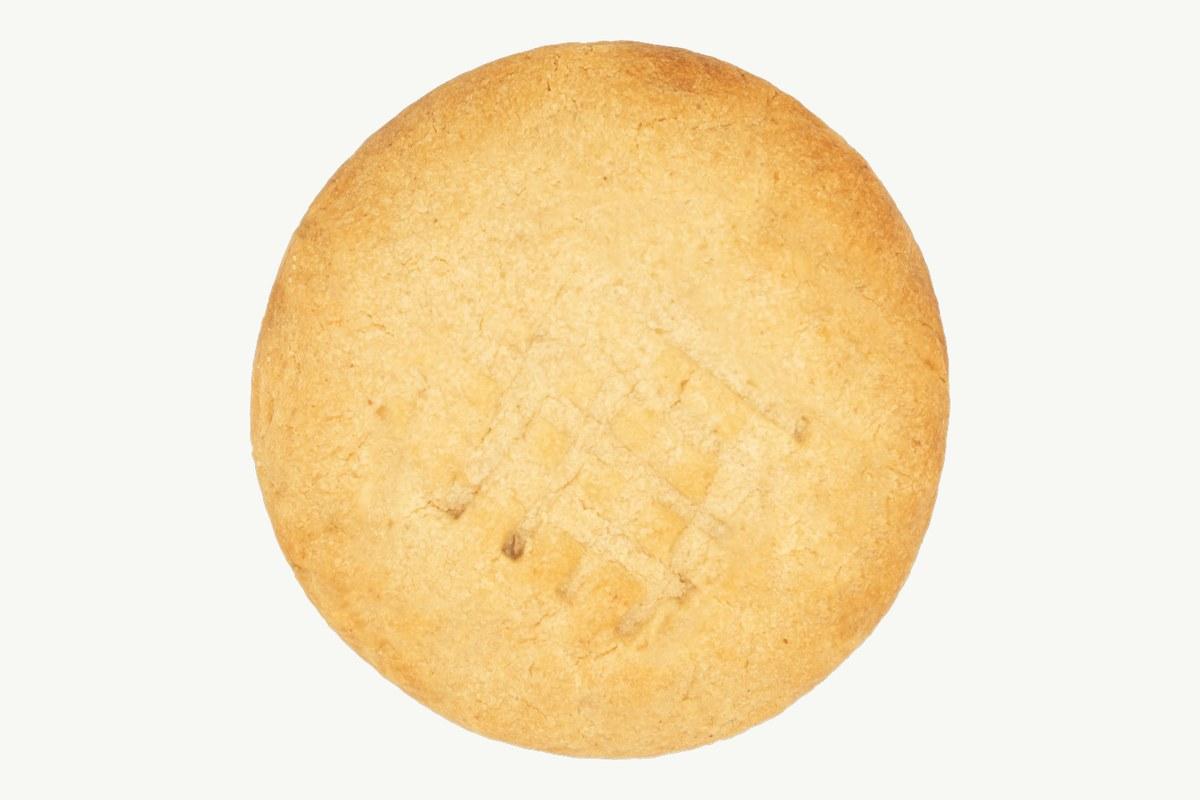
Most peanut butter cookies people remember are sandy — they crumble to powder halfway to your mouth and leave your palate dry. That texture is not inherent to the ingredient. It is what happens when a recipe treats peanut butter as though it were simply butter with flavour in it.
Our Peanut Butter Cookie is 14 AED and 80 g, and it is built to stay soft in the middle. What follows is why peanut butter behaves differently from butter in a dough, and what that means both for how we bake it and for anyone making them at home.
Peanut butter is not a fat, it is three ingredients at once
Butter is roughly fat and water with a little milk solids. Peanut butter is ground peanuts: roughly half fat, but also a substantial share of protein, plus fibre and carbohydrate. When you put it in a dough you are adding all of those at the same time, and each one pulls the texture in a different direction.
The fat does what fat always does: coats flour proteins, limits gluten development, and gives tenderness.
The protein is the complication. Peanut protein absorbs water and sets when heated, much like egg does. That means a peanut butter dough has an extra structural network in it that a plain butter dough does not, and that network firms the cookie as it bakes. Too much and you get the sandy, dry result — the protein has locked up water that would otherwise have kept the crumb soft.
The fibre absorbs water too, and holds onto it stubbornly. It is part of why these doughs feel stiffer than a butter dough at the same liquid level.
The consequence is that you cannot simply swap peanut butter in for butter one-for-one and expect it to work. The dough needs more moisture and less flour than intuition suggests, because a large share of what looks like fat is actually behaving like a dry ingredient.
Why ours stays soft
Three levers, all pulled in the same direction.
We keep the flour proportion lower than a standard cookie dough, because the peanut protein and fibre are already doing structural work that flour would otherwise do. Adding a full flour quantity on top of that is the single most common cause of a dry peanut cookie.
We lean on sugars that hold water. Brown sugars are hygroscopic and keep moisture in the crumb over the hours after baking, where a dough built mostly on white sugar dries as it cools.
And we underbake deliberately, using the same underbake window as the Double Chocolate Chip Cookie — pulled when the edges are set and the centre still looks slightly underdone. Peanut butter cookies punish overbaking more than most, because once that protein network sets fully there is nothing to soften it again.
Where the fork marks came from
The criss-cross pattern is not decoration, or at least it did not start as decoration. Peanut butter dough is dense and does not spread much during baking — the fat is partly bound up in ground nut solids rather than free to melt and flow. A ball of it left alone will bake as a ball, cooked on the outside and raw in the middle.
Pressing it flat solves that, and a fork was simply what was to hand. The pattern persisted because it works: it flattens the dough to an even thickness and the ridges increase surface area, which helps the cookie bake evenly and gives you a little textural variation between ridge and valley.
If you make these at home and skip the flattening, the failure is predictable — a domed cookie with a doughy centre and no way to fix it after the fact.
A note on serving these to children
This is one of two of our six cookies, with the Pistachio Chocolate Chip Cookie, where the audience question matters more than the recipe. Many schools and nurseries in the UAE operate nut-free policies, and a peanut butter cookie is not something that can go into a lunchbox in those settings regardless of how good it is.
If your school or nursery has a nut-free policy, check with us before packing any of our cookies. Every one is baked in a kitchen that handles peanuts and tree nuts, and our product descriptions are not full ingredient lists, so we cannot call any of them nut-free. The same applies to anyone at home with a nut allergy: ask us before you order rather than relying on a description. This one is better kept for an adult afternoon.
Storage in a humid kitchen
Peanut butter cookies have one storage advantage and one risk.
The advantage is that the high fat content slows staling considerably. Fat interferes with the starch recrystallisation that makes baked goods go firm, so these hold their texture longer than a lean biscuit would.
The risk is rancidity. Peanut oil is largely unsaturated, and unsaturated fats oxidise when exposed to warmth, light and air. In a Dubai kitchen that process runs faster than it would in a cool pantry. The symptom is a sharp, slightly cardboard-like off-taste that develops well before anything looks wrong.
So: airtight, out of direct light, at room temperature for a few days. For longer, freeze rather than refrigerate — freezing slows oxidation dramatically, while the fridge mostly just dries them out. Thaw them still wrapped at room temperature for about twenty minutes, then warm them briefly if you like.
How to eat it
Warm is better, but only slightly warm. Peanut butter's aroma compounds lift with a little heat, and the fat softens enough to coat the palate rather than sitting waxy on it. Thirty seconds in a low oven or a few seconds in a dry pan is plenty.
It wants something to cut through it. Peanut fat coats the mouth, and the cookie is sweet, so a strong black coffee does more for it than milk does. It also works surprisingly well broken over the Granola Parfait with Greek Yogurt — the acidity of the yoghurt clears the fat between mouthfuls.
Frequently Asked Questions
Why are my homemade peanut butter cookies dry and sandy?
Almost always too much flour. Peanut butter brings protein and fibre that do structural work in the dough, so a full flour quantity on top of that over-builds the structure and locks up moisture. Reduce the flour, lean on brown sugar for water retention, and pull the tray while the centre still looks underdone.
Why do peanut butter cookies have fork marks?
Because the dough barely spreads. Peanut fat is partly bound up in ground nut solids rather than free to melt and flow, so a ball of dough bakes as a ball with a raw middle. Flattening it gives an even thickness, and the fork ridges add surface area that helps it bake through evenly.
Can I substitute peanut butter for butter in a normal cookie recipe?
Not one-for-one. Only about half of peanut butter is fat; the rest is protein, fibre and carbohydrate that behave more like dry ingredients and absorb water. A straight swap gives a stiff, dry dough. You need less flour and more moisture than the original recipe calls for.
How should I store them in a warm climate?
Airtight, at room temperature, away from direct light, for a few days. The real risk is not staling but rancidity — peanut oil is largely unsaturated and oxidises faster in warmth and light, producing a sharp off-taste. For anything longer than a few days, freeze rather than refrigerate.
Do any of your cookies avoid nuts?
The Pistachio Chocolate Chip Cookie and this Peanut Butter Cookie are made with nuts, and we cannot call any of our other cookies nut-free either: our kitchen handles peanuts and tree nuts, and our product descriptions are not full ingredient lists. If you are avoiding nuts, or packing for a nut-free school, message us before you order.
Order the peanut butter cookie
The Peanut Butter Cookie is 14 AED for 80 g, baked soft in the middle and marked with a fork like it should be. It sits with the rest of the cookie board on the shop. If you want the other cookie that trades sweetness for texture, our oats and cranberry cookie guide explains why that dough rests before it is baked.