22 August 2026
Oats & Cranberry Cookie: Why Oats Need Time Before the Oven
An oat cookie made and baked in the same ten minutes will always be gritty. The oats need to drink first.
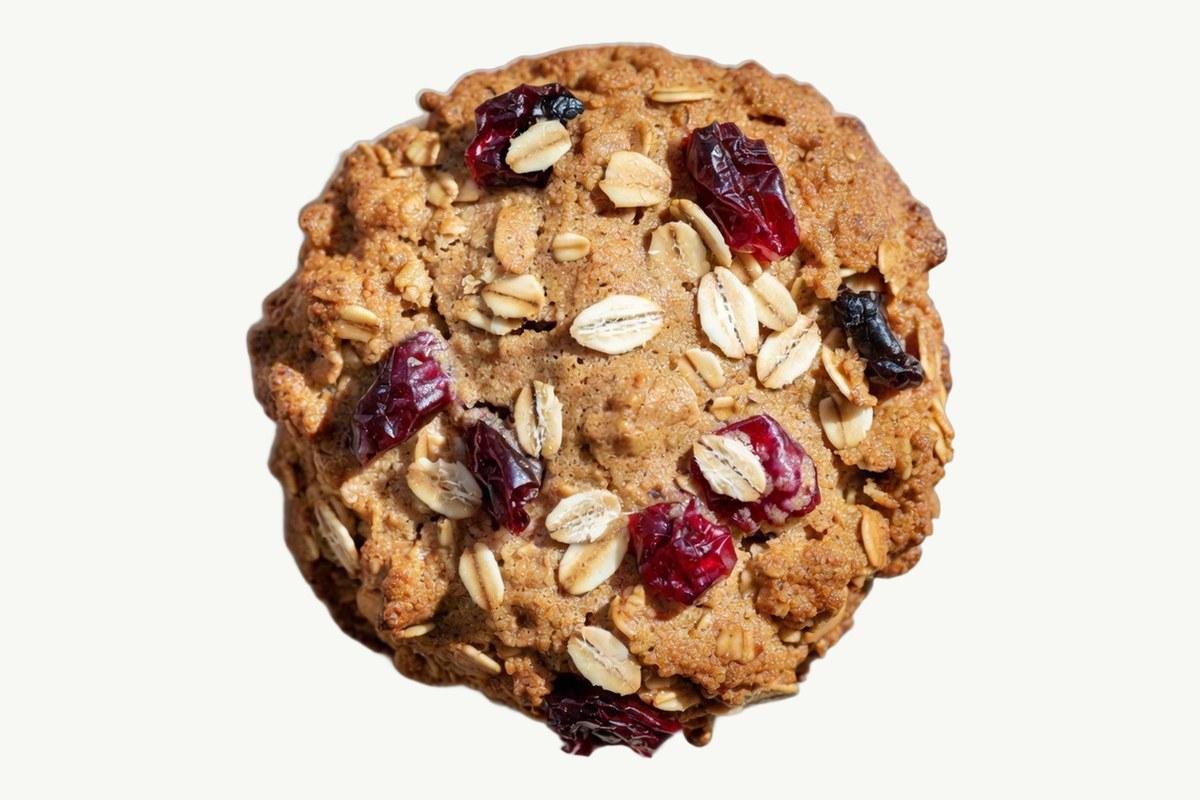
There is one instruction in an oat cookie recipe that almost everyone ignores, and it is the one that decides whether the result is chewy or gritty: let the dough sit before you bake it.
Oats are not flour. Flour hydrates in seconds — the particles are tiny and the starch is already damaged by milling. A rolled oat is a whole flattened grain with an intact structure, and water takes time to work into it. Mix a dough and bake it immediately and those oats go into the oven still dry in the middle, then finish baking dry, and you get the sandy, sawdust quality that puts people off oat cookies entirely.
Our Oats & Cranberry Cookie is 16 AED and 80 g. What follows is what the resting time does, what the cranberries need, and why it copes with being carried around better than most of our cookies.
What the rest actually achieves
Give an oat dough time and three things happen.
The oats soften. Water penetrates the flattened grain, the starch inside begins to hydrate, and the oat goes from a rigid flake to something pliable. Baked from that state it contributes chew rather than grit.
The dough firms. As the oats take up free water, the dough goes from slack to workable. This is not a side effect — it is why rested oat doughs spread less in the oven and hold a thicker, chewier shape. An unrested dough is wetter than it looks and will spread thin.
Flavour develops. Given time, enzymes in the flour and oats break some starch into simpler sugars, which deepens the toasted, faintly malty flavour that a good oat cookie has. It is a much milder version of what happens over a long fermentation in a bread like our Country Sourdough Loaf, but the direction is the same.
The trade-off is that a heavily rested oat dough eventually goes too far — the oats give up their structure and the cookie turns pasty. There is a window, and it sits in hours rather than days.
Why the cranberries are soaked first
Dried cranberries are dried for a reason: removing water makes them shelf-stable. Put them straight into a dough and they will start taking that water back from wherever they can get it, which means from the dough around them.
The visible result is a cookie with dry, tough patches immediately surrounding each piece of fruit, while the fruit itself stays leathery because it never got enough water to fully rehydrate. You get the worst of both.
Soaking the fruit before it goes in fixes both halves. The cranberry plumps to something closer to its original texture, so it is chewy rather than tough, and — because it is already full — it stops stealing moisture from the crumb during the bake and the following day.
Cranberries specifically are worth the trouble because they are sharp. Most dried fruit in a sweet cookie just adds more sweetness; cranberry adds acidity, and acidity is what stops an oat cookie tasting flat. The oats are mild and the sugars are heavy, and without something sour cutting across them the whole thing sits dully on the palate.
Why this one travels well
Of everything on our cookie board, this is the one we would put in a bag that is going to be carried around for hours.
Oats give it structure. A cookie built largely on soft flour and butter is fragile — it snaps and crumbles under pressure, which is why a delicate cookie arrives as pieces. The oat flakes act like fibres running through the crumb, and the result holds together when it is jostled.
It also has no molten component. A cookie with chocolate pieces is at the mercy of temperature: in a warm car or a school bag in a Dubai summer, those pieces soften and the cookie goes from a solid to something that marks whatever it is touching. Oats and rehydrated fruit do not do that. The cookie you packed is recognisably the cookie that arrives.
One thing travelling well does not settle is nuts. Our kitchen handles peanuts and tree nuts — the Pistachio Chocolate Chip Cookie and the Peanut Butter Cookie are both made there — and our product descriptions are not full ingredient lists, so we cannot call this cookie, or any other item, nut-free. If you are avoiding nuts, or packing for a school or nursery with a nut-free policy, ask us before you order.
Storage in a humid kitchen
Oat cookies have an unusual storage profile: they get better for a few hours, then decline slowly.
The improvement comes from the same moisture equalisation that changes every cookie overnight. In this one, water moving from the softer centre into the drier edges evens the chew out and the texture arguably peaks the day after baking rather than the hour after.
The decline is slower than most because the oats hold moisture well and there is no crisp shell to lose, unlike the sugar crust on a chocolate crinkle cookie, which humidity attacks first. Airtight at room temperature is right. Do not refrigerate — cold firms the fats and drives starch retrogradation, and a cold oat cookie is unpleasantly hard.
Freezing works well. Wrap individually, then thaw still wrapped at room temperature for about twenty minutes and warm briefly in a low oven if you like. Because there is no chocolate to overheat, this cookie is more forgiving when warmed than most of the board.
How to eat it
Room temperature is fine and warm is better. A few minutes in a low oven revives the toasted oat aroma, which is the best thing about it and the first thing to fade.
It goes with tea more comfortably than coffee — the tannins and the cranberry acidity work in the same direction — and it is the one cookie on the board that sits happily next to something savoury without seeming out of place. Crumbled over the Granola Parfait with Greek Yogurt it does an honest job as well.
Frequently Asked Questions
Why are my homemade oat cookies gritty?
The dough was baked too soon after mixing. Rolled oats are whole flattened grains and take time to absorb water, so baking immediately puts dry oats into the oven and they finish dry. Let the dough rest for at least an hour before portioning so the oats hydrate and soften.
Do I really need to soak the dried cranberries?
It makes a clear difference. Dried fruit rehydrates by pulling water out of the dough around it, leaving tough patches in the crumb and fruit that stays leathery. Soaking first means the fruit is already full, so it stays chewy and stops competing with the crumb for moisture.
Why does my oat dough spread into a thin wafer?
Usually an unrested dough. Before the oats have taken up their share of the water, the dough is far wetter than it appears and flows in the oven. Resting firms it as the oats hydrate, which is why rested oat doughs hold a thicker, chewier shape.
Does this cookie travel well in a bag or lunchbox?
For carrying, it is the one we would choose: there are no chocolate pieces to soften and smear in a warm bag, and the oat structure holds together far better than a delicate butter cookie. Nuts are a separate question. Our kitchen handles peanuts and tree nuts and our product descriptions are not full ingredient lists, so we cannot call it nut-free — for a nut-free school or anyone avoiding nuts, ask us before you order.
How long does it keep, and should it go in the fridge?
Airtight at room temperature for several days, and it arguably tastes best the day after baking once the moisture has evened out. Do not refrigerate — cold firms the fat and hardens the crumb. For longer storage, wrap individually and freeze, then thaw still wrapped at room temperature for about twenty minutes and warm briefly in a low oven if you like.
Order the oats and cranberry cookie
The Oats & Cranberry Cookie is 16 AED for 80 g, made with rested dough and soaked fruit because both of those are the difference between chewy and gritty. Compare it with the rest of the board in our guide to choosing cookies by texture, or order it from the shop.