6 August 2026
Sourdough Baguette in Dubai: Why It Behaves Differently
A sourdough baguette lives fast: thin crust, open crumb, and a few good hours. Here is how to buy one and how to bring it back.
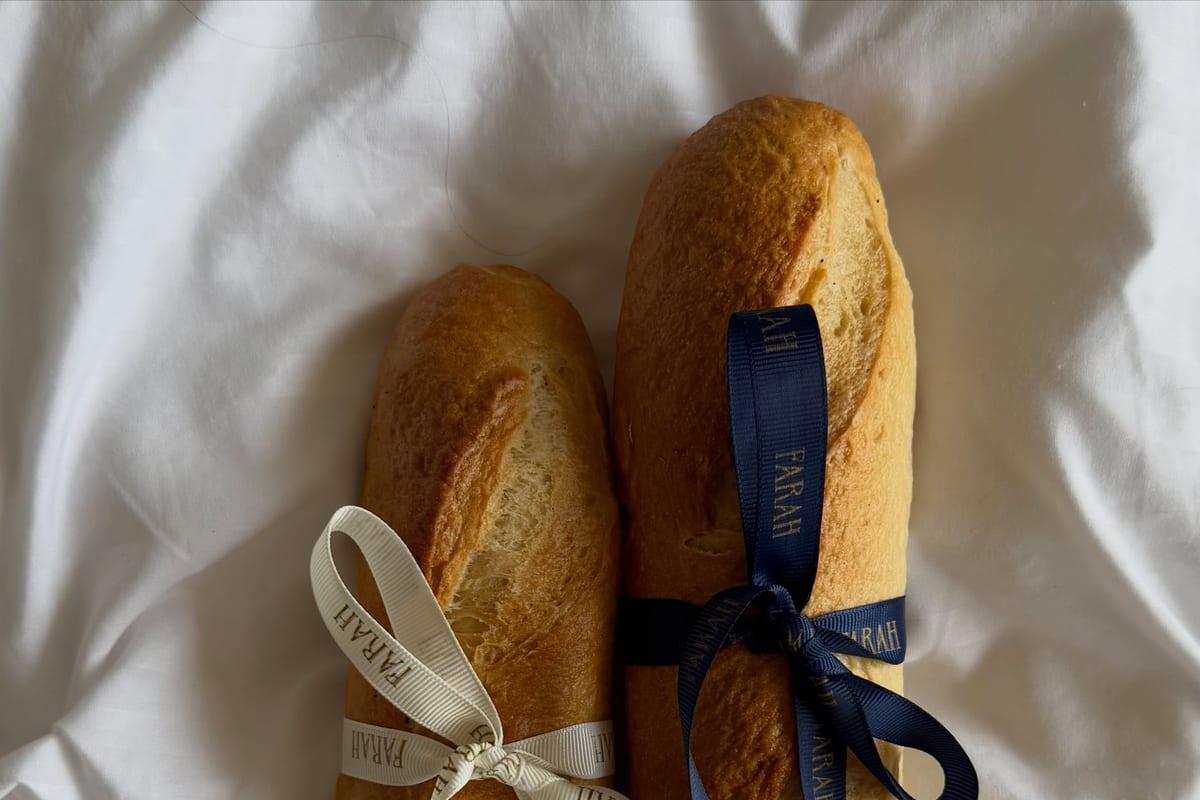
A sourdough baguette is not a normal baguette with a sour note added. It is a different loaf: fermented far longer, shaped with a lighter hand, built around a crust thin enough to shatter rather than crack. It also has a shorter life than almost anything else we bake. Here is how ours is made, how to judge one, and what to do with it after the first day.
Why a sourdough baguette is not simply a sour baguette
A classic baguette relies on commercial yeast and a poolish. It rises in a few hours, and the flavour comes mostly from the flour and the bake. A sourdough version replaces that yeast with a live culture of wild yeasts and lactic bacteria, which work slowly and make acids.
Those acids change the dough physically, not just in taste. Mild acidity tightens the gluten early on and then, as fermentation continues, begins to soften it. That narrow window is why sourdough baguettes are handled gently and shaped late. The acids also feed enzyme activity that breaks a little starch into simple sugars, which is why the loaf colours quickly and the crust tastes of caramel and toasted grain.
The flour, the hydration, and the long cold rest
Our Sourdough Baguette is 15 AED, made from a strong white flour in the French T65 style with roughly ten per cent stoneground wholemeal folded in for flavour. Hydration sits around 74 per cent, high for a baguette, and the reason the crumb opens up the way it does.
The levain is refreshed the evening before and used young, while it is sweet and just domed. Bulk fermentation runs three to four hours at 24-26°C with three sets of gentle folds, no aggressive kneading. Then the dough goes cold: fourteen to eighteen hours at 4°C. That retard does two jobs. It slows the yeasts so the bacteria keep building flavour, and it firms a wet, slack dough enough to be shaped into a baton without being crushed.
Shaping is a light roll and a stretch, never a tight cinch. Final proof is short. The loaves are scored with four shallow, near-horizontal cuts and loaded into a deck oven at 250°C with a heavy shot of steam, then vented and finished around 235°C for 22 to 24 minutes, until the internal temperature reads about 97°C. They cool on a rack, uncovered. If you have heard a baguette tick and crackle as it cools, that is the crust fracturing. Bakers call it singing, and it only happens when the crust is thin and dry.
How to tell a good one in your hands
Pick it up. It should feel light for its length; a heavy baguette means a dense, underfermented crumb. Press the side gently: the crust should crackle faintly and spring back, not dent like foam.
Look at the ears along the scores. Sharp raised lips mean the dough had strength and the oven had steam. Then the cut face: an open, irregular crumb with holes of several sizes, glossy where light hits it. Uniform pinholes across the slice usually mean commercial yeast did the work. Colour should be deep amber to chestnut. A pale baguette was pulled early and will go leathery within hours.
The honest truth: a baguette has one good day
A baguette is mostly crust. That is the point of the shape, and also its weakness. The crust that shatters at noon has, by evening, pulled moisture from the crumb and from the air, and gone soft and chewy. Sourdough holds on slightly longer than a yeasted loaf, because acidity slows the starch from recrystallising, but we are talking hours, not days.
So order it for the meal, not for the week. If you want bread that keeps its texture into the next day, a loaf with more crumb and less crust is the better tool: our Sourdough Ciabatta at 14 AED holds up far better for next-morning toast, for reasons our sourdough ciabatta guide explains. We bake in Dubai Silicon Oasis and deliver across Dubai, so it is easy to time the bread to the table.
Storing and reviving a baguette in Dubai humidity
Never put a baguette in the fridge. Starch retrogrades fastest just above freezing, and a baguette will go stale there within hours.
For the same day, leave it in the paper bag it arrived in, on the counter, out of direct sun. Paper lets the crust breathe. Plastic traps moisture against it and softens the crust within twenty minutes. In a humid coastal summer that happens fast, so if your kitchen is not air conditioned, use the driest room you have.
Beyond the same day, freeze early rather than late: cut the baguette in half, wrap it tightly, and freeze within about four hours of delivery. Freezing a stale baguette only preserves staleness.
To revive it, spritz the crust with water so it is damp but not soaked, then put it straight onto the oven rack at 200°C for five to seven minutes, or ten to twelve from frozen. The water turns to steam inside, the crumb softens, the crust re-crisps. Eat it within the hour, because the trick works once. For loaves that keep longer, our guide to storing bread in Dubai goes through them one by one.
What to serve it with
Cold butter and flaky salt, first and best. Otherwise soft cheese and honey, tomato soup, olive oil and za'atar, or split lengthways for a sandwich, since the open crumb catches dressing well. More on how we work is on our about page.
Frequently Asked Questions
How long does a sourdough baguette stay fresh?
At its best, a few hours. The crust is thin by design, so it softens once the loaf has cooled, and the crumb dries noticeably by the evening of the same day. Plan to eat it the day it arrives. If you cannot, freeze half of it early and revive it in a hot oven.
Can I freeze a sourdough baguette?
Yes, and it is the only storage method that really works. Cut it in half, wrap it tightly to keep ice crystals off the crust, and freeze within a few hours of delivery rather than the next day. Bake it straight from frozen at 200°C for ten to twelve minutes, no thawing needed.
What is the difference between a sourdough baguette and a normal baguette?
A normal baguette uses commercial yeast and rises in a few hours. A sourdough baguette uses a live starter and ferments overnight in the cold. That builds more flavour, gives a thinner and crisper crust, and produces an open irregular crumb rather than an even one. The taste is deeper and only lightly tangy.
How do I make a baguette crisp again?
Dampen the crust with water, then bake it directly on the oven rack at 200°C for five to seven minutes. The moisture becomes steam inside the loaf, softening the crumb while the outside dries and crisps. Avoid the microwave, which steams the crust soft and then turns the crumb rubbery as it cools.
Do you deliver fresh baguettes across Dubai?
Yes. We bake in Dubai Silicon Oasis and deliver across Dubai. Because a baguette is at its peak on the day it is baked, order it for the day you plan to eat it rather than stocking up, and pick a slot close to the meal you want it for.
Order a baguette for the table
Order the Sourdough Baguette at 15 AED for the day you plan to eat it, and leave it in its paper bag until the table is ready. Add a ciabatta if you want bread that carries into tomorrow. The full range is on the shop page.