16 September 2026
How to Store Bread in Dubai: A Baker's Guide, Loaf by Loaf
Humid air softens crusts and air conditioning dries crumbs, so here is how to keep every kind of bread, pastry and cake, and why the fridge is not the answer for bread.
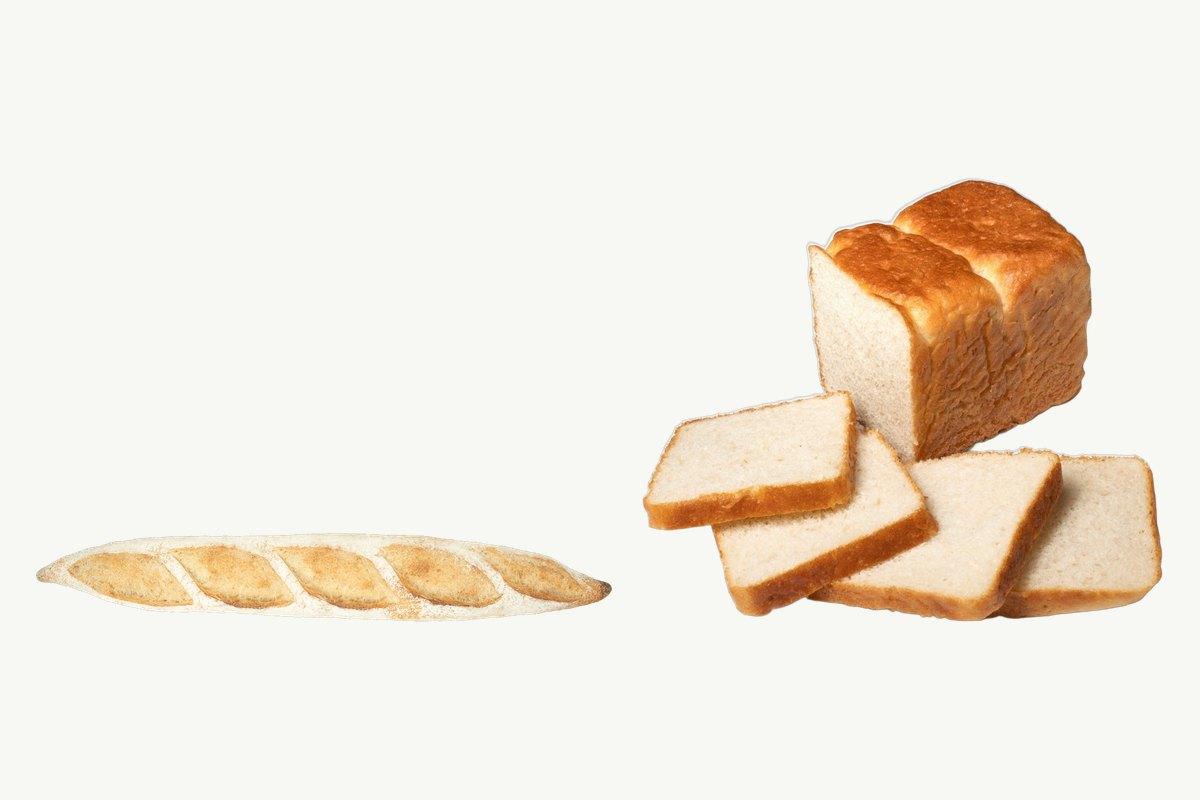
The two breads in the photograph above want opposite things. Our Sourdough Baguette at 15 AED has a crisp crust that a sealed plastic bag would turn leathery by morning. The White Toast Bread at 10 AED has only a thin, soft crust, and left open on a counter it dries at the cut face within hours.
So the short answer to how to store bread in Dubai: crusty loaves in cloth or paper, soft loaves in a sealed bag, both at room temperature and out of the fridge, and anything you will not eat in time sliced and frozen on the day it arrives.
What Dubai does to bread
Dubai gives bread two opposite climates. Outside, through the long summer, the air is hot and often very humid, which softens a crisp crust, makes sugary surfaces tacky, and feeds mould.
Inside, air conditioning dries the air as it cools it, so an uncovered loaf loses moisture through its cut face and an unwrapped cake dries at the edges by evening. The right wrapping depends on what needs protecting: a crust that must stay dry, or a crumb that must stay moist.
Against mould, keep bread where the air conditioning runs, and if mould appears, throw the loaf away: soft, porous bread can carry it below the visible spots.
Why bread goes stale, and why the fridge makes it worse
Staling is not mainly drying out. Baking swells starch with water, which softens the crumb; as the loaf sits, that starch slowly reorganises into firmer, partly crystalline structures. This is starch retrogradation, and it happens even in a sealed bag. It runs fastest just above freezing, exactly where a fridge sits, so refrigerated bread firms far sooner than bread on the counter.
Moisture also moves from crumb to crust, which is why a crackling crust turns leathery. Heat undoes much of the staling: warming the crumb through, to about 60°C, softens it again, for a while.
Cold does slow mould, but it stales bread so fast that the freezer is the better answer; toast bread toasts straight from frozen. The fridge has one proper job: food safety. Sandwiches with meat or cheese, and anything with cream, custard, cream cheese or yoghurt, belong in it.
Crusty sourdough: let it breathe
A hard crust must stay dry, so use a bare board, cloth or paper, never plastic; in a humid room, a cloth bag or bread tin protects the crust better than paper. Sourdough's acidity also helps hold off mould.
Big loaves. Our Country Sourdough Loaf at 25 AED is best on the day it arrives, but kept well it carries on into the next few days. Stand it cut side down on a wooden board for the first day, then move it into a cloth bag or bread tin, as our country sourdough guide explains.
Slim loaves. A sourdough baguette is mostly crust, so it has one good day: keep it in a paper bag or clean cloth and eat it with a meal. The Sourdough Ciabatta at 14 AED holds a little longer and still makes good toast the next morning; ciabatta revives well with a wet crust and a hot oven.
Soft and enriched breads: seal them in
Soft toast loaves have the opposite priority: no crackling crust to lose, and a crumb that must stay moist in dry indoor air. Keep them in a sealed bag in an air-conditioned room, away from sunny windows and air-conditioning vents. A sealed bag in a warm kitchen traps the moisture mould needs, so if the room runs warm, freeze sooner. That goes for our Multi-Seed Whole Wheat Toast Bread at 32 AED too.
Fat, milk and egg slow staling. The Japanese Milk Bread Loaf at 18 AED is made with tangzhong, a cooked flour paste that holds extra water, which is why milk bread stays soft longer than a plain loaf. The Brioche Toast Bread at 35 AED, made with butter and eggs, wants tight wrapping, never a hot car, and freezes better than most breads.
A plain white toast loaf firms sooner: keep a day or two's worth in its bag, and slice and freeze the rest on the day it arrives.
Focaccia: the oil buys you time
Our Focaccia · Rosemary & Olive Oil at 12 AED is made with extra virgin olive oil, and fat in the crumb slows staling, so it forgives an overnight wait better than a lean loaf. Keep it at room temperature in paper or under a cloth; four or five minutes in a hot oven warms the crumb through and re-crisps the top, bringing focaccia back close to fresh.
Croissants and pastries: today, or the freezer
Laminated pastry is built from paper-thin layers that take up humidity quickly, so a croissant left out in humid air goes leathery within hours. That is why a croissant belongs in a paper bag, never a sealed plastic box, and our Croissant at 14 AED is for eating the day it arrives.
Otherwise, wrap and freeze plain and almond croissants the same day and revive them in the oven. Glazed or chocolate-coated pastries freeze less well, because thawing dulls chocolate and leaves a glaze tacky, so eat those on the day if you can; if not, wrap them the same day and thaw them in the wrapping, as our pistachio croissant guide explains.
The sugary topping on a cookie croissant draws moisture, so revive it unwrapped, in dry heat. A chocolate croissant needs care too: chocolate melts just below body temperature, so give it a short, gentle warm and a few minutes' rest to set again.
Sandwiches: eat the same day, and keep them cold
Sandwiches are the one thing in our bread range that belongs in the fridge. Chicken, turkey, ham and cheese are perishable, and standard food-safety guidance is no more than two hours out of the fridge in total, or one hour above 32°C, the figure that counts in a Dubai summer.
Eat a sandwich the day it arrives. Unless you are eating it straight away, refrigerate it and take it out ten to fifteen minutes before eating so the bread softens and the flavour returns.
The bread decides texture, not safety. Kept cold, a ciabatta or focaccia base holds its structure best, so our Ciabatta Turkey & Cheese Sandwich at 12 AED and Focaccia Smoked Turkey Sandwich at 17 AED are the two to choose when lunch is hours away: ciabatta's open crumb takes up juice slowly, and focaccia copes with a wait better than a soft loaf. Soft white bread and brioche sandwiches are for eating soon; how each sandwich bread behaves explains why.
Cake loaves and cookies: airtight, at room temperature
An airtight container at room temperature protects cake loaves and cookies from both problems at once. The exception is anything with cream, custard or cream cheese frosting: keep it covered in the fridge, and take it out ten to fifteen minutes before serving. A yoghurt parfait needs only about five minutes out.
Keep a cake loaf such as our Marble Cake Loaf at 35 AED whole for as long as you can, with cling film pressed to the cut face, in a tin for a few days. Then slice, wrap the slices individually and freeze. Skip the fridge, which firms the butter and stales the crumb of a marble cake loaf.
Store crisp and soft cookies apart so moisture does not move between them; they freeze well wrapped individually.
How to freeze bread, and how to bring it back
Freezing all but stops staling, but it only preserves what goes in, so freeze whatever you will not eat in time on the day it arrives, not on day three.
- Slice first. Frozen loaves are hard to cut safely. Halve baguettes; wrap croissants and cake slices individually.
- Wrap tightly and press out the air. Exposed surfaces dry out and pick up freezer smells.
- Eat it within a week, the guide on our product pages.
- Toast slices straight from frozen, on a slightly longer setting.
- Thaw an unsliced loaf or half loaf in its wrapping, so the condensation that forms on cold food in humid air settles on the wrapper, not the crust, then refresh it in the oven. Baguette halves, plain and almond croissants and focaccia squares go in straight from frozen.
To revive each kind, checking early because ovens vary:
- Crusty loaves: wet the crust, then 180 to 200°C for five to eight minutes for a baguette, ciabatta or part loaf, around ten for a whole large loaf so the centre warms through, or ten to twelve for half a baguette from frozen.
- Croissants: 160 to 170°C for four to eight minutes, the longer end from frozen.
- Brioche: toast slices on a low setting, or mist a whole loaf and warm it at about 160°C for six to eight minutes.
- Focaccia: a few drops of water on top, then about 200°C for four to six minutes, or 180°C for eight to ten from frozen.
- Cake slices and cookies: thaw, still wrapped, at room temperature for about twenty minutes, then warm them briefly if you like.
Eat revived bread within the hour, and keep crusty bread and pastry out of the microwave, which leaves them tough as they cool.
Frequently Asked Questions
Why does bread go stale faster in the fridge than on the counter?
Staling is mostly starch slowly firming as the loaf ages, and that runs fastest just above freezing, which is exactly where a fridge is kept. Keep bread on the counter, slice and freeze what you cannot finish, and save the fridge for sandwiches and anything creamy.
Is a paper bag or a plastic bag better for bread?
It depends on the bread. Crusty loaves want cloth or paper and croissants a paper bag, because plastic traps moisture and softens the crust; in a humid room, cloth or a bread tin beats paper. Soft toast loaves, milk bread and brioche want a sealed bag to stay moist.
How long does fresh bread last in Dubai's climate?
Every loaf is best on the day it arrives, and a baguette or croissant has only that one good day. A ciabatta still toasts well the next morning, a large sourdough loaf and soft enriched loaves carry on into the next few days, and a plain white loaf firms sooner. Freeze the rest on the day it arrives.
How do I freeze bread and bring it back?
Slice what you will not eat in time and freeze it, tightly wrapped, on the day it arrives, then toast slices from frozen. Revive a crusty loaf with a wet crust and five to eight minutes at 180 to 200°C, longer for a whole large loaf. Skip the microwave.
Why does bread go mouldy so fast in Dubai, and can I cut the mould off?
Mould needs warmth and moisture, and a sealed bag in a warm kitchen supplies both. Keep bread in an air-conditioned room and freeze what you will not eat in time. If you see mould, throw the loaf away: soft bread can carry it below the visible spots.
Order bread you know how to keep
Everything we sell is baked to order, and our earliest delivery window is the next morning; we do not offer same-day delivery. Eat the baguette and croissants first, the Country Sourdough Loaf over the next few days, and put the rest of a toast loaf into the freezer in slices. How our fresh bread delivery works covers delivery windows and a week of bread in one order, and the shop has the full bake.
Our kitchen handles wheat, gluten, eggs, dairy, nuts, peanuts, soy, sesame and seeds, and we cannot guarantee any item is free from traces of them. If anyone has a food allergy or intolerance, ask us before ordering, and do not rely on a product description alone.