Japanese Milk Bread Dubai: Why Tangzhong Keeps It Soft Longer
Tangzhong is why a Japanese milk bread loaf pulls apart in strands and resists staling in Dubai's heat.
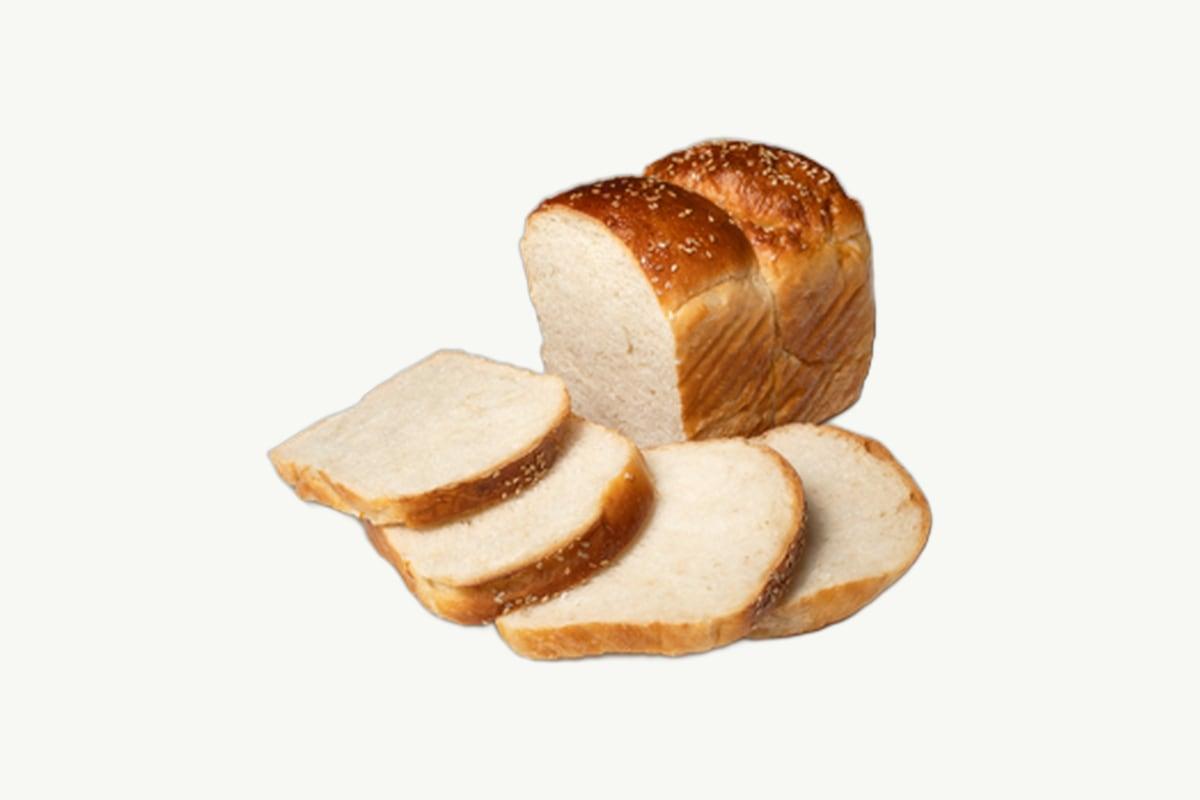
Japanese milk bread stays soft for days because a portion of its flour is cooked with liquid into a paste before mixing. That paste, called tangzhong, locks water into the dough that ordinary bread simply loses. In a city where a loaf on the counter can go dry and crumbly by the second morning, that single technique is the whole argument for baking it this way.
Our Japanese Milk Bread Loaf is 18 AED, baked in a tall tin, pale gold on top and cream-white inside. Below is what actually happens in the dough, and how to choose between it and the other two loaves on our bench.
What is tangzhong, and what does it actually do?
Tangzhong is a cooked flour paste. You take a small share of the recipe's flour and a larger share of its liquid, usually around one part flour to five parts liquid by weight, and heat them together while whisking until the mixture thickens to something between custard and wallpaper paste. It goes off the heat at roughly 65C, the point where wheat starch granules swell and gelatinise.
Gelatinised starch holds far more water than raw starch does, and it holds it in a form the dough can keep hold of through mixing, proving and baking. That means we can push total hydration well past what a plain white dough would tolerate — often into the 75 to 80 per cent range once the milk, egg and butter are counted — without the dough turning slack and unmanageable. More water in the finished crumb means a softer bite on day one and a slower slide towards dryness afterwards.
The yudane method is its close cousin: boiling water poured straight onto flour at roughly equal weights, then rested overnight. Same chemistry, slightly different handling, and a marginally sweeter, chewier crumb because the long rest lets enzymes work on the gelatinised starch.
Why does bread go stale, and why does this loaf resist it?
Staling is not drying out, though the two travel together. It is retrogradation: the starch that gelatinised in the oven slowly recrystallises as the loaf cools and sits, squeezing out water and stiffening the crumb. It happens fastest between about 0C and 10C, which is exactly why a fridge is the worst place for bread and why so many Dubai kitchens unintentionally ruin a good loaf.
Tangzhong slows this twice over. The pre-gelatinised starch carries extra water that stays available in the crumb, and the enrichment — milk solids, egg, butter — coats starch chains and gets in the way of them re-knitting. The practical result in a Dubai flat: the loaf is still genuinely soft on day three, where a lean white loaf is noticeably firm by day two.
How we build the dough
We use a strong bread flour, around 12.5 per cent protein. That matters more than it sounds. Milk bread is a heavily enriched dough, and fat weakens gluten; without a flour that can build a strong network first, the loaf collapses into something dense and greasy rather than rising into fine, silky strands.
The order of work is deliberate. Tangzhong is cooked and cooled. Flour, milk, sugar, salt, yeast and egg are mixed and developed until the gluten is well along. Only then does soft butter go in, a piece at a time, so it lubricates an already-formed network instead of preventing one. The dough is mixed to a full windowpane — stretched thin enough to read light through without tearing. Milk bread is one of the few doughs where that level of development is not optional.
Bulk fermentation is moderate, not long. This is not sourdough and we are not chasing acidity. The dough is then divided, rolled flat, folded and rolled again into spirals, and set side by side in the tin. That rolling creates the layered grain — the reason a good milk bread pulls apart in strands rather than breaking in chunks.
It bakes lower than a crusty loaf, around 170 to 180C, because sugar and milk solids brown quickly. The interior sets at about 90C while the crust stays thin, tender and pale gold. A dark crust on milk bread means it was baked too hot.
Milk bread, white toast or brioche: which should you buy?
Three soft loaves, three different jobs. Choose by what you plan to do with it.
Japanese Milk Bread Loaf — 18 AED
The lightest of the three by texture and the most versatile. Faintly sweet, milky, with a crumb that compresses like a cushion and springs back. It makes the best sandwich bread of the three because it holds fillings without fighting them, and it makes very good French toast since the crumb soaks custard without disintegrating. It is also the one that survives longest in Dubai's climate. If you are buying one loaf for the week, buy this one.
White Toast Bread — 10 AED
A straightforward, lean-leaning white loaf and the most affordable at 10 AED. Cleaner and less sweet, which suits savoury toppings, cheese toasties and children who object to anything with character. It is the right choice for everyday toast at volume; our guide to choosing a loaf that toasts well explains why a fine, tight crumb browns so evenly. It will firm up faster than the milk bread, so plan to work through it in two or three days or slice and freeze.
Brioche Toast Bread — 35 AED
The richest, at 35 AED, and the most distinctly flavoured — butter and egg forward, with a golden, slightly custardy crumb. Brioche is a treat loaf: toasted with jam, turned into burger buns, or used for bread and butter pudding. It is not the neutral background milk bread is. If you want richness to be the point, choose brioche, and our brioche guide explains how the butter ratio shapes it. If you want softness without richness dominating, choose milk bread.
Keeping it fresh in Dubai's heat and humidity
Never refrigerate it. The fridge sits squarely in the temperature band where starch retrogrades fastest, and it will stale a loaf faster than the counter will.
Keep the loaf whole until you need it — every cut face loses moisture. Store it in a sealed bag or airtight tin at room temperature, away from direct sun and out of the path of an air conditioning vent, which is drier than most people realise. A paper bag is the wrong choice indoors here; it lets the crust go leathery.
Beyond three days, slice the loaf, wrap it tightly and freeze it. Freezing halts retrogradation almost entirely, and slices toast straight from frozen. Five minutes in a hot oven also reverses much of the staling, though the loaf firms again once cooled. Our loaf-by-loaf guide to storing bread in Dubai covers the rest of the bench.
What to eat it with
Thick slices, lightly toasted, with butter and a little salt is the honest answer. Beyond that, it makes an excellent egg sandwich in the Japanese style: crusts off, soft-boiled egg mashed with mayonnaise. It is very good with labneh and date syrup. For wet fillings — tomato, cucumber, tuna — butter the cut faces first, so the fat forms a barrier and the sandwich holds up for hours in a lunch box.
We bake in Dubai Silicon Oasis and deliver across Dubai, and orders are baked fresh for the day they are due. More on how that works on our delivery page, and more on how we bake over on the blog.
Frequently Asked Questions
What is the difference between tangzhong and yudane?
Both pre-gelatinise starch, but tangzhong is cooked on the hob using roughly one part flour to five parts liquid, whisked until it thickens. Yudane pours boiling water onto flour at about equal weights and rests it, often overnight. Tangzhong gives a cleaner, lighter crumb; yudane tends to be slightly sweeter and chewier.
How long does Japanese milk bread stay soft?
Kept whole in a sealed bag at room temperature, it is genuinely soft on day three and still pleasant on day four, which is longer than a lean white loaf manages. The cooked flour paste holds extra water in the crumb and the enrichment slows starch recrystallisation. Freeze sliced portions for anything beyond that.
Should milk bread go in the fridge?
No. Fridge temperatures fall in the range where starch recrystallises fastest, so refrigerating actually stales milk bread more quickly than leaving it on the counter. Store the loaf whole in an airtight bag or tin at room temperature, away from sunlight and air conditioning vents. Freeze it if you need more than a few days.
Is milk bread the same as brioche?
No. Brioche carries far more butter and egg, giving a rich, golden, custardy crumb where the fat is the main flavour. Milk bread is enriched with milk and a little butter and sugar, and relies on tangzhong for softness rather than richness. Milk bread is the more neutral, versatile sandwich loaf.
Can I use Japanese milk bread for French toast?
Yes, and it works very well. Its fine, cushioned crumb absorbs custard readily but holds its structure instead of falling apart in the pan. Cut it thick, around three centimetres, and let the slices sit in the custard for a minute or two. Brioche is the classic choice and gives a richer, denser result.
Order a loaf this week
The Japanese Milk Bread Loaf is 18 AED and baked fresh in Dubai Silicon Oasis. Order it alongside the White Toast Bread at 10 AED if you want a lean everyday option in the house too. Browse the full bench on our shop page and we will bring it to you across Dubai.