17 August 2026
Brioche in Dubai: Why the Butter Ratio Changes Everything
Brioche is defined by its butter ratio — and that one number explains the price, the mixing, the crust and the toaster.
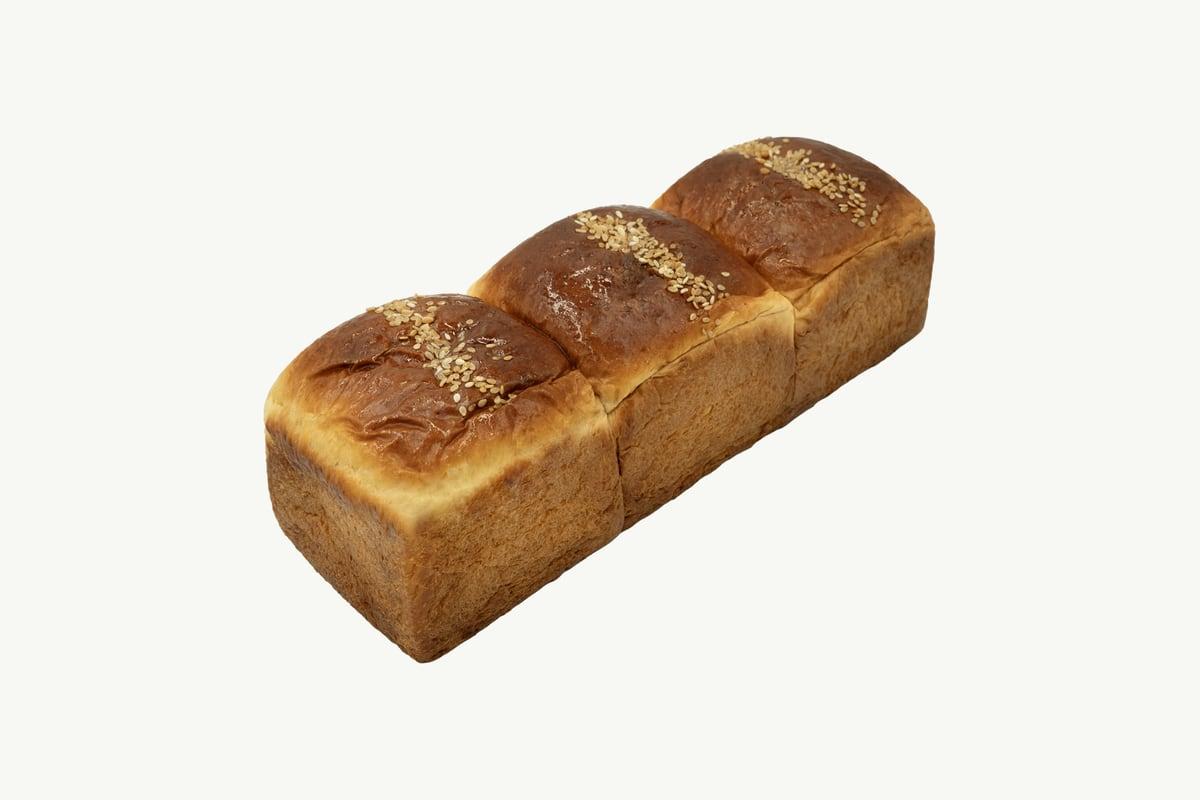
Brioche is defined by one number: how much butter goes into the dough. Push that number high enough and the dough stops behaving like bread and behaves like a cold, fragile emulsion — one that can split in the mixer, sag in the prove, and scorch in a toaster that handles a plain loaf perfectly. That ratio explains the price of our Brioche Toast Bread at 35 AED, the overnight rest it needs, and almost everything you notice when you cut into it.
What actually makes a loaf brioche
Bread at its leanest is flour, water, salt and yeast. Brioche replaces most of the water with eggs and milk, then adds butter and sugar on top. Bakers measure everything against the weight of the flour, and a serious brioche sits in the region of half its flour weight in butter, with eggs doing most of the hydrating. That is not a garnish. It is close to a third of the finished dough.
Every one of those additions fights the gluten. Fat coats the protein strands and stops them linking. Sugar competes with the flour for water and pulls it away from the developing network. Egg yolks bring lecithin, a natural emulsifier, which is the one ingredient working in our favour — it holds the fat and water phases together and gives the crumb its yellow and its silk. Egg whites bring protein that sets in the oven and helps hold the structure a lean loaf would get from gluten alone.
So you need a strong flour, roughly 12 to 13 per cent protein, worked hard early, because you are about to spend twenty minutes deliberately weakening it.
Why the butter goes in last, and why the dough must stay cold
The order is not tradition, it is physics. We mix flour, eggs, milk, sugar, salt and yeast into a stiff, unpromising dough and develop it to full gluten before a single gram of butter appears. If butter goes in early it lubricates the protein, the network never forms, and you end up with a heavy, greasy crumb that will not rise.
Once the dough passes the window test — stretched thin enough to see light through without tearing — the butter goes in slowly, in small pieces, each addition absorbed before the next. It has to be at the right consistency: pliable and cool, around 16 to 18°C, so it smears into sheets between the gluten layers rather than melting into a pool. Cold-from-the-fridge butter tears the dough. Soft butter greases it.
The whole time, the dough is fighting heat. Friction from the hook alone can raise dough temperature several degrees over a long mix, and in a Dubai kitchen the ambient air is against you before you start. We aim to finish below 24°C, chilling the eggs and milk and stopping to cool the bowl if the dough climbs. Above roughly 26°C the emulsion breaks: butter leaves the network, the dough goes slack and shiny, and it weeps fat in the oven instead of rising. There is no rescue for a broken brioche — you start again, which is another reason the loaf is priced as it is.
Why brioche needs a long, cold, slow prove
A dough this rich cannot be rushed. Sugar and fat both slow yeast activity, so fermentation takes longer for the same rise. And a warm brioche dough is impossible to handle — the butter softens, the dough sticks to everything, and shaping tears the structure you spent so long building.
Our answer is a long retard: the mixed dough goes into the fridge, covered, for twelve to sixteen hours at around 4°C. Three things happen overnight. The butter firms up so the dough can be divided and shaped cleanly. Fermentation continues slowly, building the faintly winey background flavour that a fast-proved brioche never develops. And the flour finishes hydrating, which gives the crumb its even, tight, shreddable texture rather than an open, irregular one.
Shaped cold, the loaf proves at a gentle 24 to 26°C for two to three hours — no hotter, or the butter leaks before the crumb sets. It is ready when a fingertip press springs back slowly and only partly.
Why it burns in a toaster and shines as French toast
Brioche bakes cooler than lean bread and browns faster. We bake at around 170 to 175°C, well below the 230°C-plus a sourdough sees, and the loaf still colours deeply. The sugars caramelise early and the eggs supply plenty of protein for the Maillard reaction, so the crust develops long before the centre reaches the 90 to 93°C at which the crumb sets. Push the oven hotter and you get a dark loaf that is raw in the middle.
The same chemistry is why a standard pop-up toaster is unkind to it. On the setting that suits a plain white loaf, brioche is already dark at the edges while the middle is barely warm. Drop the setting by a third, or toast it flat under a grill or in a dry pan, watching it rather than trusting the timer. Thirty seconds is the difference, and our guide to how brioche compares with leaner toast breads shows where each one fits.
That richness is also why brioche makes the superior French toast. The crumb is close and strong enough to absorb custard without collapsing, and the fat already in the bread keeps the interior tender while the surface crisps. Use slightly stale slices — day-two brioche drinks the custard better than fresh — and give them a couple of minutes a side over medium heat, not high.
The same crumb takes a filling without going soggy, which is why it carries our Brioche Smoked Chicken Sandwich at 12 AED.
How brioche keeps in Dubai's heat, and how to revive it
Brioche stales differently from a lean loaf. In plain bread, staling is starch retrogradation — the gelatinised starch recrystallises and the crumb turns firm and crumbly, often within a day. Fat interrupts that process, so brioche stays soft noticeably longer. What it does instead is dry at the crust and, eventually, lose the freshness of the butter itself. The enemy is air, not time.
So wrap it properly. A paper bag alone will let it dry out in a Dubai flat; a sealed bag left in a kitchen sitting in the high twenties, with the humidity that comes off the coast, invites mould. Keep the loaf tightly wrapped at cool room temperature for two to three days, away from the window and any direct blast from the air conditioning.
Beyond that, freeze it. Slice first, wrap in two layers, and freeze on the day it arrives — brioche freezes better than almost any other bread precisely because the fat protects the crumb structure. Toast slices from frozen on a low setting. Avoid the fridge: roughly 0 to 5°C is where starch retrogrades fastest, so refrigerating stales bread quicker than the counter does. To revive a whole loaf, mist the crust with water and give it six to eight minutes at 160°C. Our guide to storing bread in Dubai takes every other loaf the same way.
Brioche or Japanese milk bread: pick the right loaf
These two get confused constantly, and they are not interchangeable. Our Japanese Milk Bread Loaf at 18 AED is built on a cooked flour-and-liquid paste that pre-gelatinises starch so the dough can carry far more water. Its softness comes from moisture: light, faintly sweet, cotton-textured, and the better loaf for everyday sandwiches or a plain slice with jam.
Brioche gets its softness from fat. It is denser in the hand, richer on the palate, yellower in the crumb, and it holds up to heat, custard and heavy fillings in a way milk bread does not. Choose brioche for French toast, for bread-and-butter pudding, and for a slice worth eating on its own. Choose milk bread when the bread should stay in the background — and note the price difference is butter, nothing else. We deliver both across Dubai from our kitchen in Dubai Silicon Oasis; areas and timings are on the delivery page.
Frequently Asked Questions
Why is brioche more expensive than other bread?
Butter and eggs make up a large share of the dough by weight, and both cost far more than flour. The process is longer too: a full gluten development, a slow butter incorporation, an overnight cold retard and a careful prove make it a much longer bake than a plain loaf, with a real risk of a broken batch.
Can I toast brioche in a normal toaster?
Yes, but drop the setting by about a third. The sugar and egg in the crumb brown much faster than plain bread, so on a standard setting the edges scorch before the centre warms through. Better still, toast it flat in a dry pan or under a grill where you can watch it and stop at the right moment.
How should I store brioche in Dubai's humidity?
Keep it tightly wrapped at cool room temperature, away from windows and direct air conditioning, for two to three days. Do not leave it in an open paper bag, which dries the crust quickly in air-conditioned air. Avoid the fridge entirely — that temperature range makes bread go firm faster, not slower.
Should I choose brioche or Japanese milk bread?
Choose brioche when the bread should taste of something: French toast, rich sandwiches, bread pudding, or a slice on its own. Choose Japanese milk bread when you want a light, soft, neutral loaf for everyday sandwiches and toast. Brioche is softened by fat, milk bread by moisture, and they behave differently under heat.
Can brioche be frozen, and how do I revive it?
It freezes better than most breads because the fat protects the crumb. Slice on the day it arrives, wrap in two layers and freeze, then toast slices straight from frozen on a low setting. For a whole loaf, mist the crust with water and warm it at 160°C for six to eight minutes.
Order a brioche loaf from Farah Bakery
Our Brioche Toast Bread is 35 AED, baked in small batches because the mix and the overnight retard set the pace. Order it with the rest of the day's baking from the shop. Slice what you need and wrap the remainder for the freezer the same day.