Focaccia in Dubai: Hydration, Olive Oil and Three Toppings
Focaccia is defined by hydration, a long cold prove and olive oil — the toppings are the last thing that matters.
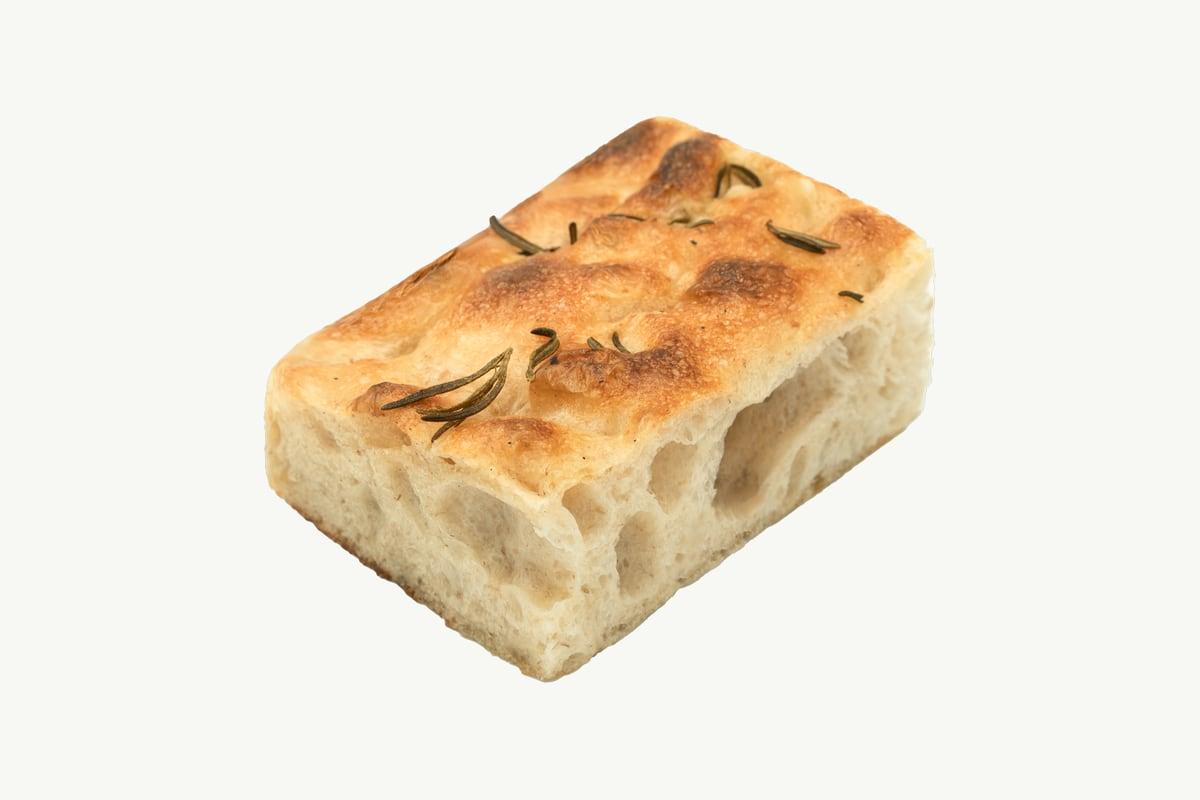
Focaccia is not a topping platform. It is a very wet dough, a long cold prove and a great deal of olive oil, and almost everything that makes it good is settled before anything is scattered on top. Get the water and the oil right and a rosemary square is the best thing on the table. Get them wrong and no amount of tomato or mushroom will rescue it. Here is how we build it in Dubai Silicon Oasis, and how each of our three toppings behaves once the oven door shuts.
Why focaccia needs 80 per cent hydration or more
Hydration is baker's shorthand for the weight of water against the weight of flour. A sandwich loaf sits around 62 per cent. A country sourdough might reach 75. Focaccia starts at about 80 and we push ours into the mid-eighties, the point where dough stops behaving like dough and starts behaving like thick batter.
That water is doing structural work. It lets the gluten network stretch far enough to hold enormous, irregular bubbles rather than the small even ones you get in a tin loaf. It keeps the crumb custardy near the base while the top dries into a thin crisp lid. And it buys time in a hot climate, because a wetter crumb takes longer to go stale.
The trade-off is that you cannot knead it in the usual sense. We mix strong wheat flour of roughly 12.5 per cent protein to a shaggy mass, rest it thirty minutes so the flour hydrates fully, then add salt and oil and develop the gluten with folds in the bowl — four sets, twenty minutes apart. No dough hook could handle it without tearing.
Olive oil is the second non-negotiable. It goes into the dough, under the dough in the tray, and over the dough before baking. It shortens the crumb slightly, which is why focaccia tears rather than shreds, and it carries herb flavour through every crumb instead of leaving it stranded on the surface.
The cold prove is where the flavour comes from
Once the folds are done, the dough goes cold. Ours rests in the tray, covered, between eighteen and twenty-four hours at fridge temperature.
Cold slows the yeast to a crawl but barely slows the enzymes. Amylase carries on breaking starch into simple sugars, protease softens the gluten so the dough relaxes into the corners of the tray on its own, and bacteria produce the organic acids that give a long-proved focaccia its faint savoury depth. A four-hour warm prove gives you bread that tastes of yeast. A twenty-hour cold one gives you bread that tastes of wheat.
The cold prove matters more in the Gulf than in Liguria. A kitchen at 24°C with the air conditioning running is still a fast fermentation environment, and outside that, dough runs away from you within the hour. The tray then sits at room temperature for an hour before shaping — long enough for the gas to become mobile again, not so long that the structure collapses.
Dimpling is not decoration
The dimples are the point. Oiled fingertips press straight down through the dough to the tray, firmly, all over. It feels violent. It is meant to.
Three things happen. The dimples redistribute the largest bubbles so the crumb bakes evenly instead of forming one cavern under a raft of crust. They lock the dough to the base so it does not shrink back. And each well holds a small pool of olive oil, which is what turns the surface golden and blistered rather than merely dry. Press timidly and the oil runs off, the bread domes, and you have made a thick flatbread instead.
A bake hot enough to fry the base
We bake at 240°C on a preheated deck, in a well-oiled steel tray. That combination does something a domestic oven rarely manages: the oil under the dough gets hot enough to fry the base while the top bakes.
That fried base is the texture people cannot place — a thin, crisp underside that gives way to a soft interior. It only happens if the tray is properly oiled and the heat comes from below. A cold tray on a middle shelf steams the base instead and you lose it.
Twenty minutes or so, until the top is deep gold and the corners a shade darker. Out of the tray immediately onto a rack, or trapped steam softens the crust you just built. Then a last brush of raw olive oil while it is hot.
How the three toppings behave in the oven
Each topping is a different problem, and each changes how the dough underneath bakes. One rule covers all of them: any finishing salt goes on just before the bake, never earlier, because salt scattered onto proving dough draws water out of the surface and leaves grey patches.
Focaccia · Rosemary & Olive Oil at 12 AED is the classic, and the one most often ruined. Rosemary needles sitting proud on the surface at 240°C scorch and turn bitter within minutes. We press them down into the dimples with the oil, where they steep rather than burn and the resin carries through the crumb.
Focaccia · Cherry Tomato at 12 AED has the opposite problem: water, released straight down into an already wet dough. We halve the tomatoes, salt them and roast them slowly before they go on so most of their water has already gone, then settle them into the oiled dimples. Skip that and you get a soggy seam under every tomato.
Focaccia · Mushroom at 12 AED is the one whose topping must be cooked before it touches the dough. Raw mushrooms are mostly water and take longer to brown than the bread takes to bake, so they would steam the crumb and come out pale. Ours are sautéed hard until the water has gone and the edges have caught colour, then cooled.
Keeping focaccia in Dubai, and what to eat it with
Focaccia is at its best three to four hours out of the oven, when the crust has settled but the oil has not fully soaked in. On the same day it needs nothing.
After that, humidity is the enemy of the crust and air conditioning the enemy of the crumb. Keep it in paper inside a loosely closed container at room temperature, never in the fridge, where starch retrogrades fastest. To bring it back, sprinkle a few drops of water on top and give it four or five minutes in a hot oven. Beyond a day, wrap squares tightly and freeze them flat.
To eat: split a rosemary square for sandwiches, mozzarella and peach, or roast vegetables, or serve it with soup, roast chicken, or good olive oil for dipping. The tomato and mushroom versions want little beside a green salad. We deliver across Dubai from Dubai Silicon Oasis, and focaccia travels better than most breads because the oil keeps it supple in the box.
Frequently Asked Questions
What is the difference between focaccia and pizza dough?
They share ingredients but not proportions or handling. Pizza dough runs drier, around 60 to 65 per cent hydration, and is stretched thin so it bakes fast and crisp. Focaccia sits at 80 per cent or more, holds far more olive oil, proves in a tray rather than on a peel, and bakes thick with an open, moist crumb.
How do I reheat focaccia so it crisps up again?
Sprinkle a few drops of water over the top of the square, then bake at around 200°C for four to five minutes on a tray or directly on the oven shelf. The water turns to steam and softens the crumb while the dry heat re-crisps the surface. Avoid the microwave, which makes it tough and leathery.
How long does focaccia stay fresh in Dubai's humidity?
Best on the day it is baked, and good the following day if it is stored properly. Keep it in paper inside a loosely closed container at room temperature, out of direct sun and away from the air conditioning vent. Do not refrigerate it. Anything you will not eat by then is better frozen than left out.
Can I freeze focaccia?
Yes, and it freezes better than most enriched breads because the olive oil protects the crumb. Cut it into squares, wrap each one tightly so no air reaches the surface, and freeze flat on the day it arrives. Reheat straight from frozen at 180°C for eight to ten minutes without thawing first.
Where can I buy fresh focaccia in Dubai?
Farah Bakery bakes focaccia in Dubai Silicon Oasis, and our online shop currently lists three versions — rosemary and olive oil, cherry tomato and mushroom — each at 12 AED. Everything is baked to order and there is no same-day delivery, so order ahead and choose a delivery window at checkout.
Order a tray-baked square this week
If you have never had focaccia made this way, start with Focaccia · Rosemary & Olive Oil at 12 AED — pressed herbs, oil-pooled dimples, a base fried crisp in the tray. Add a cherry tomato square and you have the makings of a table. The full range is on our shop page, and every square is baked to order.