26 August 2026
Rosemary Focaccia in Dubai: Why the Dimples Matter
The holes pressed into focaccia are not decoration — they are how the oil gets inside. Here is what the dimples, the oil and the rosemary actually do.
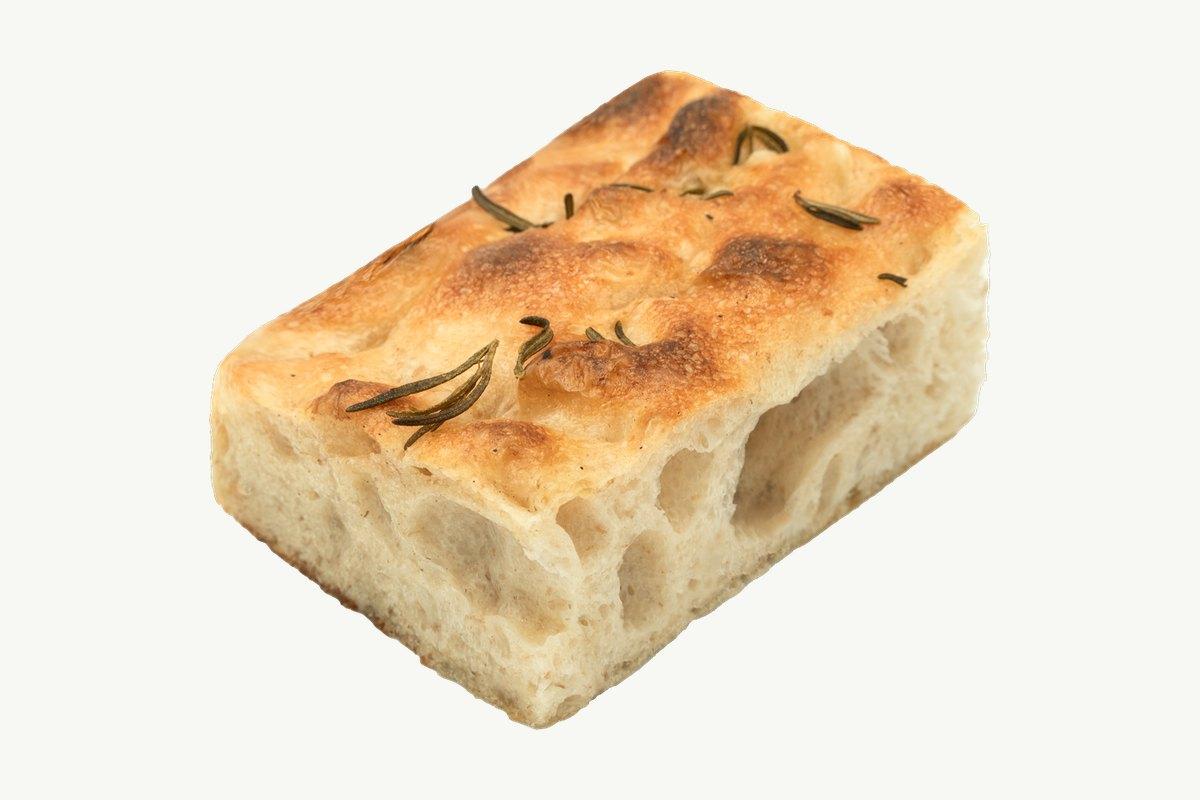
Focaccia is one of the few breads where the fat is not an optional enrichment but a structural ingredient. Take the olive oil out and you do not get a leaner focaccia — you get a flatbread. Everything that makes the bread worth eating comes from oil being physically driven into a very wet dough and then heated.
Our rosemary focaccia, the Focaccia · Rosemary & Olive Oil, is 12 AED, baked in Dubai Silicon Oasis, and it is the plainest thing on our bread list in the best sense: four ingredients plus herbs, with nowhere to hide.
Why the dough is poured, not kneaded
Focaccia dough is very wet — high enough in hydration that it will not hold a ball on the bench. That water turns to steam in the oven and pushes the crumb open into the irregular caverns you can see in a good slice.
At that hydration, kneading is counterproductive. Aggressive working tears the gluten strands faster than they can organise. So the dough is handled in folds instead — reach under one side, stretch it up, lay it over the middle, and leave it alone for half an hour. Four folds across the first few hours build strength without knocking the gas out.
Then it is poured into an oiled tray rather than shaped. It spreads to find its own level, and it is left to relax and rise in the tray it will bake in. Nothing about the outline is designed; the shape is what the dough does.
In Dubai this timeline is not fixed. A kitchen at 26°C ferments considerably faster than one at 20°C, so the schedule moves with the season — cooler water and shorter bulk in summer, longer in winter. Get it wrong and the dough over-ferments, the gluten degrades, and the slab bakes flat and gummy.
The dimples are how the oil gets in
This is the part that gets treated as decorative and is not. Before the final rise, the baker pushes fingertips straight down through the dough to the base of the tray, all over the surface, and floods the top with olive oil.
Three things follow. The oil pools in the wells instead of running off the sides, so it stays where it is put. Under oven heat it conducts far more efficiently than air, so the interior of each dimple fries slightly while the raised areas between them bake — that is the contrast between crisp golden ridges and soft, almost custardy hollows that defines the texture.
And the pressing deflates the largest gas bubbles selectively. Without it, focaccia inflates into a dome with one enormous cavity under a thin roof. The dimples anchor the surface to the base at regular intervals so the crumb rises evenly around them.
Press too gently and the wells close during proofing, taking the oil with them. Press properly and you can still see them in the baked slab, which is the honest signature of the method.
Olive oil is doing more than flavour
Fat coats flour proteins and physically interrupts gluten from linking end to end. In a lean dough that would be a problem. Here it is the point: shortened gluten strands make a crumb that is tender and yielding rather than chewy, which is why focaccia tears rather than pulls.
Oil also carries flavour in a way water cannot. Rosemary's aromatic compounds are fat-soluble, not water-soluble, so they dissolve into the oil and then travel through the whole slab. A herb scattered on a dry surface tastes of the surface. A herb sitting in oil that has been pressed into the crumb tastes of the bread.
The last thing oil does is slow staling. It coats starch granules and interferes with the retrogradation that makes bread go firm, which is why a focaccia is still good the following day when a lean baguette is finished.
Rosemary goes on late, and here is why
Rosemary burns. Its leaves are thin, resinous and full of volatile oils, and at the temperature focaccia bakes at they will scorch black long before the crumb is set if they are exposed for the whole bake.
So the rosemary is not mixed through the dough hours earlier. It goes onto the oiled surface shortly before baking, pressed lightly into the wells so most of each needle sits in oil rather than in dry air. Oil conducts heat evenly and buffers the leaves from the direct radiant heat of the oven. What comes out is fragrant and green-tasting rather than acrid.
The needles that do sit proud of the surface toast slightly, and that is deliberate too — a little toasted rosemary against a lot of infused rosemary is a more interesting thing to eat than either alone.
What to do with the slab
Eat it plain and warm, first. It does not need company.
After that it splits horizontally into the best sandwich bread we make, because the oil-rich crumb resists going soggy against wet fillings — the same logic behind our Focaccia Smoked Turkey Sandwich. Or cut it into fingers for a table, alongside our Sourdough Baguette at 15 AED if you want a crackling crust in the same bread basket.
If you would rather have something on top than inside, our Focaccia · Cherry Tomato and Focaccia · Mushroom are both 12 AED and take the same base in two different directions: one has to keep a wet tomato from soaking the crumb, the other depends on mushrooms that are cooked twice.
Keeping it, and bringing it back
Focaccia keeps better than lean bread but it is still best on the day. Leave it at room temperature under a cloth or in paper. Do not refrigerate it — the fridge sits in the temperature band where starch firms up fastest, and it will stale several times quicker there than on a counter.
To revive it, put it in a hot oven for five or six minutes. The oil in the crumb re-melts, the surface re-crisps, and it comes back remarkably close to fresh. A microwave does the opposite: it steams the crust soft and the slab turns tough as it cools.
Everything is baked to order in Dubai Silicon Oasis and delivered across Dubai. Details are on our delivery page.
Frequently Asked Questions
Why does focaccia have holes pressed into the top?
The dimples hold olive oil in place instead of letting it run off, so the wells fry while the ridges bake and you get both crisp and soft in one slab. Pressing also deflates the largest bubbles, stopping the bread from inflating into a hollow dome.
Can I make focaccia with less olive oil?
Not without changing what it is. The oil shortens gluten strands to make the crumb tender, carries the fat-soluble rosemary flavour through the bread, and slows staling. Reduce it substantially and you have a plain flatbread with herbs on top rather than focaccia.
Why add rosemary at the end instead of into the dough?
Rosemary leaves are thin and resinous and will scorch at focaccia baking temperatures if they sit exposed for the whole bake. Adding them shortly before the oven, pressed into oiled wells, protects them enough to stay fragrant and green-tasting rather than turning bitter.
How long does focaccia stay good, and how do I revive it?
It is best the same day but holds better than lean bread because of the oil. Keep it at room temperature in paper, never in the fridge. To bring it back, five or six minutes in a hot oven re-melts the oil and re-crisps the surface.
Is focaccia the same thing as pizza dough?
They are related but proofed and handled differently. Focaccia is wetter, rises fully in an oiled tray, and is dimpled so oil penetrates the crumb, producing a thick tender interior. Pizza dough is stretched thin and baked fast, so it stays crisp rather than pillowy.
Order a focaccia this week
Our Focaccia · Rosemary & Olive Oil is 12 AED, poured wet, dimpled by hand, and flooded with olive oil the same morning it goes out. See the whole bread list in the shop and we will bring it across Dubai.