27 August 2026
Mushroom Focaccia in Dubai: Building Savoury Depth
A raw mushroom is bland and full of water. Two rounds of heat turn it into the most savoury thing you can put on a slab of focaccia — here is the mechanism.
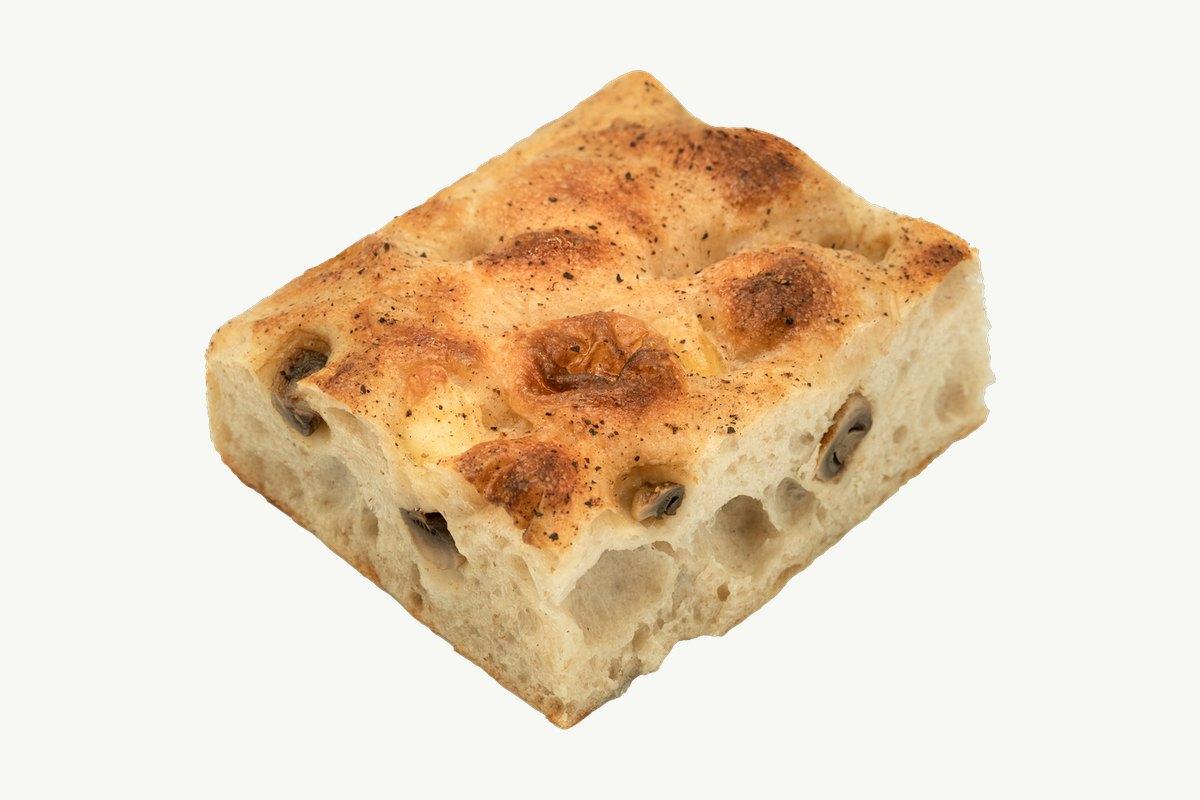
Mushrooms are the most misunderstood topping in a bakery. Raw, they are watery and almost flavourless. Cooked badly, they steam themselves grey and leach liquid into whatever is underneath them. Cooked properly, they become the most intensely savoury thing you can put on bread, and they do it without any meat, stock or reduction.
Our Focaccia · Mushroom is 12 AED, baked in Dubai Silicon Oasis. The difference between the bad version and the good one is entirely about heat and water, and it happens before the dough is ever touched.
Why raw mushrooms cannot go on dough
A mushroom is roughly nine-tenths water held in a soft, sponge-like structure with very little starch or fibre to bind it. Put raw sliced mushrooms onto proofed focaccia and the oven does two unhelpful things at once.
The water comes out. It has nowhere to go but down, into the crumb, where it sets a dense wet band beneath every slice of mushroom. And while that water is evaporating it holds the surface temperature near boiling, so the bread underneath and around cannot brown. You end up with pale, steamed patches and shrivelled grey mushrooms that taste of very little.
The mushrooms themselves also lose most of their volume in the oven, so a generous-looking raw topping bakes down to almost nothing. Everything about the outcome is worse than it needed to be.
The first cooking: driving the water out
So the mushrooms are sautéed first, in a wide pan over decent heat, and the process has two distinct phases that are worth understanding because most home cooks stop at the first.
Phase one is water release. The mushrooms give up their liquid and the pan floods. This looks like failure — the mushrooms are grey, they are boiling in their own juice, and nothing is browning. It is not failure, it is a stage, and the correct response is to leave it alone and let the liquid cook off. Crowding the pan or turning the heat down here is what produces the sad steamed version.
Phase two starts when the pan runs dry. Now the surface temperature can finally climb past boiling point, and the mushrooms begin to brown. This is where the flavour is made, and it takes several minutes of patience after the point at which most people have already stopped.
Salt goes in late rather than early. Added at the start it draws water out immediately and extends phase one; added once the pan is drying it seasons the mushrooms without fighting the browning.
Why browned mushrooms taste so savoury
Two mechanisms stack on top of each other.
The first is the Maillard reaction between amino acids and sugars, which only runs meaningfully above the boiling point of water. It is the same chemistry that browns bread crust and roasted meat, and it generates hundreds of aromatic compounds that simply do not exist in the raw ingredient.
The second is concentration. Mushrooms are naturally high in glutamates — the compounds responsible for savoury depth — and they also carry nucleotides that multiply that effect rather than merely adding to it. Cooking off most of the water leaves those compounds in a much smaller volume. What you taste is not a new flavour so much as the mushroom's own savouriness turned up several times over.
Aromatic herbs go into the pan at the end. Their compounds are fat-soluble, so they dissolve into the oil in the pan and coat everything, which puts the aroma through the whole topping instead of leaving it sitting on top.
Into the dimples, and the second cooking
Focaccia is dimpled before its final proof — fingertips pressed straight down to the base of the tray — and then olive oil is flooded across the surface so it pools in the wells; our piece on why the dimples matter in rosemary focaccia explains the mechanism. The mushrooms go into those wells.
That matters for the same reason it does on our Focaccia · Cherry Tomato at 12 AED, where roasted tomatoes sit in the same oiled wells: oil conducts heat far more efficiently than air. The mushrooms sitting in oil get a second round of browning during the bake rather than drying out in hot air, and their edges crisp. Being set below the level of the surrounding ridges also anchors them, so they stay put when the slab is cut rather than sliding off the first slice.
Because the water was removed in the pan, the crumb underneath bakes normally. That is the whole trick. The bread gets to be bread.
For the version of this dough with nothing on it but oil and herbs, our Focaccia · Rosemary & Olive Oil is the same base at 12 AED, and our guide to focaccia hydration, the cold prove and the bake covers the dough itself.
What to eat it with
This is the focaccia to serve at lunch rather than breakfast. It is savoury and earthy where the tomato version is bright and acidic, and it stands up to being the main thing on a plate.
Split horizontally it makes a substantial sandwich base — the browned mushrooms are effectively a built-in filling, and the oil-rich crumb resists going soggy against anything else you add. On a table, a lean crusty bread alongside gives you the contrast: our Sourdough Baguette at 15 AED or a Country Sourdough Loaf at 25 AED both work, because their hard blistered crusts are the opposite texture to the focaccia's soft one.
It also reheats better than almost anything else we bake, so it is a good one to keep for the next day's lunch.
Keeping it in Dubai's climate
Room temperature, wrapped in paper or under a cloth. The olive oil worked through the crumb slows staling considerably, so a mushroom focaccia is genuinely good the next day in a way a lean loaf is not.
Do not refrigerate it. The fridge sits almost exactly in the band where starch retrogrades fastest, and bread stales several times faster at 4°C than on a warm counter. To revive a slab, give it five or six minutes in a hot oven — the oil re-melts, the ridges re-crisp, and the mushrooms brown a little further. Avoid the microwave, which steams the crust soft and leaves the crumb tough once it cools.
Everything is baked to order in Dubai Silicon Oasis and delivered across Dubai. Details are on our delivery page.
Frequently Asked Questions
Why do mushrooms have to be cooked before going on focaccia?
They are roughly nine-tenths water. Raw on dough, that water drains into the crumb and sets a dense wet band, while the evaporation keeps the surface too cool to brown. Sautéing first removes the water and builds the savoury flavour that raw mushrooms simply do not have.
Why do my mushrooms go grey and rubbery in the pan?
Because the pan is crowded or the heat is too low, so they never get past the stage of boiling in their own liquid. Use a wide pan, keep the heat up, and wait through the flooded phase until it runs dry — browning only starts after that.
When should I salt mushrooms when cooking them?
Late rather than early. Salt added at the start immediately draws water out and prolongs the wet phase before any browning can happen. Adding it once the pan is drying seasons the mushrooms properly without getting in the way of the Maillard reaction.
What makes mushrooms taste savoury without any meat?
They are naturally high in glutamates, the compounds behind savoury depth, and they also contain nucleotides that multiply rather than merely add to that effect. Cooking off most of their water concentrates all of it into a smaller volume, which is why browned mushrooms taste so much stronger.
Does mushroom focaccia keep well?
Better than most bread. The olive oil through the crumb slows staling, so it is genuinely good the following day at room temperature in paper — never the fridge. Five or six minutes in a hot oven re-crisps the ridges and browns the mushrooms a little further.
Order one this week
Our Focaccia · Mushroom is 12 AED, with the mushrooms browned in a pan before they meet the dough and the slab baked the same morning it goes out. Browse the full bread list in the shop and we will bring it across Dubai.