26 August 2026
Cherry Tomato Focaccia: How to Top Bread With Something Wet
A tomato is roughly ninety-five per cent water. Putting one on bread without ruining the crumb is a technical problem — here is how it is solved.
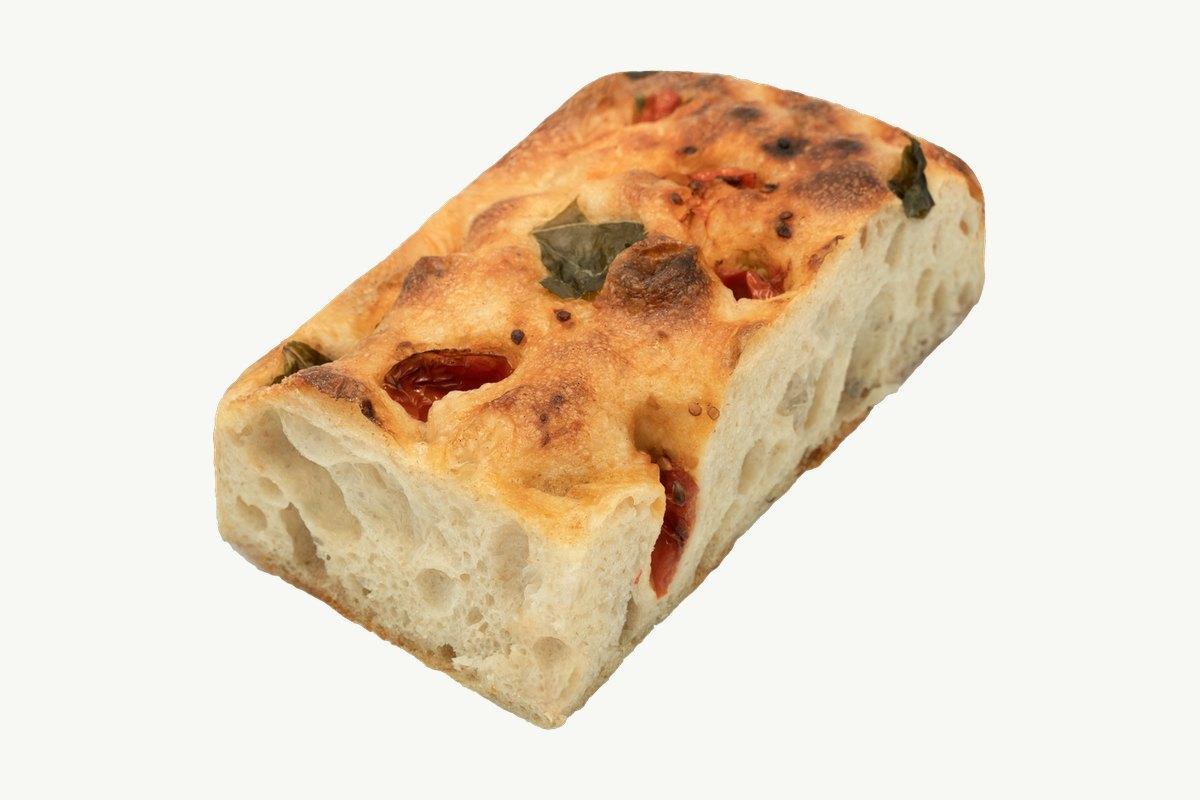
Every topped bread has the same fight at its centre. The topping is the reason anybody wants the thing, and the topping is also what threatens to ruin the bread underneath it. With tomatoes the fight is at its sharpest, because a cherry tomato is somewhere around ninety-five per cent water and bread is a structure held together by not being waterlogged.
Our cherry tomato focaccia, the Focaccia · Cherry Tomato, is 12 AED and baked in Dubai Silicon Oasis. Getting it right is less about the recipe than about managing where that water goes.
What raw tomatoes do to dough
Put raw halved cherry tomatoes onto a proofed focaccia and press them in, and two things happen in the oven.
First, the tomatoes release their water downward into the crumb directly beneath them. That water does not evaporate — it is trapped under the fruit, which acts as a lid. The starch in that patch of crumb gelatinises in an excess of liquid and sets as a dense, grey, slightly gummy layer. You can see it in a cross-section as a compressed band under each tomato.
Second, the tomatoes themselves cool the surface where they sit. Evaporating water carries heat away, so those spots stay near boiling point while the rest of the surface climbs high enough to brown. The result is pale, steamed-looking patches on an otherwise golden slab, and tomatoes that are hot and raw rather than concentrated.
Neither problem is solved by baking longer. Baking longer just dries the rest of the bread out while the wet patches stay wet.
Roasting first, and why it changes everything
So the tomatoes are roasted before they ever touch the dough. Halved, dressed in olive oil, salted, and put through a slow oven until they have given up a large share of their water and collapsed slightly.
Three things change at once. The obvious one is that there is far less water left to donate to the crumb. The second is flavour: as water leaves, the sugars and acids that remain are concentrated into a much smaller volume, and the exposed cut faces caramelise. A slow-roasted cherry tomato tastes several times more like tomato than the raw fruit it came from.
The third is texture. Roasted tomatoes have lost enough structure to slump into the dimples of the focaccia and sit flush with the surface, rather than perching on top and rolling off the first slice.
Salting is doing real work here too. Salt draws water out of the tomato through osmosis before the heat does, which speeds the whole process and seasons the fruit from the inside rather than leaving a salty exterior on a bland centre.
Placement: into the wells, not onto the surface
Focaccia is dimpled before it proofs, and the dimples are how the oil gets in: fingertips pressed straight down to the base of the tray, then olive oil flooded over the top so it pools in the wells. Those wells are where the tomatoes go.
Sitting a tomato in an oil-filled dimple does something specific. Oil conducts heat far better than air, so the underside of the fruit is in contact with a hot conducting medium rather than sitting on a cooling wet spot. It roasts further during the bake instead of steaming. And because the dimple is a depression, the fruit is anchored below the level of the surrounding ridges, which are free to rise and brown normally around it.
The result is a slab that is golden across its whole surface with tomatoes set into it, rather than a pale bread with fruit balanced on top. If you want to see the same base without a wet topping, our Focaccia · Rosemary & Olive Oil at 12 AED is the plain version of exactly this dough, and our guide to focaccia hydration and the cold prove explains the dough itself.
Herbs, oil, and the order things go on
Dried herbs go into the oil early. They are robust enough to survive the full bake, and oil is the right carrier because most aromatic compounds in herbs are fat-soluble rather than water-soluble — they dissolve into oil and then spread through the crumb, so the flavour is in the bread rather than sitting on the surface.
Anything delicate goes on late, and tucked into the oil rather than left standing proud of the surface. Soft leaves exposed to direct radiant heat scorch and turn bitter; the same leaves sitting in an oil-filled well are buffered enough to come through the bake dark green and fragrant. The rule is about protection, not about keeping them out of the oven.
The last of the olive oil goes over the finished slab while it is still hot. Warm bread absorbs it; cold bread wears it.
Eating it, and what to serve alongside
Warm, in fingers, on its own is the honest answer. The combination of concentrated tomato, salt, olive oil and an open, oil-rich crumb does not need help.
If it is going on a table, put a lean bread next to it for contrast — our Sourdough Baguette at 15 AED, or a Sourdough Ciabatta at 14 AED, both of which are crust-forward where the focaccia is soft. For something in the opposite direction, our Focaccia · Mushroom is 12 AED and savoury and earthy rather than bright and acidic, thanks to mushrooms browned in a pan before they meet the dough.
Split horizontally, it also makes an unusually good sandwich base, because the oil in the crumb resists going soggy against a wet filling. The tomatoes are effectively a built-in condiment.
Storing it in a Dubai kitchen
Room temperature, in paper or under a cloth, and eaten the same day if you can. The oil in the crumb slows staling, so it holds better overnight than a lean loaf would, but the tomatoes will continue to give up a little moisture as it sits.
Do not refrigerate it. The fridge is close to the temperature at which starch firms up fastest, and bread stales several times quicker there than on a warm counter. To bring a day-old slab back, five or six minutes in a hot oven re-melts the oil and re-crisps the ridges. A microwave will steam it soft and then leave it tough.
Everything is baked to order in Dubai Silicon Oasis and delivered across Dubai. Details are on our delivery page.
Frequently Asked Questions
Why are the tomatoes roasted before they go on the focaccia?
Raw cherry tomatoes are mostly water, and that water soaks into the crumb underneath and sets it dense and gummy while cooling the surface so it cannot brown. Roasting drives most of it off first, concentrates the flavour, and lets the bread bake normally around the fruit.
Can I just press raw tomatoes into the dough at home?
You can, but expect a compressed wet band in the crumb under each tomato and pale patches where the surface could not brown. If you want to try it anyway, halve them, salt them and leave them on kitchen paper for an hour first to draw some water out.
Why do the tomatoes sit in the dimples rather than on top?
The dimples hold olive oil, and oil conducts heat far better than air, so the fruit continues roasting during the bake instead of steaming. Sitting below the level of the surrounding ridges also anchors the tomatoes so they do not roll off when the slab is cut.
Does the tomato topping make the focaccia go stale faster?
Slightly, because the fruit keeps releasing a little moisture as the bread sits. In practice the olive oil worked through the crumb more than compensates, so a topped focaccia still holds better overnight than a lean loaf like a baguette does.
What is the difference between this and a pizza?
Proofing and thickness. Focaccia is a wet dough that rises fully in an oiled tray and bakes into a thick, tender, oil-rich crumb with the topping set into its surface. Pizza dough is stretched thin and baked fast so it stays crisp rather than pillowy.
Order one this week
Our Focaccia · Cherry Tomato is 12 AED, with the tomatoes slow-roasted before they meet the dough and the slab baked the same morning it goes out. See the rest of the bread in the shop and we will bring it across Dubai.