16 August 2026
Country Sourdough Loaf in Dubai: How the Flagship Is Made
The starter, the folds, the overnight retard and the score — everything that goes into Farah's flagship country sourdough loaf.
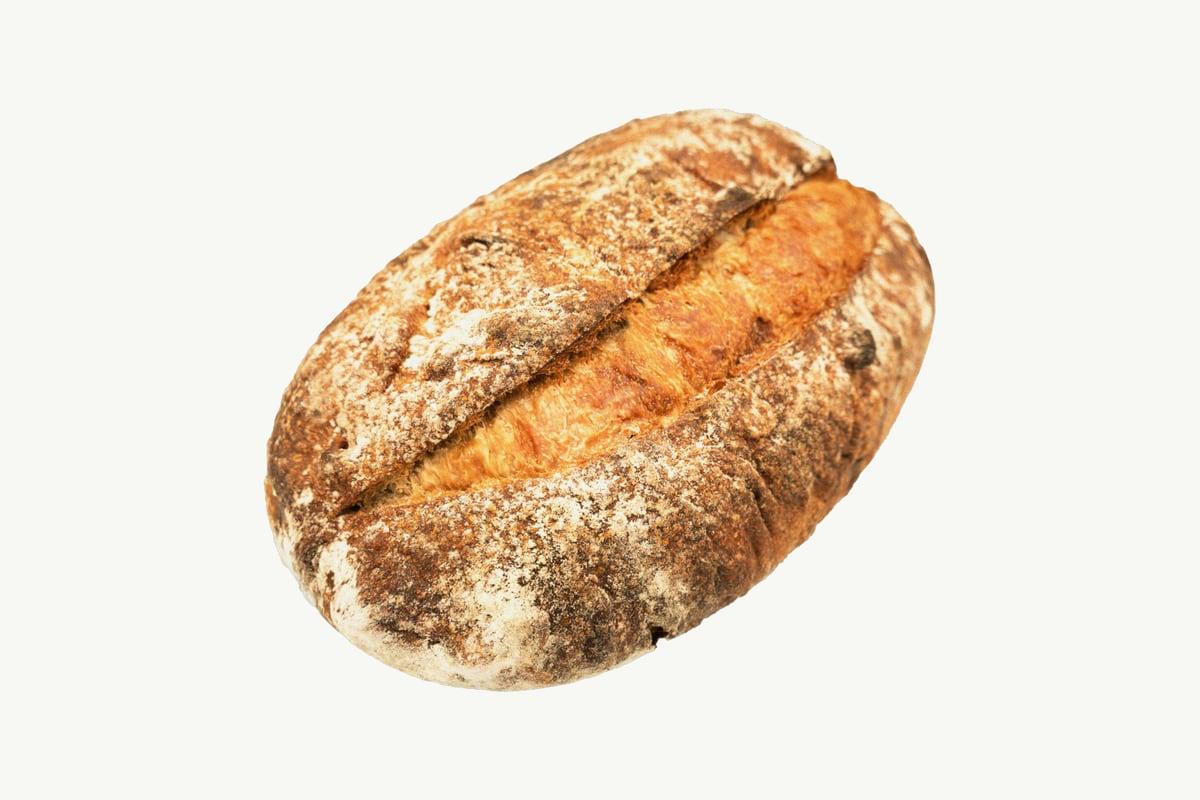
A country sourdough loaf is a round, naturally leavened bread made from flour, water and salt, raised by a live sourdough starter rather than commercial yeast, and baked dark. Ours is slow-fermented for over twenty-four hours, most of that spent doing nothing visible. That waiting is the whole recipe. Everything below is what happens inside it.
The Country Sourdough Loaf is 25 AED and it is the loaf we judge the rest of the bench against. If the country loaf is right on a given morning, the seeded and filled breads will be right too.
What the starter actually contributes
A sourdough starter is not one organism. It is a stable partnership between wild yeasts and lactic acid bacteria, and each does a different job.
The yeasts eat simple sugars and produce carbon dioxide. That is the lift — the gas that inflates the gluten network and becomes the holes in the crumb. Left to themselves, yeasts would give you a bread that rises but tastes flat.
The lactobacilli do the flavour. They produce lactic acid, which is soft and yoghurt-like, and acetic acid, which is sharper and more vinegary. The balance between the two is something a baker steers rather than sets. Warm, wet, well-fed starters push towards lactic and mildness. Cooler, stiffer, hungrier starters push towards acetic and tang. We keep ours on the lactic side: fed on a regular schedule, kept at a stable temperature, used when it has roughly tripled and still smells of ripe fruit rather than solvent. A starter that smells of nail varnish has gone too far and will bake into a loaf with a thin, brittle crumb, because excess acid degrades the gluten it is supposed to be inflating.
The acids do a second, quieter job. They lower the pH of the dough, which slows staling and holds mould off for longer than in a yeasted bread. In a Dubai kitchen in August, that matters.
Why bulk fermentation and the folds decide the crumb
After mixing, the dough rests for about half an hour so the flour can hydrate fully — the autolyse. Then salt goes in, and bulk fermentation begins: three to four hours at a controlled dough temperature, because a degree or two either way changes the timing by half an hour.
During those hours we fold rather than knead. Every forty-five minutes or so, the dough is lifted from one side and folded over itself, a quarter turn, four times round. Folding aligns and strengthens the gluten without tearing it, equalises temperature so the outside of the tub is not fermenting faster than the middle, and degasses just enough to move the yeast onto fresh food.
The crumb you see when you slice the loaf is decided here. Fold too often or too firmly and you get a tight, uniform, sandwich-like crumb. Fold too little and the dough spreads flat, and the gas collects in a few enormous caverns near the crust with dense bread underneath. What we want is an open but even crumb — irregular holes, thin glossy walls, no tunnel running the length of the loaf.
Hydration sits around 75 per cent. That is high enough for an open crumb and a moist interior, low enough that the dough still holds a shape on the peel rather than relaxing into a puddle. Push above that with the flour we use and the loaf loses its dome.
What the overnight cold retard adds
Once shaped, the loaf goes into a banneton and then into the fridge for twelve to sixteen hours at around 4°C. This is the step home bakers skip most often, and the one that changes the bread most.
Cold does not stop fermentation, it separates it. Yeast activity falls off sharply near 4°C, so the loaf stops inflating. The bacteria keep working, slowly, so acid and flavour compounds keep accumulating. You get the taste of a long ferment without the dough over-proving and collapsing.
The retard also firms up the surface. Cold dough is stiff dough, and stiff dough takes a clean cut from a blade instead of dragging and sticking. Almost every ragged score you have seen on a home loaf is a room-temperature dough problem, not a knife problem.
Scoring, steam, and the first ten minutes in the oven
The score is one confident cut across the top, held at roughly 30 degrees to the surface rather than straight down. That shallow angle is the entire trick. A vertical cut simply opens; an angled cut lifts a flap of dough, and as the loaf springs in the oven that flap peels back and sets into the raised ridge bakers call the ear. Depth of about a centimetre. Hesitate mid-cut and the crust tears somewhere else instead, usually along the base.
The loaf goes into a deck oven at 250°C with steam for the first ten minutes, then the steam is vented and the temperature drops to about 230°C for a further twenty-five to thirty.
Steam is not for moisture. It keeps the crust surface flexible while the interior is still expanding, so the loaf can grow to its full volume before the outside sets. It also gelatinises the starches on the surface, which is what gives a sourdough crust its faint gloss. Vent it too late and you get a pale, leathery skin; skip it entirely and the crust hardens in the first three minutes and the loaf stays squat.
The last stretch of the bake is pure colour. We take the crust to a deep red-brown, past the point most people expect. Caramelisation and the Maillard reaction happen out there, and a pale sourdough tastes noticeably less of anything.
How to read a good loaf
Four checks, in order.
Colour. Even and dark, with the ear a shade darker still. Blotchy pale patches mean uneven oven loading or too little steam.
Sound. Tap the base. It should be hollow and slightly resonant. A dull thud means the centre is underbaked and will be gummy.
The crackle. A properly baked loaf sings on the rack for a few minutes as the crust contracts.
The crumb. Slice only once cool — cutting hot bread compresses the starch, which is still setting. Look for a translucent sheen on the hole walls and irregular holes that get slightly larger towards the centre. A grey, dense band along the base usually means the loaf was under-proved.
How a naturally leavened loaf behaves through a Dubai week
Humidity is the enemy of crust here, and air conditioning is the enemy of crumb. A paper bag on the counter loses the crust to damp air in a day. A plastic bag keeps the crumb soft but steams the crust to leather within hours.
What works: cut side down on a wooden board for the first day, uncovered, so the crust stays dry. From day two, a cloth bag or a bread tin. Never the fridge — fridge temperatures are the fastest possible staling range for bread starch.
Expect roughly this. Day one, best crust. Days two and three, the crumb is at its most flavourful and slices beautifully for toast. Day four onwards, it wants heat: five minutes at 180°C, no wrapping, brings the crust back almost completely. To freeze, slice first and freeze on the day of purchase, then toast from frozen. Our guide to storing bread in Dubai covers the rest of the bread box, loaf by loaf.
Farah delivers across Dubai from Dubai Silicon Oasis, and every loaf is baked fresh for the day its delivery is due — see delivery for areas and timings.
Once the country loaf makes sense, the variations do too. The Multi-Seed Sourdough Loaf at 28 AED is the same dough carrying soaked seeds, which changes hydration and shortens the crumb. The Sourdough Cheese Loaf at 28 AED is the same method with cheese laminated in on the final fold, which alters how the crust colours. Further out, our chocolate sourdough shows what a long ferment does against the bitterness of cocoa.
Frequently Asked Questions
How long does a country sourdough loaf stay fresh in Dubai?
Kept cut-side down on a board, uncovered on day one and in a cloth bag afterwards, it slices well for three to four days. The acidity from the long ferment slows staling compared with a yeasted loaf. Beyond day four, refresh it in a hot oven for five minutes rather than eating it cold.
Should I keep sourdough bread in the fridge?
No. Fridge temperatures, around 4°C, sit in the fastest staling range for bread starch, so a loaf goes dry and crumbly there much quicker than on the counter. If you cannot finish it within a few days, slice the loaf and freeze it on the day you bought it, then toast slices straight from frozen.
Why did my crust go soft after delivery?
Crust softens when moisture from the still-warm crumb migrates outwards and cannot escape, which happens inside any bag or box. It is normal and reversible. Take the loaf out of its packaging as soon as it arrives, leave it uncovered for an hour, or give it five minutes in a 180°C oven to crisp the surface again.
What is the difference between the country loaf and the multi-seed loaf?
Both use the same starter and the same fermentation schedule. The multi-seed loaf carries soaked seeds through the dough, which absorb water, interrupt the gluten network and produce a shorter, tighter crumb with a nuttier flavour. The country loaf is the plain version: more open crumb, cleaner sour note, and the better choice for tasting the fermentation itself.
Can I use a slice of your loaf to start my own sourdough culture?
Not usefully. The yeasts and bacteria in a baked loaf were killed by the oven. A starter is built from flour and water over one to two weeks, feeding daily until it rises predictably. Wholemeal or rye flour gets it going faster because the bran carries more of the microorganisms you are trying to cultivate.
Order a country sourdough loaf
The Country Sourdough Loaf is 25 AED, baked to order for the day your delivery is due. Order it alongside the seeded or cheese versions and taste what one change to a single dough does. The full bench is on the shop page.