How to Make a Sourdough Starter in Dubai: A Day-by-Day Guide
Flour, water, a jar and at least five days of feeding: how to raise a sourdough starter from scratch, how to tell when it is ready, and how to keep it going in a warm Dubai kitchen.
To make a sourdough starter, stir 50 g of wholewheat flour into 50 g of cool water in a jar and leave it for a day. Then keep only 50 g of it and feed that with 50 g of plain flour and 50 g of water, once on day 2 and twice a day after that, until it reliably doubles within 6 to 8 hours of a feed. King Arthur Baking's recipe looks for that by day 5 and its guide allows up to a couple of weeks, while a University of California schedule takes two weeks to a month. In a warm Dubai kitchen a starter rises and peaks faster, so heat is the first thing to manage.
We bake our sourdough with a live starter in our kitchen in Dubai Silicon Oasis, but we do not sell starter, and this is not our house recipe. It follows King Arthur Baking's starter recipe, starter guide and feeding and maintenance recipe, and a new starter schedule from a University of California Master Food Preserver programme, all checked on 13 October 2026. For what a starter does inside a loaf, see what sourdough actually is.
How do you make a sourdough starter?
Mix flour and water, wait a day, then keep throwing most of it away and feeding the rest until it rises predictably.
King Arthur Baking's schedule:
- Day 1. Mix 50 g of wholewheat flour and 50 g of cool water in a clear jar. Cover loosely and leave at room temperature for 24 hours.
- Day 2. Keep 50 g, discard the rest, add 50 g of plain flour and 50 g of water, and leave for 24 hours.
- Day 3. Expect bubbles, a fresh, fruity smell and some rise. Now feed twice a day, about 12 hours apart: keep 50 g, discard the rest, add 50 g of flour and 50 g of water.
- Days 4 and 5. Keep feeding. By the end of day 5 it should at least double within about 6 to 8 hours of a feed.
- Day 6 onwards. If it has not risen much, keep feeding every 12 hours for as long as it takes.
The University of California schedule is slower: 75 g each of flour and water on day 1, using half wholewheat and half bread flour, or a quarter rye and three quarters bread flour. Days 2 and 3 get a stir but no feed. From day 4 it is one feed a day: 25 g of starter, 50 g of flour and 50 g of water.
Why throw so much away? Without a discard you would soon have a very large container of starter, and a small portion gets more food at each feed. The University of California schedule bins it for the first two weeks.
What does an active sourdough starter look like?
An active starter at least doubles within 6 to 8 hours of each feed, fills with bubbles and smells tangy but clean. King Arthur's guide describes these signs:
- Rise. A clear, repeatable rise. The guide suggests a clear, straight-sided container, which makes the rise easy to track.
- Bubbles and texture. Lots of bubbles, perhaps small rivulets across the surface, and a thick, viscous body rather than a thin one.
- Smell. Sharply sour but clean, with no hint of spoilage and nothing oddly chemical, such as a smell of acetone.
How long until a sourdough starter is ready to bake with?
It is ready when it doubles reliably within 6 to 8 hours of each feed, which the two sources put at anywhere from about five days to a month.
- King Arthur Baking's recipe expects it by the end of day 5, but its guide allows up to a couple of weeks, and says that the colder the room, the more slowly a starter grows.
- The University of California schedule calls a starter active at the end of two weeks if it has risen for three days in a row, and expects a stronger starter, ready for bread, by day 30.
Do not rely on the float test, where a spoonful of starter is dropped into water. When King Arthur Baking tested it (checked on 13 October 2026), a starter that still needed more hours floated anyway. A fed starter that sinks is not ready, but one that floats may not be either.
Our country sourdough deep dive follows a loaf from starter to oven, and sourdough vs white bread explains what the slow rise changes.
How do you keep a sourdough starter alive in Dubai's heat?
Keep it out of the warmest spots, expect it to peak sooner than a recipe says, and between bakes keep it in the fridge with a weekly feed.
- Know the limits. The University of California schedule says a counter at 70–80°F (about 21–27°C) suits a new starter, and warns that above 100°F (about 38°C) the yeast will die. Keep the jar away from windows, the oven and rooms where the air conditioning is off for the day, and use cool water, as King Arthur advises for a warm house.
- Watch the jar, not the clock. King Arthur notes that the warmer your kitchen, the faster your starter rises, so it is ready for its next feed sooner.
- Feed it more, not just more often. Once the starter is established, the University of California schedule suggests 1:3:3 or even 1:5:5, because the more food you give it, the longer it can go between feeds. At 1:5:5, that is 20 g of starter with 100 g of flour and 100 g of water.
- Use the fridge between bakes. Both sources move a mature starter into the fridge. King Arthur feeds it there about once a week: keep 50 g, add 50 g of flour and 50 g of water, leave it out for an hour or two, then chill it again. Before a bake, it feeds the starter every 12 hours at room temperature until it doubles or triples within 6 to 8 hours.
Can you freeze a sourdough starter?
Not reliably. King Arthur Baking says freezing will kill a starter and recommends drying it, while a 2021 study found that the lactic acid bacteria in frozen sourdough decline the longer it stays frozen.
- Dry it instead. King Arthur's post Putting your sourdough starter on hold (checked on 13 October 2026) spreads a fed, bubbly starter as thinly as possible on baking parchment and dries it at room temperature until brittle: about a day in a hot, dry climate, three to five days in humid weather. The flakes go airtight into a glass jar somewhere cool and dark, not the fridge.
- The research. In a 2021 paper in the Czech Journal of Food Sciences (checked the same day), lactic acid bacteria in frozen sourdough fell in number as storage went on, and its acidity fell too. The sources differ on how complete the damage is, but both describe a loss.
To revive dried starter, King Arthur dissolves the flakes in twice their weight of lukewarm water, adds flour, waits about a day for bubbles, then keeps feeding it until it rises strongly.
Baked bread is a different matter: our guide to storing bread in Dubai covers freezing and reviving loaves.
What has gone wrong with my sourdough starter?
Slowness and hunger can be fed away; pink or orange streaks, mould or a putrid smell cannot.
- No bubbles yet. No activity in the first 24 hours is normal. If it stays flat, the University of California schedule says to delay feeding and give it a good stir, and King Arthur suggests a warmer spot if the room is cool.
- Liquid on top. This liquid, often called hooch, is a by-product of the fermenting yeast. King Arthur says it tends to turn from clear to dark on a starter neglected for a long time, and that you can stir it back in or pour it off, then feed.
- Pink or orange streaks, mould or a putrid smell. Throw it out and start again in a clean jar. Both sources say so for mould and pink or orange colour; King Arthur adds a putrid smell, a sign that harmful microorganisms have invaded.
What if you would rather not keep a starter?
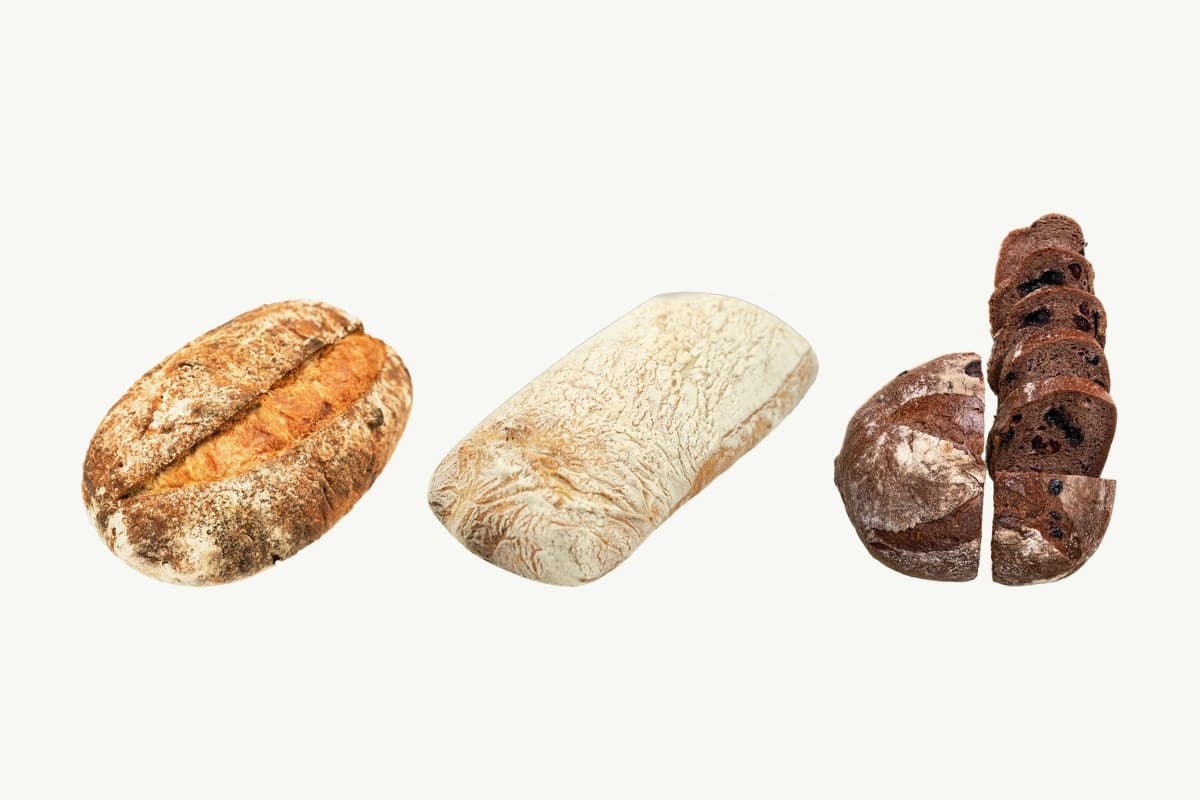
Then buy the bread: our seven sourdough loaves run from 14 to 30 AED, baked to order and delivered across Dubai. The three in the photo:
- Country Sourdough Loaf, 25 AED. Raised by a live starter rather than commercial yeast and slow-fermented for over 24 hours. It slices well for three to four days.
- Sourdough Ciabatta, 14 AED. Naturally fermented for over 24 hours and folded by hand, never kneaded; why the holes matter.
- Chocolate Sourdough Loaf, 30 AED. Barely sweet, a bread rather than a dessert, and at its best within two days.
Two worked orders at today's prices:
- The three loaves in the photo: 69 AED, plus 20 AED delivery, so 89 AED.
- One of each of our seven sourdough loaves: 170 AED, so delivery is free.
Checkout offers four windows, each three hours long: tomorrow 7–10 am, tomorrow 3–6 pm, the day after tomorrow 7–10 am, and next Saturday 9 am–12 pm. There is no same-day delivery. Delivery is free once the bag reaches 150 AED, and a flat 20 AED below that. For Abu Dhabi, where the earliest delivery is two days after ordering, see bread delivery to Abu Dhabi.
All seven loaves contain gluten. The multi-seed loaf is coated with seeds, sesame among them, the cheese loaf contains cheese and the date loaf contains walnuts. Our descriptions are not a full allergen list. Our kitchen handles wheat, gluten, eggs, dairy, nuts, peanuts, soy, sesame and seeds, and we cannot guarantee that any item is free from traces of these. If anyone has an allergy or intolerance, tell us before you order and we will tell you honestly whether we can serve them safely.
Frequently Asked Questions
Can I use any flour to make a sourdough starter?
Wholegrain flour is the easier start. King Arthur Baking begins with wholewheat, where wild yeast is more likely to be found, then feeds with plain flour, which also works on its own but may be slower; the University of California schedule mixes wholewheat or rye with bread flour.
Why does my sourdough starter smell sour?
Because it should. A ripe starter smells sharply sour but clean, and around day 3 it smells fresh and fruity. A putrid smell is not normal and, like mould or pink or orange streaks, means throwing it out and starting again.
How often should I feed a sourdough starter in a Dubai summer?
There is no fixed number. A warm kitchen makes a starter rise faster, so it is ready for its next feed sooner. A bigger feed, such as 1:5:5 by weight, lets it go longer between feeds, and between bakes the fridge with a weekly feed is simpler.
Can I freeze a sourdough starter?
It is not recommended. King Arthur Baking says freezing will kill a starter, and a 2021 study found the bacteria in frozen sourdough declining over time. Drying it thinly on parchment and keeping the flakes airtight is the safer way to store it.
Do you sell sourdough starter?
No. We bake our sourdough with a live starter in our Dubai Silicon Oasis kitchen, but we do not sell starter. If you would rather skip the feeding, our loaves are baked to order and delivered across Dubai.
Order sourdough while your starter grows
While a new starter matures, the Country Sourdough Loaf at 25 AED shows what a long ferment tastes like, and our sourdough collection runs from 14 to 30 AED. Order by the day before and choose a delivery window; the rest is in the shop.