Sourdough Ciabatta in Dubai: Why the Holes Matter
High hydration, barely handled dough, and an open crumb built to hold oil without collapsing — here is how ciabatta actually works.
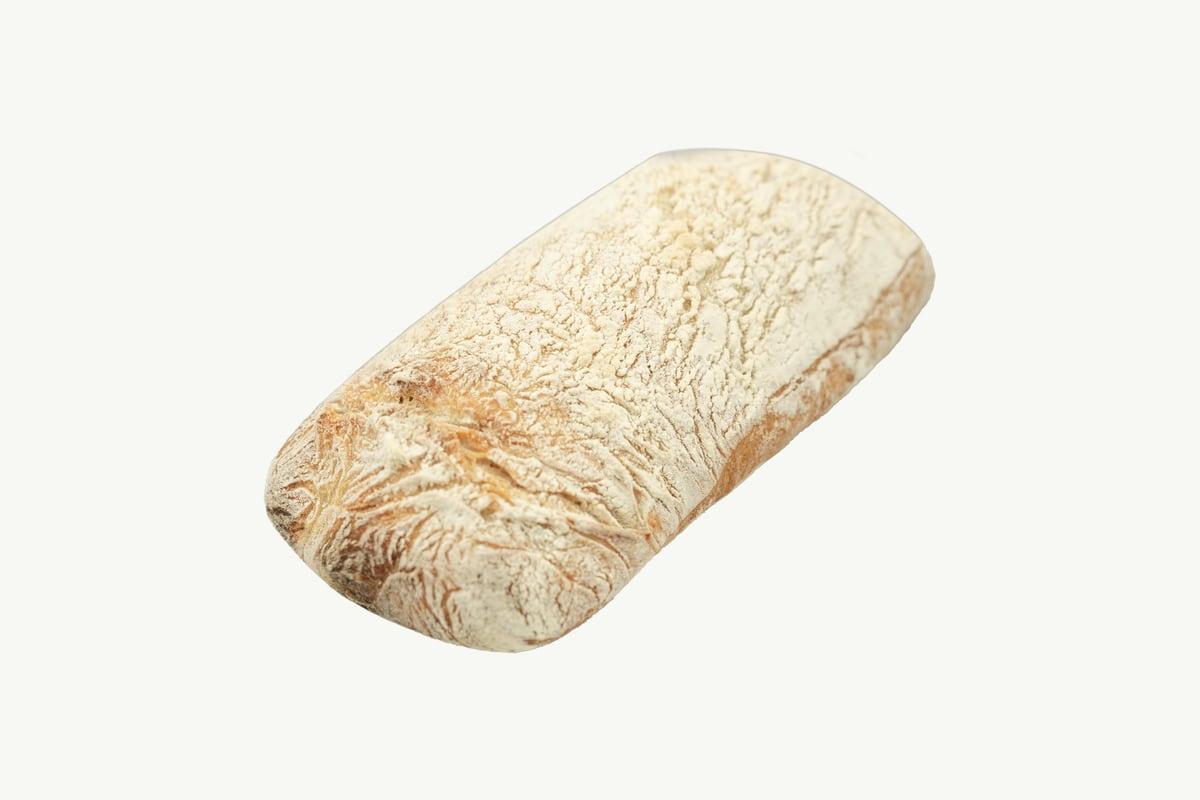
Ciabatta is a very wet dough — often 80% hydration or more — that is poured into shape rather than kneaded and moulded. That single decision explains everything about the bread: the flat slipper form, the thin blistered crust, and the wide irregular holes that make it the best sandwich bread there is. If you have ever wondered why your ciabatta collapsed into a dense slab at home, hydration is almost always the answer.
Our Sourdough Ciabatta is 14 AED, baked in Dubai Silicon Oasis, and built around that principle rather than around convenience. Below is what actually happens to the dough, and what to do with the loaf once it reaches your kitchen.
What 80% hydration actually means
Bakers describe hydration as water weight against flour weight. A standard sandwich loaf sits around 60%: firm, easy to knead, predictable. Ciabatta pushes to 80% and beyond. For every kilo of flour there is 800g or more of water, and at that ratio the dough will not hold a ball. It flows. Left on the bench it spreads out like thick batter.
That water has a job. During baking it turns to steam inside the crumb, inflating the gas cells the fermentation created and pushing them into those big translucent caverns. Low-hydration dough simply cannot do this — there is not enough water to generate the steam, so the cells stay small and even. The open crumb is not a stylistic choice. It is physics.
The catch is that wet dough has almost no structural strength of its own. Gluten needs time and gentle handling to organise, and aggressive kneading at this hydration just tears what has formed. So the method changes completely.
Why the dough is folded, never kneaded
We mix, then leave the flour and water alone for a rest before the starter goes in. That pause lets the flour hydrate fully and lets enzymes start breaking the proteins into strands on their own, which does much of the work kneading would otherwise do.
After that the dough is handled in folds. Every thirty to forty-five minutes, the baker reaches under one side, stretches it up, and lays it over the middle. Four folds over the first two or three hours. Each one stacks the gluten sheets like layers of tissue paper and adds tension without knocking out gas. Between folds the dough sits still and ferments.
Sourdough is what makes the long timeline possible. A wild starter works slowly compared to commercial yeast, so bulk fermentation stretches across four to six hours at room temperature, then usually a cold retard overnight in the fridge. That slow acidification does three useful things: it strengthens the gluten so the wet dough can hold its shape, it builds the faintly sour, nutty flavour you cannot get from a fast dough, and it produces the organic acids that keep the finished loaf from staling as quickly.
In Dubai this timing is not fixed. A kitchen running at 26°C ferments far faster than a European bakery at 20°C, so the schedule shifts with the season. Summer means cooler water, shorter bulk, and a longer cold retard. Ignore that and the dough over-ferments, the gluten degrades, and the loaf comes out flat and gummy with a sour edge that has tipped into vinegar.
Poured, cut, and never shaped
This is the part that surprises people. Ciabatta is not shaped in the way a baguette is shaped. The bulk dough is tipped out onto a heavily floured bench in one slab, dusted, and left to relax. Then it is cut with a bench scraper into rectangles and moved — gently, with two hands under the whole piece — onto floured cloth or a tray.
That is it. No tightening, no rolling, no seam. The word ciabatta means slipper in Italian, and the shape comes from the dough finding its own level rather than from any moulding. Every loaf is slightly different in outline, which is the honest signature of the method.
Then it goes into a hot oven — around 240°C, with steam for the first ten minutes. The steam keeps the surface soft long enough for the loaf to expand fully, then the heat sets a thin, crackly, blistered crust. Too little steam and the crust sets early, trapping the oven spring and giving you a tight crumb. Too much and the crust never crisps.
Why those holes make the better sandwich
A dense, even crumb behaves like a sponge. Put oil, dressing, or tomato juice on it and the liquid wicks straight through the fine cell walls, saturating the whole slice. Within twenty minutes it is soggy and structurally finished.
An open crumb works differently. The large holes hold liquid as pockets, and the walls between them are thicker, drier, and lightly toasted by the bake. Oil sits in the cavities instead of dispersing through the bread. You get the flavour on the tongue in bright bursts, and the surrounding structure stays intact. This is exactly why ciabatta is the traditional carrier for anything wet — good olive oil, roasted peppers, mozzarella, a proper dressing.
It also means ciabatta tolerates being made ahead. A sandwich built at eight in the morning is still worth eating at one in the afternoon, which is precisely the logic behind our Ciabatta Turkey & Cheese Sandwich at 12 AED. The bread is doing structural work, not just holding the filling.
Ciabatta or baguette: which one for what
Both are lean doughs — flour, water, salt, starter — but they solve different problems.
A Sourdough Baguette at 15 AED has far more crust relative to crumb. It is shaped and tightened, so the crumb is more regular, and the eating experience is dominated by that shattering exterior. It is the right choice for cheese and cured meats, for tearing at the table, for anything where you want crunch as the main event. Its weakness is that it goes stale quickly — high crust ratio means fast moisture loss, and a baguette is genuinely past its best by the next morning, which is why a sourdough baguette has one good day.
Ciabatta is the opposite balance: a thin crust and a lot of soft, chewy, moisture-holding interior. It keeps better, it presses better, and it takes wet fillings without complaint. If you are building a sandwich to carry somewhere, choose ciabatta. If you are eating at the table within the hour, take the baguette.
Keeping and reviving it in Dubai's climate
Never refrigerate ciabatta. The fridge sits in the exact temperature range where starch retrogrades fastest, and bread goes stale several times quicker at 4°C than at room temperature. It is the single most common mistake.
Keep the loaf cut-side down on a board or in a paper bag for the first day. In a Dubai kitchen with air conditioning running, that is a dry environment and the crust holds well. If humidity is high — a kitchen near an open door, or during the muggy months — paper alone will let the crust soften, so a loose linen wrap is better. Plastic will keep it soft but kills the crust entirely.
Beyond day one, freeze it. Slice first, bag it, and take out only what you need. Our guide to storing bread in Dubai compares how every other loaf we bake should be kept.
Ciabatta is the most forgiving bread to bring back, and the reason is its own water content. Even a two-day-old loaf still holds moisture in that open crumb. Run the crust briefly under a tap — genuinely wet it — then into a 200°C oven for six to eight minutes. The surface water turns to steam, drives back into the crumb, and the loaf comes out very close to fresh. A baguette will not survive this trick twice. Ciabatta will.
For sandwiches, split it and press it in a hot pan or grill without oil for two minutes a side. The cut face caramelises, the holes crisp at their edges, and the bread gets a second life entirely.
We bake every order fresh for its delivery day and deliver across Dubai from Dubai Silicon Oasis. If you want the crust at its crackle for lunch, choose a morning delivery window. Details are on our delivery page.
Frequently Asked Questions
Why is my homemade ciabatta dense instead of full of holes?
Almost always under-hydration or over-handling. If your dough held a neat ball on the bench, it was too dry for an open crumb. Push the water higher, use folds instead of kneading, and give the dough a long enough bulk fermentation. Also check your oven had steam in the first ten minutes.
How long does sourdough ciabatta stay fresh in Dubai?
Expect a day at its best on the counter, wrapped in paper or linen and never in the fridge, which stales bread faster than room temperature. After that it is still excellent revived in the oven. For anything beyond two days, slice the loaf and freeze it, then toast straight from frozen.
Should I choose ciabatta or a baguette for sandwiches?
Ciabatta, in most cases. Its open crumb holds oil and dressing in pockets rather than soaking through, so the sandwich survives a few hours without turning soggy. Choose the baguette when you want a dominant crackling crust and you plan to eat within the hour, at the table.
Can I toast ciabatta, or does it dry out?
It toasts very well. Split the loaf, press the cut faces in a dry hot pan for around two minutes each side, and the edges of the holes crisp while the interior stays chewy. For a whole loaf, wet the crust under a tap and bake at 200°C for six to eight minutes to bring it back.
What makes sourdough ciabatta different from ordinary ciabatta?
A wild starter ferments slowly, over hours rather than minutes, which strengthens the gluten enough to support very wet dough and develops a deeper, faintly nutty flavour. The organic acids produced also slow staling, so a sourdough ciabatta typically keeps a day longer than a fast commercial one.
Order a ciabatta this week
Our Sourdough Ciabatta is 14 AED, mixed wet, folded by hand, and baked fresh for its delivery day. Pair it with a Sourdough Baguette at 15 AED if you want both textures on the table. Browse the full bake in the shop and we will bring it to you across Dubai.