Sandwiches in Dubai: Why the Bread Decides Everything
Ciabatta, brioche, focaccia or multigrain — the bread decides whether your sandwich survives until lunchtime.
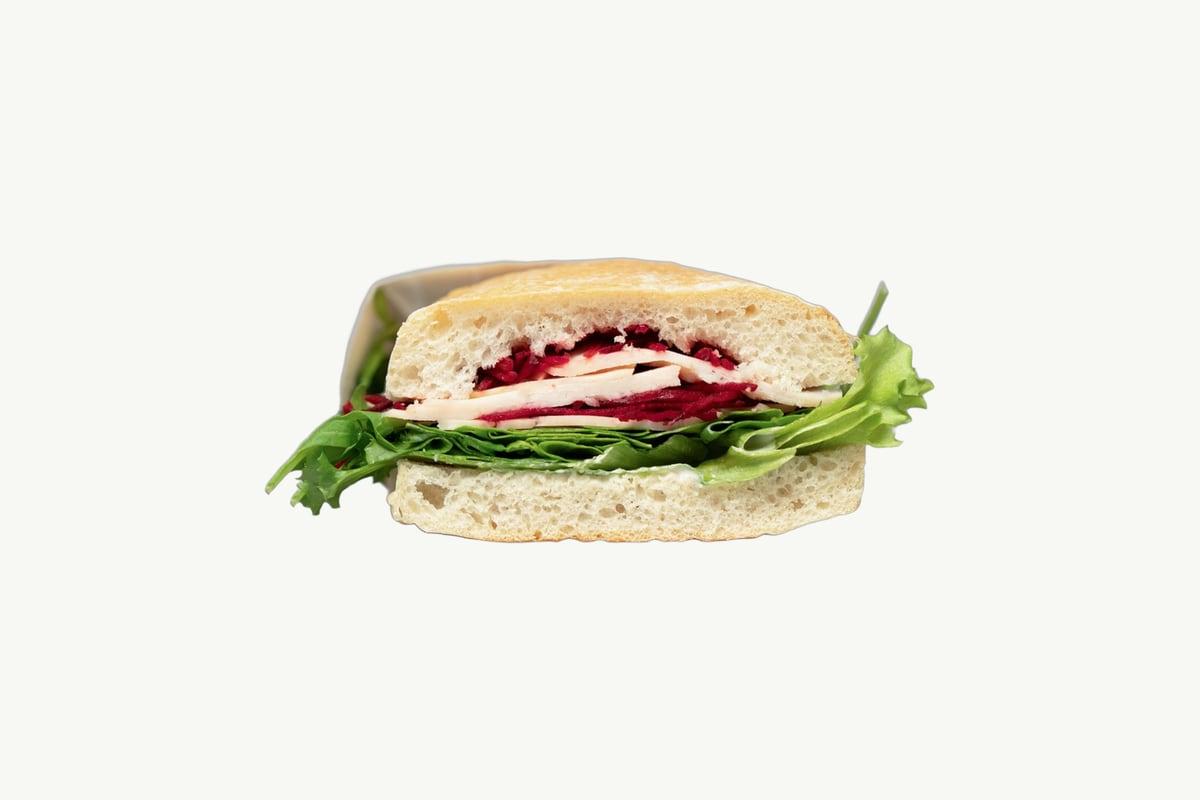
Most sandwiches in Dubai fail at the bread. The filling is fine, the bread is a delivery vehicle, and by 1pm it has gone damp and flat in the middle. We bake our own bread every morning, so we choose the loaf for the job — and that single decision does more for a sandwich than any amount of clever filling.
This guide explains how each of our five sandwich breads actually behaves: what happens to the crumb when it meets moisture, which one holds up for a few hours in the fridge, and which should be eaten within the hour. If you have ever bought a sandwich at nine and eaten it at one, this is the part nobody tells you.
What makes a sandwich bread work
A sandwich bread has two jobs that pull against each other. It has to be soft enough to bite cleanly, so the filling does not squeeze out of the far end. And it has to resist the water and fat migrating out of the filling for however many hours sit between the wrap and the first bite.
The variable that governs both is crumb structure. An open, irregular crumb — big holes, thick cell walls, the result of high hydration and a long fermentation — has less surface area touching the filling and more strength in the walls that remain. A tight, fine crumb like an enriched loaf soaks moisture evenly and quickly, which softens the whole slice at once.
Fat is the second variable. Oil and butter in the dough are hydrophobic. They physically slow water moving into the starch. This is why an oiled bread behaves so differently from a lean one, even when both look sturdy.
The third is crust. A proper crust, baked dark with steam early and dry heat late, forms a barrier. Cut through it and you have exposed only the cut face, not the whole surface.
Ciabatta: the one that holds up
Ciabatta is a wet dough — well above 75 per cent hydration — given a long, slow fermentation that builds an open, unevenly holed crumb. Those holes are the point. Less of the crumb is in contact with the filling, and the gluten walls between them are strong from the extended fermentation rather than from added gluten.
Practically, this means a ciabatta sandwich can carry tomato, mayonnaise, or anything with a little moisture and, kept in the fridge, still be structurally the same sandwich four hours later. The crust helps too: chewy, slightly blistered, it protects the outside from the humidity in a bag.
Our Ciabatta Turkey & Cheese Sandwich at 12 AED is the one we recommend when you know you will not eat it straight away. It is the office-fridge sandwich. Turkey is lean and does not weep fat the way some cured meats do, so the crumb stays as it was.
Keep it in the fridge and take it out ten to fifteen minutes before eating. Cold flattens the wheat flavour in a long-fermented bread, and ciabatta in particular loses most of what makes it interesting when it comes straight out of the fridge; those few minutes on the counter bring it back. How the beetroot slaw's juice moves into the crumb is in our ciabatta turkey and cheese sandwich guide.
Focaccia: already oiled, already protected
Focaccia is, with ciabatta, the most reliable sandwich bread we bake, and the reason is simple: it is saturated with olive oil before it goes into the oven and finished with more on top. That oil sits in the crumb and around it, and it does exactly what fat does — it slows water down.
The dough is also high hydration and slowly proved, dimpled by hand so the oil pools into the wells. Bake it hot, around 240°C, and the base develops something close to a fried surface. That oil, with a plain, fairly dry filling, is why a focaccia sandwich holds up so well.
The Focaccia Smoked Turkey Sandwich at 17 AED carries olives, cherry tomatoes and rosemary on the bread itself, and with the ciabatta it is one of the two that wait best for lunch. If you are ordering for a meeting, or taking sandwiches somewhere, this is the safe choice; our guide to office breakfast catering in Dubai covers the rest of the planning. It also eats well warm: lift out the turkey and lettuce, warm the bread halves in the oven and put the cold filling back, as our focaccia sandwich guide explains.
Focaccia carries salt and herbs well, so it is more assertive than the others. This one already carries olives and cherry tomatoes, so it needs little alongside it; if you want more, add something sharp such as pickles. The same guide covers the toppings in more detail.
Brioche: rich, soft, and eat it now
Brioche is an enriched dough — butter and egg worked into the flour, a slower and cooler rise because fat inhibits gluten development, then a gentler bake at lower temperature so the sugars do not burn. The result is a fine, tender, cake-like crumb with a thin, soft crust.
That crumb is lovely and it is fragile. The tight cell structure absorbs moisture evenly, and there is no protective crust to speak of. A brioche sandwich made at eight and eaten at two is a different, sadder object. Made at eight and eaten at nine, it is hard to beat.
Our Brioche Smoked Chicken Sandwich at 12 AED is a sandwich to eat now. Our smoked chicken sandwich guide compares it with the white bread version. The richness of the bread against the smoke of the chicken is the whole idea, and it works because the butter in the crumb carries the smoke flavour — fat is where aroma lives.
The other brioche caution is heat. Butter softens fast in Dubai. A brioche sandwich left in a car for twenty minutes will not be a firm sandwich when you get to it. Unless you are eating it straight away, keep it in the fridge.
Multigrain and white: structure versus softness
Multigrain sits between the two extremes. The seeds and cracked grains interrupt the crumb, adding physical structure and a slower, chewier bite. It is denser than a plain white loaf, which means it compresses less under a firm filling and holds a clean edge when cut. It also keeps its texture longer, because there is simply more solid material in each slice.
The Multi-Grain Ham & Cheese Sandwich at 12 AED is the everyday one. Kept in the fridge, it handles a few hours reasonably well — not as well as ciabatta, better than brioche — and the earthy flavour of the grains stands up to a strong cheese. For anyone who finds white bread too soft, this is the one.
White bread is the softest base we use and the most familiar. A tight, even crumb, a thin crust, a clean flavour that stays out of the filling's way. It is the traditional choice for a reason: it makes the filling the subject.
Both the White Bread Smoked Chicken Sandwich and the White Bread Smoked Turkey Sandwich are 12 AED. Treat them as short-window sandwiches. Eaten soon after they arrive, they are exactly right. Keep them for the afternoon, even in the fridge, and the crumb will have taken on moisture and softened noticeably.
How sandwiches behave in Dubai's climate
Two things happen to bread here that do not happen in a temperate climate, and they pull in opposite directions.
Outdoors, through the long summer, the air is hot and often humid, which softens a crust. Indoors, air conditioning dries the air, so an unwrapped sandwich dries at its cut faces. And when a chilled sandwich meets warm, humid air, condensation forms on its wrapping and goes back into the crumb. That is the real enemy of a packed lunch here — not drying out, but sweating.
The practical rules follow from that; our guide on how to store bread in Dubai covers every other loaf. A sandwich with meat or cheese goes into the fridge as soon as it arrives, unless you are eating it there and then; standard food-safety guidance is no more than two hours out of the fridge in total, or one hour above 32°C. Take it out ten to fifteen minutes before eating so the crumb relaxes and the flavour comes back. If you rewrap it, use paper rather than plastic, because paper lets the sandwich breathe instead of sweat. Never leave a butter-rich bread in a hot car. And if the gap between delivery and lunch is long, choose ciabatta or focaccia, keep them cold, and stop worrying about it.
We deliver across Dubai from our kitchen in Dubai Silicon Oasis, and we bake in the morning. There is no same-day delivery and our earliest window is the next morning, so order ahead and pick a morning delivery window if the sandwiches are for lunch; our guide to fresh bread delivery in Dubai explains how the windows work. You can see the full range on the shop, and there is more on how we work over on about.
Frequently Asked Questions
Which sandwich bread lasts longest without going soggy?
Ciabatta and focaccia, kept in the fridge, hold up equally well for different reasons. In focaccia, the olive oil in and on the dough slows moisture moving from the filling into the crumb. Ciabatta's open, irregular crumb means less bread touches the filling, and the strong gluten walls built during long fermentation resist compression for several hours.
Can a sandwich delivered in the morning wait until lunchtime?
Yes, if you choose the right base and it is kept in the fridge. Ciabatta and focaccia are built for it and will be much the same four or five hours later. Brioche and white bread are best eaten soon after they arrive, since their fine crumb takes on moisture quickly and their thin crust offers little protection.
How much do your sandwiches cost?
Most of our sandwiches are 12 AED, including the multigrain ham and cheese, both white bread options and the brioche smoked chicken. The focaccia smoked turkey is 17 AED. All prices are listed on each product page.
What is the difference between ciabatta and focaccia for sandwiches?
Both are high-hydration Italian doughs, but focaccia carries olive oil through the crumb and on the surface, giving a softer, richer, oil-slicked bite and a near-fried base. Ciabatta is leaner, chewier and more open, with a firmer crust. Focaccia is the richer eat; ciabatta gives a cleaner, drier chew.
Should I refrigerate a sandwich before eating it?
Yes, unless you are eating it as soon as it arrives. Every sandwich we make has meat or cheese in it, so it belongs in the fridge until shortly before you eat. Cold mutes the wheat flavour and firms the crumb, particularly in long-fermented breads like ciabatta, so ten to fifteen minutes on the counter first restores both the texture and the aroma.
Order sandwiches on bread baked for the day they arrive
If you want one sandwich to try first, make it the Ciabatta Turkey & Cheese Sandwich at 12 AED — it is the clearest demonstration of what a proper bread does for a sandwich. For something with more on the bread, the Focaccia Smoked Turkey Sandwich at 17 AED is the one we suggest for meetings. Browse the full range in the shop, order ahead (our earliest delivery window is the next morning), and choose your window at checkout.