17 August 2026
Bagels in Dubai: The Boil, the Malt and the Cold Night
The chew in a proper bagel is decided by a stiff 55% dough left cold overnight, then locked in by a short boil.
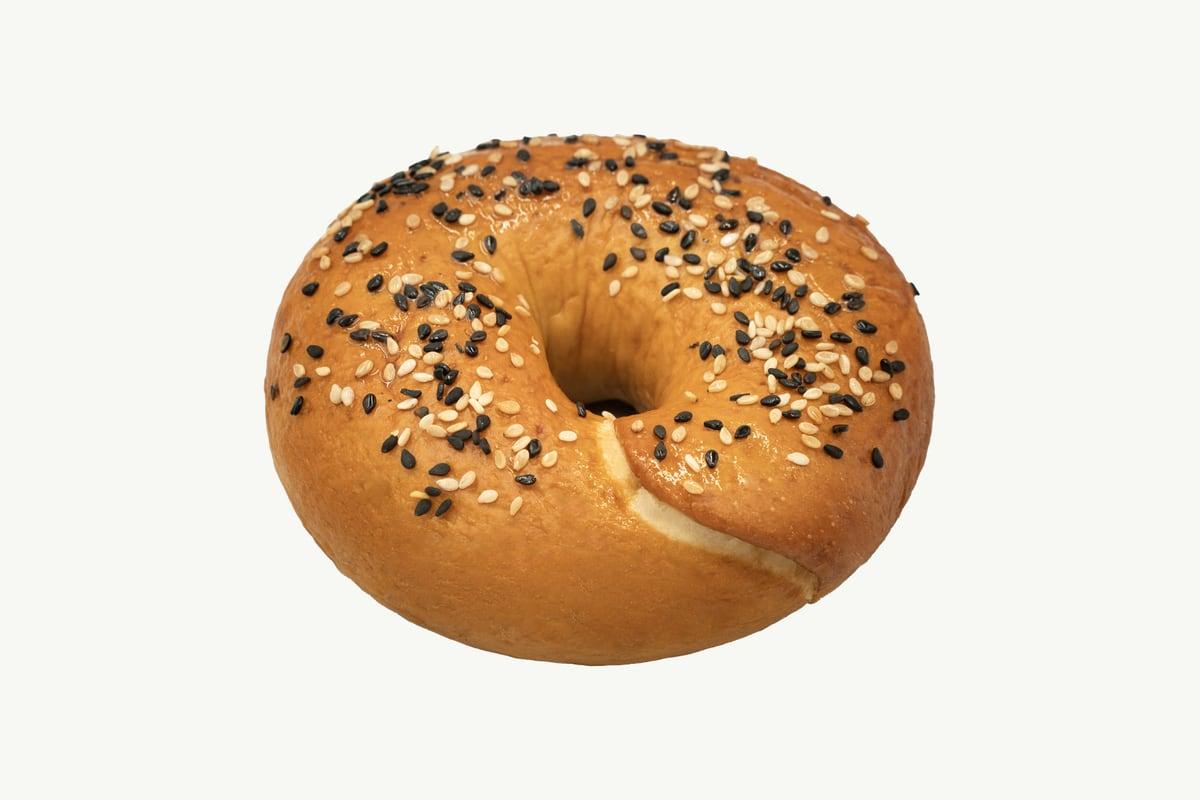
Everyone talks about the boil. The boil matters, and we cover it below, but it only sets what the dough already is. A bagel gets its chew from three decisions made long before the water heats: very low hydration, flour strong enough to survive it, and a long cold night in the fridge.
Get those wrong and no amount of boiling saves you. This is what happens inside the dough of our Classic Bagels at 6 AED, in the water, and what it all means for how you slice, toast and store them in Dubai.
Why bagel dough is the stiffest dough in the bakery
Most bread doughs we mix sit between 68 and 80 percent hydration, meaning water as a percentage of flour weight. A ciabatta is a slack, wobbly thing handled with wet hands. Bagel dough is the far end of the shelf: around 55 percent, sometimes 57 in the driest weeks. It comes off the hook looking like modelling clay and feeling like it too.
That number is not stylistic. Water is what lets a gluten network stretch and inflate. Take it away and the network still forms, but it cannot balloon. When the bagel hits a hot oven the interior has very little free water to flash into steam, so the crumb sets close and tight rather than opening into holes. That is the elastic, slightly resistant crumb that makes you chew rather than swallow.
Low hydration is hard on the mixer and on the baker. You mix long and slow, twelve minutes or more, because gluten develops sluggishly with barely enough water to hydrate the flour. We aim to finish around 24 to 25 degrees, which in August means chilled water: heat and friction push the dough past 28 before you notice, and overheated bagel dough ferments too fast overnight.
Then the flour. This dough needs 13 to 14 percent protein, real bread flour, not the 10 to 11 percent all-purpose sold in most supermarkets here. The gluten has to survive rolling, being lapped into a ring, a night in the cold, boiling water and then the oven. Weaker flour tears at the seam and the ring opens in the water.
What does barley malt actually do in a bagel?
This is the ingredient that separates a bagel from a boiled roll, and the one most home recipes leave out or replace with sugar.
It comes in two useful forms. Diastatic malt is barley sprouted and dried gently, so its enzymes survive. It goes into the dough at a very small dose, well under one percent of the flour. Those enzymes, chiefly amylase, break long starch chains into maltose and glucose, feeding the yeast through a long cold ferment and leaving residual sugars on the surface at bake time. Sugars that were not there when you mixed. Overdo it and the enzymes chew through so much starch that the crumb turns gummy and the crust leathery.
Non-diastatic malt is the same extract cooked until the enzymes are dead. No enzyme activity, only flavour and colour: that dark, faintly bitter, molasses-adjacent note.
Malt also goes into the boiling water, a spoonful or two per litre. It deposits a film of sugar on a surface that has just gelatinised and is therefore sticky, and that film browns hard in the oven. It is why a malted bagel comes out mahogany with a shine while an unmalted one stays pale at the same bake time.
Sugar browns sweet. Malt browns savoury and slightly toasted. That is the flavour your memory reaches for in a good bagel, and its absence is why so many taste of nothing in particular.
Why the dough rests cold overnight
After shaping, the rings go onto trays and into the fridge at around 4 degrees for 16 to 24 hours. Two separate things happen, and both are essential.
Inside the dough, yeast activity drops to a crawl while the enzymes keep working. Flavour accumulates slowly instead of being blown through in two warm hours. A bagel proofed warm and baked the same day tastes flat and yeasty. The same dough after a night in the cold tastes of wheat and malt.
On the outside, the surface dries into a fine skin. Fridges are dehumidifying machines: air moves across the rings and pulls moisture from the outermost layer, leaving a dry, matt pellicle. That skin gives a bagel its tight, almost lacquered surface after boiling and baking. Rings that go into the water damp come out slack and wrinkled. This is where Dubai humidity trips people up at home, since a domestic fridge, packed and opened constantly, runs far wetter than a commercial one.
What does boiling do to a bagel?
Before any ring goes into the water there is a quick check bakers use: the float test. Drop a shaped bagel into a bowl of cold water. If it floats within about ten seconds, it has fermented enough and is ready. If it sinks, it needs more time. It is crude and it works.
Then the boil: simmering, malted water, roughly 30 to 60 seconds a side. Two things happen in that minute or two.
First, the starch on the outer few millimetres gelatinises. The granules absorb water and swell, then set into a smooth, tight film as the surface cools. That film is why a real bagel has a glossy, faintly leathery skin rather than a floury matte crust.
Second, that sealed skin restrains oven spring. A bread roll wants to balloon in the first minutes of baking. A boiled bagel cannot: the skin sets fast and holds the expanding gas in check, so the crumb stays close instead of inflating, and you get the dense, elastic chew a bagel is supposed to have. Bite through one and it should pull back a little against your teeth.
Longer boils mean a thicker skin and a denser crumb; shorter boils give a lighter result. Ours sit at the traditional end of that scale, because a bagel that does not fight back is not doing its job. A pretzel takes the same idea somewhere else entirely, swapping the water for an alkaline bath, and our piece on why the lye bath matters for a soft pretzel explains the difference.
The oven is the short part of the story. Our bagels bake hot, around 230 degrees, with no added steam, for roughly eighteen minutes. Steam would soften the very skin the fridge and the boil spent so long building.
How to slice, toast and revive a bagel properly
Slicing is where most bagels are ruined, and the occasional finger with them. Never hold a bagel in your palm and cut towards your hand. Lay it flat, fingers spread on top, and take a long serrated knife through the equator using the full blade. Saw, do not press. A dense crumb pushes back and a pressing knife skids.
Toast cut side down and hotter than you think. You want a dry, golden face, which takes the top few millimetres of crumb from soft to crisp and stops it going soggy under labneh with za'atar or cream cheese.
If a bagel has firmed up on the counter, run it briefly under a tap, shake it off and give it five minutes in a 180 degree oven. The trapped water turns to steam and softens the retrograded starch. Eat it quickly: a revived bagel firms up again faster than the first time.
Why a day-old bagel toasts better than a fresh one
A bagel out of the oven this morning is full of free water. Put it under a grill and that water turns to steam before the surface can dry, so the cut face goes rubbery rather than crisp.
By the next day two things have shifted. Moisture has migrated outward from crumb to crust, and some starch has retrograded, recrystallising into a firmer structure. Firmer, drier crumb dehydrates quickly under heat instead of steaming, so the cut face browns and crisps.
Same reason a slice of day-old White Toast Bread at 10 AED toasts better than one cut from a loaf still warm, a point our guide to choosing a loaf that toasts well takes further. Fresh is best for eating plain. One day on is best for toasting.
Storing bagels in Dubai heat, and why to freeze on day one
Freeze on the day you buy, not day three when they have gone hard and you feel guilty. Freezing stops staling where it is, so whatever quality the bagel has going in is what comes out. Freezing a tired bagel preserves tiredness.
Slice first. A frozen bagel cannot be cut safely, and the toaster wants halves anyway. Wrap tightly with the air pressed out, since a dense crumb picks up freezer odours. From frozen, straight into the toaster on a longer setting, no defrosting.
For a day or two on the counter, paper beats plastic, which traps condensation against a crust already carrying sugar. And never the fridge: around 4 degrees is where starch recrystallises fastest, so refrigerating stales bread several times quicker than leaving it out. The cold that helps the dough overnight ruins the baked bagel. Our loaf-by-loaf guide to storing bread in Dubai covers the rest of the shelf.
So buy a larger order and freeze most of it on arrival. We deliver across Dubai from our kitchen in Dubai Silicon Oasis, so a week's bagels arrive together. See the delivery page.
Frequently Asked Questions
Why are my homemade bagels soft instead of chewy?
Almost always one of three things. The flour protein is too low, so use a strong bread flour of 13 percent or above. The dough is too wet, since bagel dough should be stiff at around 55 percent hydration. Or the boil was skipped. Boiling gelatinises the crust, which restrains oven spring and forces the dense chew.
How long should you boil a bagel before baking?
Between 30 and 60 seconds a side in simmering, not violently rolling, water. Shorter gives a lighter crust and softer crumb. Longer gives a thicker, chewier skin and a denser interior. Beyond about 90 seconds a side the crust turns tough and the surface can wrinkle as it bakes.
Can I use sugar or honey instead of barley malt?
You can, and the bagel will still bake, but it will taste different. Sugar and honey brown sweet. Malt brings a toasted, faintly bitter note that most people recognise as the taste of a bagel. Diastatic malt also adds enzyme activity that sugar cannot replicate during a long cold ferment.
How long can bagel dough stay in the fridge?
Between 16 and 24 hours at around 4 degrees is the usual window. Shorter than about 12 and the flavour has not developed and the surface skin has not formed. Much beyond 24 and the gluten begins to degrade, giving slack rings that spread in the boiling water and bake flat.
How should I store bagels in Dubai's summer?
Keep them in paper at room temperature for one to two days, never in the fridge, which speeds staling considerably. Anything you will not eat within that window should be sliced, wrapped tightly and frozen on the day of purchase. Toast from frozen with no defrosting.
Order a batch and see what the dough does
To taste what low hydration, real barley malt, a cold night and a proper boil produce, order our Classic Bagels at 6 AED and toast one on day two. Add a White Toast Bread at 10 AED while you are in the shop, and we will bring the lot to your door.