6 August 2026
Almond Croissant Dubai: Lamination, Butter and Frangipane
Lamination, the cold-room problem, and why the almond croissant is richer than the plain one, explained by the bakers who make it.
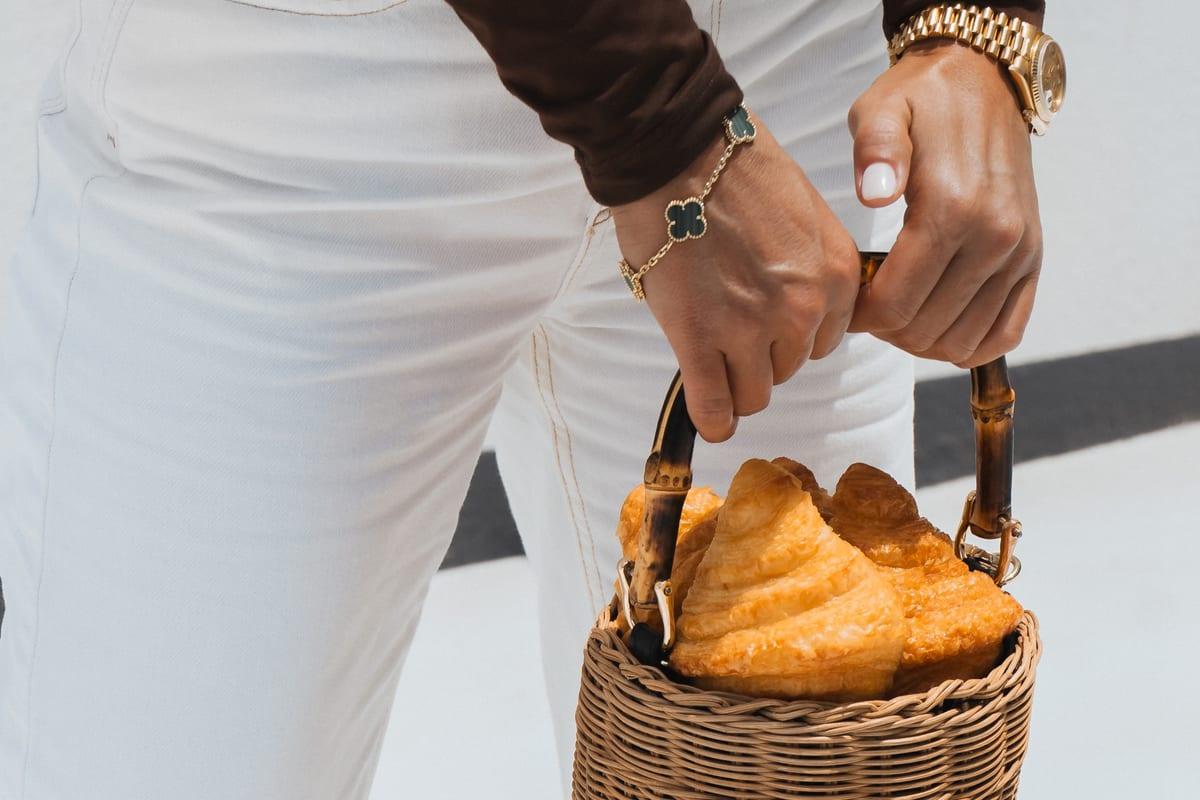
A proper almond croissant is not a plain croissant with almonds scattered on top. It begins as a finished croissant, gets brushed with syrup, filled and topped with frangipane, then baked a second time. That second bake is the whole story: it is why the pastry eats denser, sweeter and more custard-like than the original, and why it behaves differently in a Dubai kitchen.
What lamination actually is
Lamination means trapping thin, continuous sheets of butter between thin sheets of dough. It starts with a lean yeasted dough, the détrempe, usually a French-style flour around 11 to 12 per cent protein so the sheets stretch without tearing. The dough is rested cold, wrapped around a flat block of butter, then rolled and folded.
Three letter folds gives twenty-seven layers of butter. Go further and the layers get so thin they merge, and you lose the open honeycomb inside. Between each fold the dough rests at around 4°C for thirty to forty-five minutes, so the gluten relaxes and the butter firms up again.
The butter matters more than almost anything. A European-style butter at roughly 82 per cent fat holds less water, so it stays plastic rather than snapping when it is cold and rolled thin. Wetter butter fractures into shards, the shards puncture the dough sheets, and the layers weld together. You can see the failure in the crumb: tight, bready, no shatter.
Why a real croissant shatters
When the shaped croissant hits the oven, the water in the butter turns to steam. Trapped between dough sheets, that steam pushes each layer apart before the crust sets. What is left is dozens of paper-thin walls of baked dough with air in between. Break one and it should splinter, drop flakes, and sound audibly brittle.
We proof at 24 to 26°C, never warmer. Above about 28°C the butter melts out before the oven can turn it into steam, and you get a puddle of fat on the tray and a flat pastry. We bake hot to start, around 200°C, then drop to 180°C so the layers lift fast and the crust colours slowly. A good croissant is deep amber, not pale gold. Pale means underbaked, and underbaked croissants go soft within the hour.
The cold room problem in a hot climate
Lamination wants the dough and the butter at the same firmness, and that window sits at roughly 14 to 16°C. In a French winter you can roll on a marble bench in an ordinary bakery. In Dubai, a working kitchen can sit above 30°C before the ovens are on, and the butter loses its structure in minutes.
So the work is timed around the fridge, not the clock. Dough goes back to cold between every fold. Sheeting is done in short passes rather than one long roll, because friction warms the dough. Shaped croissants are retarded overnight, twelve to sixteen hours at 4°C, which builds flavour while keeping the butter set. They proof in the early hours and bake before the day gets hot. Anyone baking laminated pastry here is running a race against their own room temperature.
Why the almond croissant is richer than the plain one
Traditionally, the almond croissant was a thrift item. Yesterday's croissants were split, soaked in syrup, filled and rebaked so nothing went to waste. The technique stuck because it produces something genuinely better, not just something rescued.
The filling is crème d'amandes: butter, sugar and ground almonds in roughly equal weight, bound with egg. It is spread inside, piped along the top, and finished with flaked almonds. The syrup brush is not optional. A day-old croissant has dried slightly, and the syrup, sometimes scented with orange blossom water, restores moisture so the pastry does not turn to sawdust in the second bake. That bake runs cooler and longer, around 170°C for twelve to fifteen minutes, until the frangipane is set and just caramelised at the edges.
The result is a different pastry. The layers are still there, softened and enriched from the inside, so you get shatter outside and something close to baked custard within. Our Almond Cream Croissant is 18 AED, dusted with icing sugar once cool, never while hot.
How the rest of the range differs
The plain Croissant at 14 AED is the honest benchmark. Nothing hides a lamination fault in it, so we judge every batch by that one first.
The Chocolate Croissant at 16 AED puts the chocolate outside, keeping the crisp shell and setting bitterness against the butter. The Cookie Croissant, also 16 AED, is topped with cookie dough that bakes into a craquelin-style crust, a sandy snap over the flaky one beneath.
The Pistachio Croissant, at 19 AED, swaps almond cream for creamy pistachio paste, a filling that handles oven heat very differently from frangipane.
We bake in Dubai Silicon Oasis and deliver across Dubai, and every order is baked for the day it is due rather than taken from a display case.
How to store a croissant in Dubai humidity
Humidity is the enemy of anything laminated. A croissant left on a plate here will pull moisture from the air and go leathery within hours. Keep it in paper, never a sealed plastic box, which traps steam and softens the crust from the inside. Eat it the day it is baked if you can. If not, freeze it whole in a sealed bag on the same day, then reheat straight from frozen at 170°C for six to eight minutes. Day-old and not frozen, four to five minutes at 160°C brings the shatter back. Never use a microwave; it steams the layers and they collapse permanently. Serve with black coffee or plain tea; the frangipane is already carrying the sugar.
Frequently Asked Questions
What is inside an almond croissant?
The filling is frangipane, also called crème d'amandes: butter, sugar and ground almonds bound with egg. The croissant is split, brushed with sugar syrup, filled, topped with more frangipane and flaked almonds, then baked a second time. Icing sugar goes on after cooling. No artificial almond flavouring is needed if the almonds are fresh.
Why are almond croissants made from day-old croissants?
Because it works better. A one-day-old croissant has lost some moisture, so it absorbs the syrup and the frangipane instead of going soggy. A fresh croissant is too soft and collapses under the filling during the second bake. The practice started as a way to avoid waste and stayed because the texture is superior.
How much is an almond croissant in Dubai at Farah Bakery?
Our Almond Cream Croissant is 18 AED. The plain Croissant is 14 AED, the Chocolate Croissant and Cookie Croissant are 16 AED each, and the Pistachio Croissant is 19 AED. Prices are per pastry. You can order any of them from our shop page for delivery across Dubai, including Dubai Silicon Oasis and the surrounding communities.
How do I reheat a croissant so it goes crisp again?
Use a conventional oven or air fryer, never a microwave. From room temperature, four to five minutes at 160°C. From frozen, six to eight minutes at 170°C. Let it stand for two minutes before eating so the interior steam escapes and the layers set. Microwaving turns the butter layers soft and they do not recover.
Is an almond croissant heavier than a plain croissant?
Yes. The frangipane adds butter, sugar and ground almonds, and the syrup adds moisture, so it is denser and more filling than a plain croissant of the same size. Many people find it works better as a single treat with coffee than as part of a larger breakfast spread.
Order an almond croissant
Our Almond Cream Croissant is 18 AED, baked in small batches for the day it is due. Browse the shop to add a loaf to the same order. There is no same-day delivery: the earliest delivery window is the next morning, and you choose your window at checkout.