Date Bread in Dubai: How Our Date & Walnut Sourdough Bakes
Dates are almost pure sugar — here is how we stop them running away with the dough, and why honey changes the whole bake.
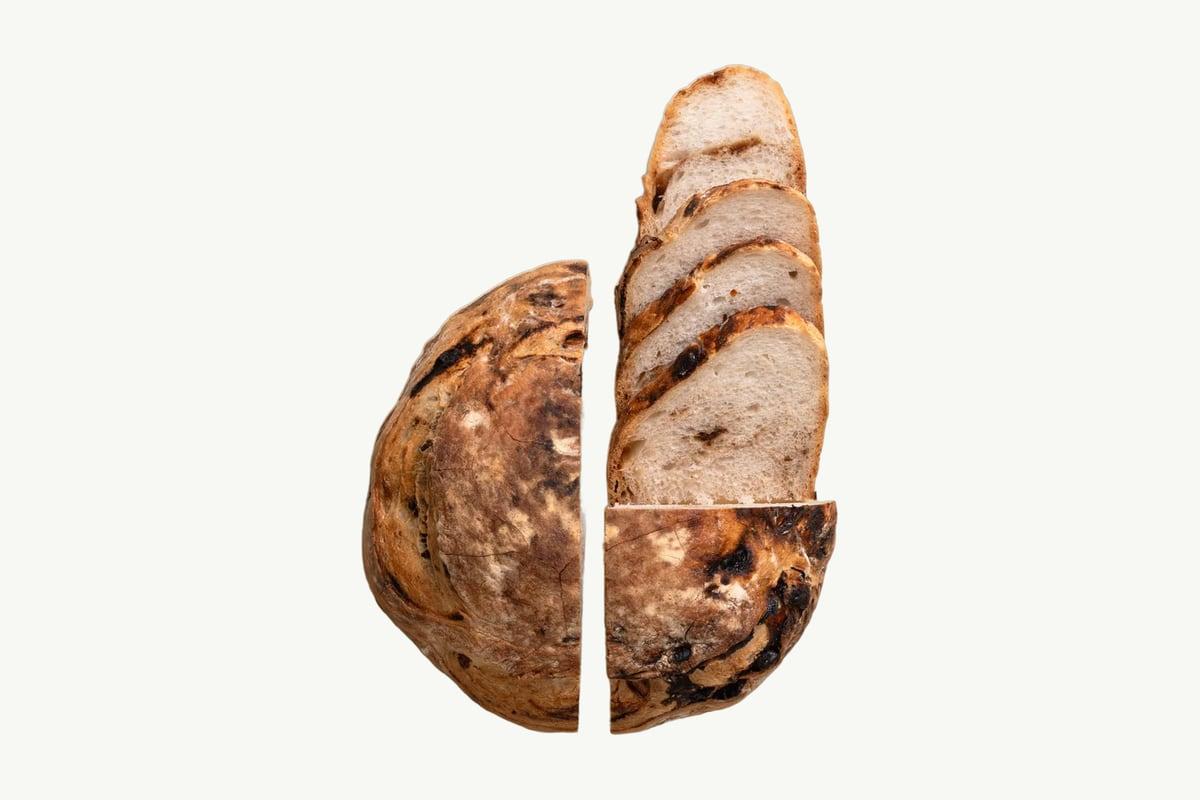
Date bread is the hardest loaf we bake, for a simple reason: dates are almost pure sugar, and sugar is fuel. Add them at the wrong moment and the dough ferments faster than the baker can react, then flattens on the peel. Our Date, Walnut & Honey Sourdough (30 AED) exists because we spent a long time learning where that moment is.
It is also the most regionally rooted loaf we make. Dates have been the staple sweetness here for centuries; sourdough is the oldest way of raising bread. Putting them in one loaf is not fusion — it is two old ideas that fight each other chemically, and the craft is in the refereeing.
Why dates make a dough behave differently
Flour gives yeast almost nothing to eat at first. Starch has to be broken down by enzymes into simpler sugars before fermentation gets going, which is why a plain dough builds gas slowly and predictably over hours.
A dried date skips that entirely. Most of its weight is sugar already in its simplest form — glucose and fructose, immediately available. Fold chopped dates into a dough and you have not added an ingredient so much as thrown petrol on a controlled fire.
Two things then happen at once. Fermentation accelerates, so the dough peaks sooner than the clock says it should. And sugar is powerfully hygroscopic, so it pulls moisture out of the surrounding gluten network. The dough slackens. It feels wetter and weaker than it did twenty minutes earlier, which tempts a baker into adding time when what it needs is less.
We compensate before the dates ever appear. The final dough is mixed a few degrees cooler than our Country Sourdough Loaf (25 AED) — around 24°C rather than 26°C — and at slightly lower hydration, because the dates carry their own moisture and give most of it up during bulk fermentation. Start at the usual hydration and you finish with a puddle.
Why the dates go in late, not at the mix
The dates are laminated in during the final fold, roughly an hour before the end of bulk. Never at the mix. There are two separate reasons, and both matter.
The first is mechanical. Chopped dates are dense, sticky and slightly abrasive. Worked through a full mix and three folds, they shear the gluten strands the dough has spent an hour building, and the crumb comes out tight and short instead of open. Laminating them in at the end distributes them without dragging them through the structure.
The second is fermentative. Every minute the dates sit in the dough is a minute their sugar is feeding the culture. Adding them late narrows that window to about sixty minutes — enough for the flavour to move into the crumb, not enough for the fermentation to run away. Bulk finishes earlier than for a plain loaf, and an overnight cold retard does the rest of the flavour work at a temperature where the sugar cannot cause trouble.
There is a cosmetic reason too. Dates added early dissolve, leaving a uniformly brown crumb with no dates in it.
The walnuts have their own problem
Walnut oil is highly unsaturated, which is another way of saying it turns rancid quickly — and quickly is quicker in this climate. Walnuts are kept cold and toasted the morning they are used, eight to ten minutes at 160°C, driving off the volatiles that carry that stale, bitter edge.
Toasting also tames the skins, which are tannic — untoasted tannins taste astringent and tighten the gluten around each piece. They still tint the crumb faintly purple-grey where they sit against wet dough. That reaction is entirely normal, and it is the mark of real walnuts rather than a flavouring.
Why honey changes the whole bake
Honey is the ingredient that forces the oven schedule to change, and it catches people out. It is mostly fructose and glucose — reducing sugars, which take part in Maillard browning readily, and fructose caramelises at a far lower temperature than ordinary table sugar. Crust colour that a plain sourdough reaches at 250°C, this dough reaches well before that. Left on a standard bake, the crust is mahogany and heading for bitter while the centre is still raw.
So the bake is lower and longer. Loaded into a 250°C oven, held under steam for twenty minutes so the crust stays soft and the loaf can expand, then vented and dropped to around 205°C for another twenty to twenty-five. The internal temperature has to reach 96–98°C. A sugar-rich crumb sets slowly and stays soft long after it is genuinely baked, so a loaf that feels underdone by touch usually is not — trust the thermometer, not the squeeze.
Scoring matters more than usual. Any date sitting proud of the surface will blacken, so exposed pieces are tucked back in at shaping and the cut opens the loaf away from them.
The last trap is cooling. This loaf needs at least two hours on a rack before it is cut, ideally four. Cut it warm and the crumb, still holding moisture the sugar will not release, drags and turns gummy under the knife.
Why it is not a sweet bread
People assume dates plus honey means dessert. It does not, for three reasons. The proportion of dates to flour is modest — enough to punctuate the crumb, not define it. The fermentation converts a good share of the free sugar into acids and aromatics, which is exactly why the dates go in when they do. And the salt sits at full bread level, with the sourdough's lactic acidity underneath.
What survives is caramel, malt and a faint dried-fruit depth, closer to a dark rye than to a cake. Which is why it belongs on a savoury table.
Aged cheddar and blue cheese are the obvious partners — salt and funk against caramel. Labneh with olive oil and za'atar is better still, and cold laban alongside is the most local pairing there is. Grilled halloumi on a toasted slice works. So does nothing but good butter and flaky salt. With coffee, go dark and unsweetened; a bitter espresso reads the date as fruit rather than sugar. For a loaf that brings its own cheese, see how our sourdough cheese loaf is made.
How it keeps in Dubai's heat
The sugar that makes this dough difficult makes the finished loaf keep well. Sugar holds water, so the crumb stays soft noticeably longer than a plain country loaf — three to four days, kept properly.
Kept properly means a paper or linen bag, cut side face down on a board, on the counter. Not plastic on day one: an air-conditioned Dubai kitchen is dry and the crust is doing its job as a barrier, but seal it while it is still giving off moisture and that crust turns leathery by morning. If the loaf has sat in real summer humidity, dry the crust in a hot oven for three minutes first.
Do not refrigerate it. Fridge temperatures are the fastest zone for starch retrogradation — bread stales several times quicker at 5°C than at room temperature. Freeze instead, sliced and sealed, and toast straight from frozen a setting lower than usual, because exposed date pieces blacken before the crumb is golden. A whole loaf revives at 180°C for six to eight minutes, then rests five before cutting. Our guide on how to store bread in Dubai sets out the same rules for every other loaf.
We bake it to order and deliver across Dubai from our kitchen in Dubai Silicon Oasis — see delivery for areas and timing.
Frequently Asked Questions
Is date bread sweet?
Not in the way people expect. Fermentation consumes a good share of the dates' sugar, the salt sits at normal bread level, and the sourdough acidity balances the rest. What you taste is caramel and dried-fruit depth rather than sweetness, which is why it suits cheese rather than jam.
What should I serve date and walnut sourdough with?
Aged cheddar, blue cheese, labneh with olive oil, or grilled halloumi. Cold laban alongside is the most regional pairing, and its sourness balances the date. Butter and flaky salt is enough on its own. With coffee, choose something dark and unsweetened.
How long does date bread keep in Dubai?
Three to four days on the counter in a paper or linen bag, cut side down on a board. The sugar in the dates holds moisture, so it stays soft longer than a plain loaf. Avoid plastic on the first day, and never refrigerate it — the fridge stales bread far faster.
Can I freeze it?
Yes, and freezing is far better than refrigerating. Slice the loaf first, seal it in a bag, and freeze. Toast slices straight from frozen on a lower setting than usual, because exposed date pieces darken before the crumb does. A whole loaf reheats at 180°C for six to eight minutes.
Why are the dates added at the end of mixing rather than the start?
Two reasons. Their sugar is immediately available to the culture, so adding them early makes fermentation accelerate unpredictably and the dough collapse. And the pieces shear gluten strands if worked through a full mix. Laminated in near the end of bulk, they stay as jammy pockets instead of dissolving.
Order a loaf this week
The Date, Walnut & Honey Sourdough is 30 AED and baked in small numbers, because the timing leaves no room to scale it carelessly. Add a Country Sourdough Loaf at 25 AED if you want one for cheese and one for everything else. Browse the shop and we will bake yours fresh.