7 August 2026
Cheese Bread in Dubai: How a Sourdough Cheese Loaf Is Made
Why cheese fights sourdough dough, how we bake around it, and the best way to eat the loaf once it reaches your kitchen.
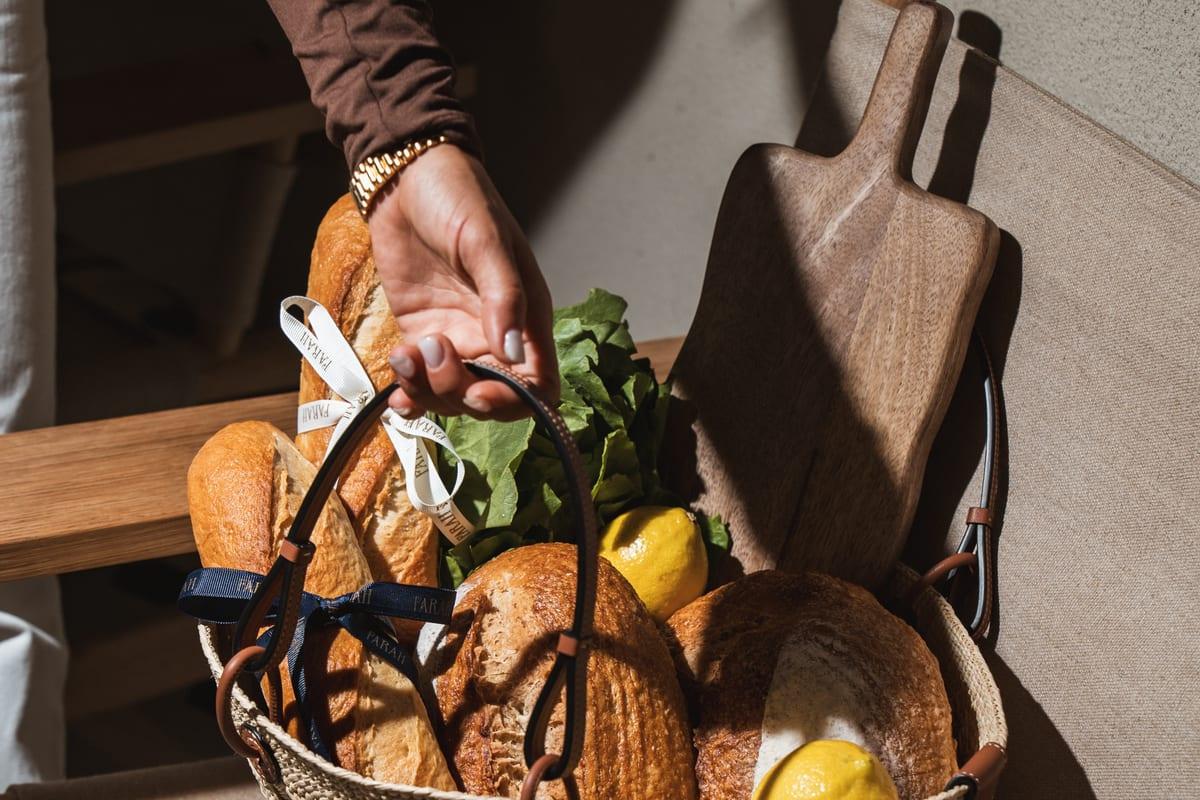
Cheese is the hardest thing to put into a naturally leavened dough. Fat coats gluten strands and stops them linking, so the dough loses strength exactly when it needs it most. Cheese also melts and browns long before the crumb has set, which is why so much cheese bread comes out either pale in the middle or scorched on top. Here is how we work around all three problems in our Sourdough Cheese Loaf, and what to do with the loaf once it is in your kitchen.
Why fat and gluten do not get along
Gluten is a network. Flour proteins hydrate, then link into sheets that trap the carbon dioxide your starter produces. Fat is a lubricant. Introduce it early and it films over those proteins, so the sheets never form properly. The dough goes slack, the bulk ferment loses its lift, and you end up with a dense, greasy crumb that tastes of neither bread nor cheese.
The fix is order of operations. We build the dough plain first: flour, water, salt and levain, with the full autolyse and the first two sets of stretch and folds done before any cheese is anywhere near the bowl. By the time the cheese goes in, the gluten is already developed and can survive the interruption.
The second fix is temperature. Cold cheese, cut into cubes rather than grated, stays intact during the folds instead of smearing through the dough. Grated cheese disappears into the crumb and takes the structure with it. Cubes stay cubes, and they become pockets.
How the loaf is actually built
Our cheese loaf runs on the same base as the rest of the range: a high-extraction wheat flour, around 75 percent hydration, with a stiff levain refreshed the evening before. Bulk ferment sits at roughly four to five hours in a cool room, which in Dubai means an air-conditioned proving space rather than a countertop, because ambient here will run a dough away from you.
The cheese is laminated in on the final fold. We spread the dough out, scatter the cubes, then fold it back over itself so the pockets sit inside the loaf rather than on the surface. Surface cheese burns. That is the single most common failure in home cheese bread, and it is a placement problem, not an oven problem.
Then the dough goes into a cold retard overnight, twelve to sixteen hours at fridge temperature. That long, slow, cold fermentation is where the flavour comes from — the acidity that makes the finished loaf taste savoury rather than merely cheesy. It also firms the dough enough to score cleanly the next morning.
The bake, and why it starts hot
We load at around 250°C with steam for the first fifteen minutes, then drop to about 220°C and finish dry for another twenty-five. The high opening heat drives oven spring and sets the crust before the interior cheese has fully liquefied. The drop protects the top from going bitter while the crumb finishes cooking through.
Cheese pockets collapse if the loaf is cut hot. The molten cheese has not re-set, so it runs, and the crumb around it compresses. Wait at least an hour, ideally two. It feels like a long time when the kitchen smells like that. Wait anyway.
Storing bread in Dubai humidity
Dubai gives you two enemies at once: heat that speeds staling and outdoor humidity that softens crust the moment the bread leaves air conditioning. A cheese loaf is more vulnerable than a plain one, because the fat content gives mould a head start.
Keep it in a paper bag or a clean cotton cloth on the counter, in the air conditioning, for the first day or two. Never a plastic bag — it traps moisture against the crust and turns it leathery. If you are not going to finish it within two days, slice the whole loaf and freeze it flat in a sealed bag. Frozen sourdough revives well; refrigerated sourdough does not, because fridge temperature is the fastest zone for starch retrogradation.
To bring slices back, toast them from frozen. Do not microwave. Microwaving gelatinises the starch and then lets it re-set gummy, and it makes the cheese rubbery. Ninety seconds in a hot toaster or four minutes in a 180°C oven gets you a crust again. Crustier loaves and soft toast breads need different handling, which our guide to storing bread in Dubai sets out.
What to eat it with
The obvious answer is soup, and the obvious answer is right. Toasted thick and rubbed with a cut clove of garlic, the loaf holds up against tomato, lentil or anything with body. The acidity from the long ferment cuts through richness.
As a sandwich base it wants restraint. The bread is already savoury and already fatty, so the filling should be sharp or fresh — roast vegetables, pickles, rocket, a tomato with good salt. Piling more cheese on cheese bread is a common instinct and usually a mistake.
Warmed whole is the third option. Fifteen minutes at 160°C, wrapped loosely in foil, brings the interior pockets back to soft without re-baking the crust. Put it on the table torn rather than sliced and let people pull it apart.
The rest of the savoury and enriched range
If you like what fermentation does to a savoury loaf, the same technique runs through the rest of our sourdough range. The Multi-Seed Sourdough Loaf at 28 AED takes a different approach to inclusions: in a seeded sourdough the seeds are soaked first so they do not steal water from the dough, which is the seed equivalent of the fat problem. It is a firmer crumb, good for open sandwiches.
At the sweeter end, the Date, Walnut & Honey Sourdough at 30 AED works with dates and behaves differently again, because sugar accelerates fermentation and browns fast. Same starter, three quite different doughs. The full range sits on the shop page, and there is more on how we work over on our about page.
Because everything is baked to order in Dubai Silicon Oasis, fresh for the day its delivery is due, the loaf that reaches you has not sat on a shelf. That matters more for a cheese loaf than for almost anything else we make. Full details are on the delivery page.
Frequently Asked Questions
What is a sourdough cheese loaf? It is a naturally leavened bread with cheese folded into the dough as cubes rather than mixed through as gratings. The starter provides the rise instead of commercial yeast, and a long cold fermentation develops a mildly acidic, savoury flavour. The cheese forms distinct molten pockets inside the crumb rather than a uniform texture.
How do I store cheese bread in Dubai's humidity? Keep it in paper or cotton on the counter, indoors in air conditioning, for the first two days. Avoid plastic bags, which soften the crust. For longer storage, slice the loaf and freeze it flat in a sealed bag. Do not refrigerate it — fridge temperature stales bread faster than room temperature does.
Can I reheat a cheese loaf in the microwave? Better not to. Microwaving makes the crumb gummy as the starch re-sets, and turns the cheese rubbery. Toast slices from frozen, or warm the whole loaf loosely wrapped in foil at 160°C for about fifteen minutes. That softens the interior pockets while leaving the crust intact and crisp.
How much does the Sourdough Cheese Loaf cost? The Sourdough Cheese Loaf is 28 AED. The Multi-Seed Sourdough Loaf is also 28 AED, and the Date, Walnut & Honey Sourdough is 30 AED. All three are baked to order rather than held in stock, and current availability is shown on each product page in the shop.
Why does homemade cheese bread come out burnt on top? Almost always because the cheese is sitting on the surface rather than inside the dough. Exposed cheese browns and turns bitter long before the crumb sets. Laminate the cheese in on the final fold so it is fully enclosed, and start the bake hot with steam before dropping the temperature.
Order a loaf
The Sourdough Cheese Loaf is 28 AED, baked to order for your delivery day and delivered across Dubai. If you are ordering more than one, the seeded and date loaves come out of the same starter and make a good contrast on the table. Everything currently available is on the shop page.