29 August 2026
Choosing a Wholesale Bakery Supplier in Dubai
The questions worth asking before a bakery becomes your supplier, from someone who has to answer them — consistency, capacity, lead times and shelf life.
Choosing a wholesale bakery in Dubai to supply a café, a hotel or an office pantry is a harder decision than it looks, because almost every bakery can produce an impressive sample. The sample is not the question. The question is whether the same thing arrives every Tuesday for the next year, at a volume that grows, without anyone having to chase it.
We bake in Dubai Silicon Oasis and supply businesses as well as households, so these are the questions we get asked and the ones we think are worth asking. Our own product list for businesses is on the wholesale page.
Ask what happens when the volume triples
Most bakeries can make excellent bread at their current scale. The useful question is what breaks when the order doubles or triples, because that is what a successful café will do to a supplier within a year.
Two structural answers matter. The first is whether the bakery bakes to order or from stock. Baking to order means capacity is a scheduling problem — more dough, more oven slots — rather than a forecasting problem. A bakery that produces speculative batches and sells them down has to guess your volume in advance, and it will either run out or throw bread away.
The second is whether the process depends on one person. A recipe that lives in one baker's hands does not scale and does not survive a holiday. A process written down as timings, temperatures and hydrations does.
Ask about consistency, and how it is defined
Handmade bread is not identical loaf to loaf, and any supplier who claims otherwise is either mistaken or working from a frozen part-bake. Focaccia is poured and finds its own outline; a ciabatta is cut from a slab rather than moulded. Those breads are supposed to vary slightly.
What must not vary is everything else: weight, bake colour, crumb structure, salt, and the day it arrives. Those are the things to write into an agreement.
It is also worth asking how the bakery handles Dubai specifically. A kitchen sitting at 26°C ferments considerably faster than one at 20°C, so a bakery running a fixed clock through August produces over-fermented, flat, gummy loaves. The correct answer is that timings, water temperature and retard length move with the season. If a supplier has never thought about this, you will taste it in summer.
Ask about lead times, and be honest about your own
Sourdough cannot be produced on demand. Our Country Sourdough Loaf is slow-fermented for over 24 hours: it is mixed, folded across hours of bulk fermentation, shaped, and then rested overnight in the cold before it is baked. It has to be planned into a bake rather than made on the day, and no supplier can shortcut that without switching to commercial yeast.
That cuts both ways. A supplier needs your standing order far enough ahead to schedule the bake, and you need to know that a Thursday emergency cannot be met with sourdough. On our own shop there is no same-day delivery; the earliest window is the next morning. The workable arrangement is a predictable standing volume plus a clear, small margin for adjustment — not an open-ended promise that nobody can keep.
Agree what happens when you need to change the number. A supply relationship that cannot absorb a 20% swing for a busy week is not much use.
Ask which products actually suit your service
This is where most wholesale relationships go wrong, and it is not the bakery's fault or the buyer's. It is a mismatch between the bread and the way it will be used.
If bread is sliced through a service and eaten over hours, you want tin loaves: a Multi-Seed Whole Wheat Toast Bread, a White Toast Bread, a Japanese Milk Bread Loaf. Thin crusts, soft crumbs, built for daily slicing and forgiving of sitting. If the slices are toasted for service, our guide to toast bread explains how crumb, sugar and fat change the result.
If bread is served at a table within the hour, lean sourdough earns its place: a Sourdough Baguette or a Sourdough Ciabatta. The baguette is crust-forward and has one good day; the ciabatta holds a little longer and still toasts the next morning, but both are at their best in a service that turns over, not a breakfast buffet that sits for three hours.
For sandwiches prepared ahead, ask specifically about crumb structure. An open crumb holds oil and dressing in pockets rather than wicking it through fine cell walls, which is why a ciabatta or focaccia sandwich made at eight and kept chilled is still worth eating at one. A soft, fine crumb such as white bread or brioche takes up moisture much faster, so those sandwiches are for eating soon. This is a technical property, not a preference, and our guide to sandwich breads sets the breads side by side.
And for a counter or a pantry where things need to look generous, focaccia does the most visual work per dirham — rosemary and olive oil, cherry tomato or mushroom.
Ask what happens when something goes wrong
Every supplier has a bad delivery eventually. What separates them is the hour after it.
The useful questions are narrow. Who do you message, and is it a person or a form? What is the window for reporting a problem — with fresh bread it has to be same-day, because nobody can assess a loaf three days later. Is the remedy replacement, credit, or an argument?
Ask also who receives the delivery on your side. Fresh bread cannot be left at a service entrance in a Dubai summer, and a supply agreement that does not name a receiving person is one that will produce a dispute.
Start smaller than you think
We would rather start a wholesale relationship with a short trial at real volume than with a tasting. A tasting tells you whether the bread is good. Two weeks of actual Tuesday deliveries tells you whether the bakery is good — whether it arrives, whether the weights hold, whether the summer schedule is genuinely managed, and whether anyone answers when something slips.
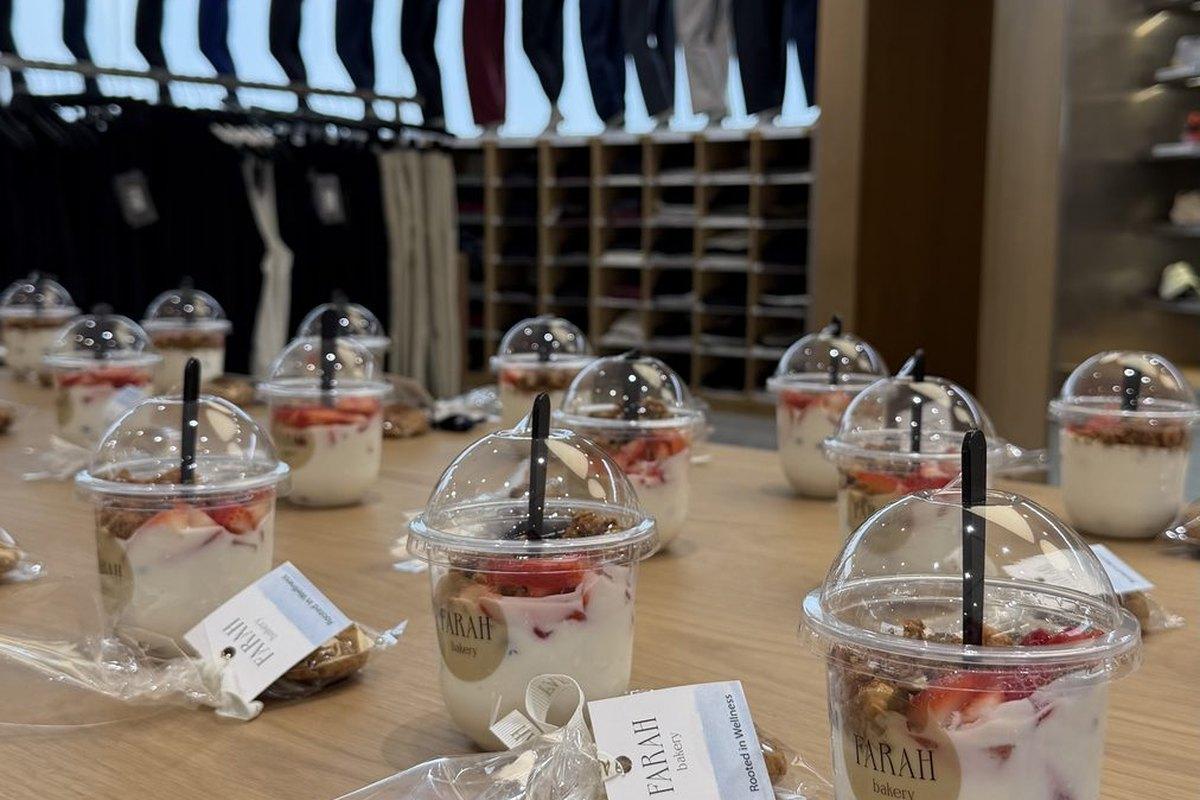
We have also worked with brands on one-off collaborations rather than standing supply — granola parfaits and fresh-baked treats for a lululemon morning in store and in the Dubai Aquarium tunnel, a gift bag at every mat at Arte Museum, a grazing spread for Kure. Past collaborations are on the events page, and they are often a sensible way to test a supplier before committing to a schedule.
Frequently Asked Questions
What should a café ask a bakery before agreeing a supply deal?
Ask what happens when volume triples, whether the bakery bakes to order or from stock, how the summer schedule is adjusted, what the lead time genuinely is for sourdough, and what the remedy is when a delivery goes wrong. Sample quality tells you very little on its own.
How much notice does a bakery need for a standing order?
More than most buyers expect. Sourdough involves hours of fermentation and an overnight cold retard after shaping, so it has to be planned into a bake rather than made on the day; agree the notice period with your supplier. On our own shop, the earliest delivery window is the next morning. A standing weekly volume with a small agreed margin for adjustment works better than ad-hoc ordering.
Which bread suits a breakfast buffet that sits out for hours?
Tin loaves rather than crusty ones. A multi-seed whole wheat or milk bread loaf has a thin crust and soft crumb that tolerates sitting and slicing. A baguette has so much crust relative to crumb that it has one good day, and once sliced and left out on a buffet it dries quickly.
Why do bakery products taste different in summer in Dubai?
Because fermentation is temperature-driven. A kitchen at 26°C ferments far faster than one at 20°C, so a bakery running fixed timings through August over-ferments its dough, degrading the gluten and producing flat, gummy loaves with a sour edge. Good suppliers move their schedule seasonally.
Can a bakery supply for a one-off event rather than a contract?
Yes, and it is often the sensible first step. A single event at real volume shows you how a bakery handles logistics, timing and receiving without committing either side to a schedule, and it gives you something concrete to base a standing order on afterwards.
Talk to us about supply
Our product list for cafés, hotels and restaurants is on the wholesale page, and the full retail bake is in the shop. If you want to talk about regular supply, get in touch and we will work out what actually fits your service. For a one-off event, use the Bring Farah to your event form, and we reply within one working day.